THE ULTIMATE SACRIFICE WHY THE ONE FOOD YOU CHOOSE TO ABANDON FOREVER REVEALS THE DEEPEST DARKEST SECRETS OF YOUR SOUL

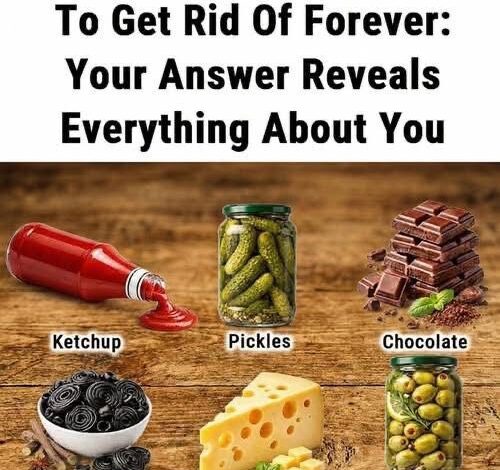
Picture yourself across the table from someone you’ve never met. They toss out a question that sounds like a harmless conversation starter, the kind you’d hear at a party or scroll past online: If you had to give up one food forever, what would it be? No loopholes. No exceptions. No “just this once.” The moment you choose it, it disappears from your life completely—as if it never existed.
At first, people treat it like a joke. They answer instantly, naming something they’ve never liked—maybe Brussels sprouts or some overly sharp cheese. It feels like an easy win, a clever dodge. But if you sit with the question a little longer, something shifts. The lightness fades. The permanence creeps in. And suddenly, it’s not so simple.
Because it isn’t really about taste.
When you take the question seriously, you realize you’re not just eliminating a food—you’re erasing pieces of your life. Give up pizza, and you’re not just losing dough and cheese. You’re losing late-night celebrations, chaotic family dinners, and that universal comfort of sharing a box with friends. Give up a certain soup, and maybe you’re letting go of the memory of someone who made it for you when you needed care. Every food carries a story, and choosing one to lose means deciding which story matters least.
That hesitation? It’s your mind flipping through those memories, realizing how deeply food is tied to who you are.
Psychologically, the choice reveals more than we expect. People who easily give up sweets might prioritize discipline over indulgence, valuing control and structure. Others who refuse to part with comfort foods may rely on them as emotional anchors—small, reliable sources of joy in a chaotic world. The question quietly asks: what part of your emotional life can you afford to lose?
What’s even more telling is what people refuse to give up. For some, the idea of losing bread feels almost unsettling—like being cut off from something fundamental. For others, it’s chocolate—not for survival, but for ritual. That small, end-of-day moment of unwrapping something sweet becomes a form of self-care. Remove the food, and you remove the ritual—and that loss hits deeper than expected.
It also exposes how accustomed we’ve become to abundance. Today, almost anything is available anytime. The idea of permanently losing even one option forces us to confront scarcity in a way we rarely do. Suddenly, a simple apple feels significant. The question becomes less about food and more about what it means to lose something forever.
There’s also an element of identity wrapped up in the answer. Some people might say they’d give up fast food—not because they don’t enjoy it, but because it aligns with the image they want to present. It’s less about honesty and more about aspiration. But beneath that, there’s often a quiet awareness that certain habits—no matter how imperfect—are part of their real lives.
In the end, this isn’t just a question about preferences. It’s a reflection. It asks what you value, what you cling to, and what you’re willing to let go of. If the answer comes easily, maybe the loss doesn’t matter much. If it doesn’t, it likely means your experiences—your memories, your connections—are deeply tied to the things you consume.
And maybe that hesitation is the point.
Because it shows appreciation. It shows that even the smallest things—meals, flavors, routines—carry weight. They shape your days in quiet ways.
So when you consider your answer, don’t rush to the safest option. Pay attention to what feels hardest to lose. That’s where your attachments live. That’s where your story is.
In the end, we’re not just defined by what we choose—but by what we’re willing to leave behind.