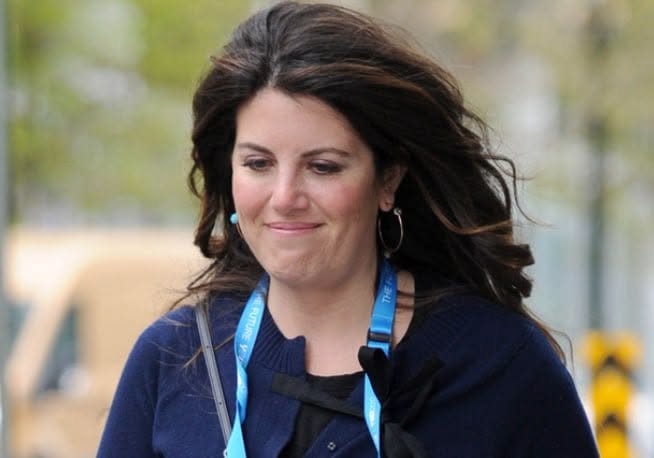
She no longer exists as a relic of scandal, frozen in the moment the world decided who she was. Instead, she stands as something far more complex—and far more unsettling: a reminder of what collective cruelty can do, and what it cannot fully erase. The woman once flattened into a late-night joke or a headline has reshaped her narrative, not by denying the past, but by confronting it with clarity and purpose. She has become, in many ways, a translator of pain—someone who can articulate what it feels like to be publicly dismantled and then expected to quietly disappear.
Her advocacy against cyberbullying and digital humiliation carries a weight that theory alone could never achieve. It is not built on statistics or distant observation, but on lived experience—on the memory of being scrutinized, mocked, and reduced to something less than human on a global scale. And perhaps what makes her voice so resonant is the timing. She endured this before we had the frameworks to fully understand it, before “online shaming” and “digital harassment” were widely recognized as serious social issues. She lived through a phenomenon that society had not yet learned how to name, much less address.
But her story is not one of simple redemption or clean closure. What makes her evolution so powerful is that it resists that kind of neat resolution. She does not pretend that time erases what happened, nor does she frame her journey as a complete overcoming. Instead, she speaks from a place of coexistence—with memory, with pain, with the parts of her story that remain unresolved. There is a quiet honesty in that, a refusal to simplify something that was never simple.
In choosing to stay present with that history rather than outrun it, she transforms it. Not into something positive, exactly, but into something useful. Empathy becomes her tool. Accountability becomes her message. Dignity—something once stripped away in public—becomes something she reclaims on her own terms. And in doing so, she shifts the focus outward, asking not just what happened to her, but what it reveals about all of us.
Because her story is not isolated. It is part of a larger pattern—a culture that has long blurred the line between curiosity and consumption, between accountability and spectacle. We are drawn to downfall, to scandal, to the unraveling of other people’s lives, often without pausing to consider the human cost. Her voice interrupts that привычка. It forces a moment of reflection: not just about how she was treated, but about how easily the same dynamics continue to play out, amplified now by technology and distance.
Listening to her now is uncomfortable in a necessary way. It challenges the idea that time alone absolves collective behavior. It asks whether recognition without change is enough. And it raises a question that lingers long after her words are heard: if we understand the damage more clearly now, are we willing to act differently the next time someone becomes the center of public scrutiny?
Her presence today is not about rewriting the past—it’s about refusing to let it define the limits of what comes next. And in that refusal, she offers something rare: not just a personal evolution, but an invitation for a broader one.