A Resurfaced Photo of Donald Trump Walking Toward Marine One Sparks Fresh Debate as Viewers Zoom In on One Small Detail, Fueling Renewed Questions About His Health, Lifestyle, and the Fine Line Between Public Image, Political Narrative, and Internet Speculation

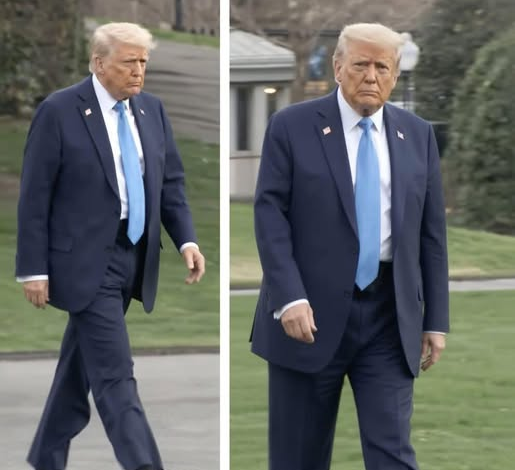
A single photograph—Trump crossing the South Lawn on his way to Marine One—has taken on a second life far beyond the moment it originally captured. First published in 2025, it has resurfaced in 2026 and quickly reignited debate, showing how even the most routine presidential image can become something far larger once it enters the digital echo chamber.
On its face, the scene is ordinary: a walk across familiar ground, a transition from one obligation to the next. But attention has shifted almost entirely away from the setting and toward something far more granular—his physical appearance. Viewers have zoomed in, compared it to older photos, and constructed narratives from subtle visual cues. What might once have been dismissed as a passing frame has instead become a focal point for broader conversations about age, health, and leadership.
That reaction is unfolding in a climate already primed for it. At 79, Trump’s age is not just a biographical detail; it’s part of the ongoing national conversation about the endurance and capacity of political leaders. Similar scrutiny has followed other figures, but in Trump’s case, the response tends to sharpen quickly into opposing interpretations. The same image becomes evidence for entirely different arguments depending on who is looking at it.
Supporters see signs of vitality—perhaps even improvement. They point to what they interpret as a leaner frame or a more energetic posture, suggesting discipline or change behind the scenes. Critics, meanwhile, urge restraint, noting that appearance alone can’t reliably indicate health and that changes in weight or posture—especially later in life—can have a wide range of explanations. Neither side is working from confirmed medical data, yet both speak with a kind of certainty that reflects something deeper than observation.
Part of what fuels this dynamic is the long-standing public fascination with Trump’s lifestyle. Stories about his diet—fast food preferences, Diet Coke habits—have been repeated for years, shaping a narrative that people instinctively return to when assessing anything related to his health. So when a photo hints at change, it doesn’t exist in isolation; it plugs directly into a preexisting storyline, inviting speculation about what may have shifted behind the scenes.
But speculation is exactly where the line begins to blur. In the absence of verified information, online discussion tends to fill the gaps—sometimes with reasonable guesses, other times with unverified claims that gain traction simply through repetition. The image becomes less a record of a moment and more a starting point for interpretation, amplified by the speed and reach of digital platforms.
Timing also plays a role. Images like this don’t just resurface randomly—they tend to reappear when attention is already focused on the person in question. In those moments, a photo can take on symbolic weight, reused as visual shorthand in ongoing debates. The South Lawn image has effectively become one of those symbols, revisited whenever questions about Trump’s condition or stamina come back into public view.
What’s striking, in the end, is how much meaning has been layered onto something so simple. The photograph hasn’t changed—but the context around it has, and with it, the conclusions people draw. Without direct medical insight, the reality behind what’s visible remains uncertain. What’s clear, though, is how modern audiences engage with images: not just as snapshots of reality, but as evidence to support beliefs they may already hold.
And that may be the most revealing part of all. The debate isn’t really about a walk across the lawn—it’s about perception, expectation, and the human tendency to see what we’re already prepared to believe.