Another legend gone It breaks our hearts to confirm the death of this acting icon from the ’80s… three days after his planned surgery… details in comments

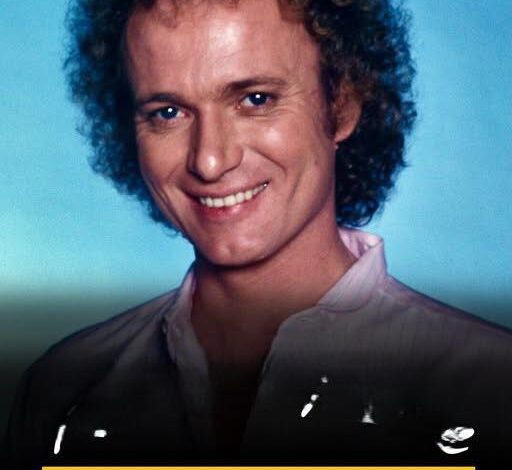
Anthony Geary’s passing doesn’t feel like ordinary news—it feels like a sudden, unwelcome rewrite of a story that still had more to say. For years, he wasn’t just a presence in daytime television; he transformed it. Through Luke Spencer, he introduced a kind of character that didn’t ask for easy approval. Luke could be reckless, wounded, even deeply flawed, yet Geary infused him with enough humanity that audiences couldn’t look away. That balance—between light and shadow—became the core of his impact, keeping viewers invested even when the storylines challenged their comfort.
What Geary accomplished went beyond performance. He reshaped expectations. Soap operas had long followed recognizable rhythms, but he disrupted that familiarity, proving that a character could be morally complex and still command loyalty. He invited audiences into a more uncomfortable space—one where admiration and unease could exist at the same time. That willingness to complicate the narrative gave General Hospital a depth that extended far beyond its time slot.
That’s why the reality of his passing feels almost out of sync with the life he lived on screen. A figure who once held millions of viewers in suspense, whose presence filled entire story arcs with intensity, leaving quietly after a routine procedure in a city far removed from Hollywood—it feels too small, too still. And yet, there’s a quiet symmetry in it. Geary chose distance from the spotlight long before his final days, stepping away not out of necessity, but by design. His ending, like much of his life, followed his own script.
What remains now isn’t defined by the circumstances of his death, but by the endurance of his work. The scenes are still there. The performances still breathe. Every rerun, every clip, every rediscovery brings Luke Spencer back into motion—and with him, the unmistakable presence of the man who made him real. It’s a reminder that some portrayals don’t fade; they settle into culture, becoming part of how stories are told moving forward.
This is what lasting storytelling does. It outlives the moment. It carries forward, reshaped by each new viewer who encounters it. Geary’s legacy isn’t locked in the past—it’s active, still unfolding in the way people respond to characters who don’t fit neatly into hero or villain.
Like any truly memorable arc, his story resists a clean ending. It lingers in the spaces between scenes, in the questions he left behind, in the standard he set. And for those who watched him—whether in the height of his career or years later—the feeling endures: he brought something uncommon to the screen, something layered and real, and that kind of presence doesn’t simply disappear.