Decision clears path for major shift in U.S. immigration policy
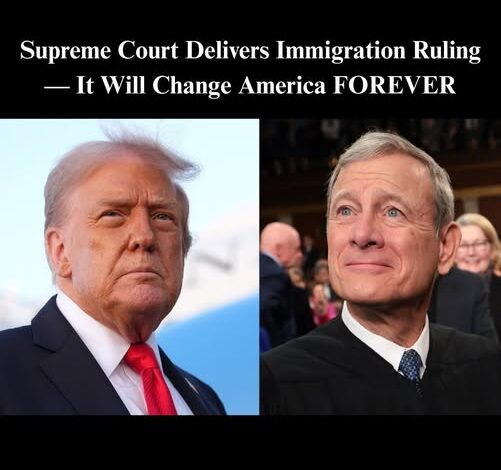
In a major legal development with far-reaching implications for U.S. immigration policy, the Supreme Court has allowed the federal government to move forward with plans to revoke humanitarian parole protections affecting more than half a million migrants.
The decision, issued March 5, 2026, permits the executive branch to proceed with ending temporary legal status for individuals from Venezuela, Cuba, Haiti, and Nicaragua who had previously been granted entry under a humanitarian parole program. By staying a lower court ruling that had temporarily blocked the policy, the Court effectively gave the administration permission to implement its new enforcement approach while legal challenges continue in lower courts.
The move represents a significant step in the administration’s broader effort to reshape immigration policy and tighten border enforcement.
Background: The humanitarian parole program
Humanitarian parole is a long-standing legal mechanism that allows the U.S. government to grant temporary entry to individuals for urgent humanitarian reasons or when doing so serves a significant public benefit.
In recent years, the program was expanded as part of efforts to manage migration at the southern border. Under that system, more than 500,000 individuals from several countries were granted temporary permission to live and work in the United States while awaiting further immigration processing.
The current administration has argued that the program was applied too broadly and that its widespread use exceeded the limited intent envisioned by immigration law.
After taking office earlier this year, the administration moved quickly to terminate these parole grants through executive action. Officials at the Department of Homeland Security (DHS) stated that ending the program would allow immigration authorities to return to a stricter enforcement model and accelerate deportation procedures for individuals without permanent legal status.
Supreme Court ruling and dissent
The Supreme Court’s order came through its emergency docket, sometimes referred to as the “shadow docket.” As is typical for decisions issued through this process, the ruling was unsigned and did not include a detailed written explanation.
However, two justices—Sonia Sotomayor and Ketanji Brown Jackson—publicly dissented, indicating significant disagreement within the Court about the scope of executive authority and the humanitarian consequences of the policy.
For migrants affected by the ruling, the decision creates immediate uncertainty. With their parole protections removed, many individuals could now face immigration enforcement actions while the broader legal challenges continue to move through federal courts.
Additional legal battles over immigration protections
The administration’s policy changes extend beyond the parole program. On the same day the ruling was issued, the Department of Justice filed another emergency appeal seeking authority to terminate Temporary Protected Status (TPS) for approximately 6,100 Syrian nationals currently living in the United States.
Syrians have held TPS protections since 2012 due to the ongoing civil war in their home country. Following the fall of the Assad government in 2024, however, the Department of Homeland Security concluded that Syria no longer met the criteria required for continued TPS designation.
Homeland Security Secretary Kristi Noem argued that the legal standard for protection—conditions of armed conflict that would endanger returning citizens—had changed significantly.
Immigration advocates strongly dispute that assessment. Groups such as the International Refugee Assistance Project argue that Syria remains unstable and that forcing individuals to return could expose them to severe humanitarian risks.
Potential wider implications for other migrants
The administration has also requested a broader ruling that would prevent federal courts from blocking future efforts to terminate TPS for additional nationalities.
Programs currently protecting migrants from countries such as Venezuela and Haiti cover more than one million individuals in the United States. If those protections were revoked, the scale of immigration enforcement actions could increase dramatically.
Legal experts say the administration is seeking to clarify that the Secretary of Homeland Security has wide discretion when determining whether conditions in foreign countries justify temporary protection.
Logistical challenges for immigration enforcement
If the administration proceeds with large-scale revocations of humanitarian status, immigration authorities will face significant operational challenges.
Ending work authorization for hundreds of thousands of individuals would require major coordination across the Department of Homeland Security, including expanded detention capacity, transportation resources, and administrative processing.
There could also be economic consequences. Many migrants granted temporary status have joined the workforce in industries such as agriculture, construction, and healthcare—sectors that rely heavily on immigrant labor.
The sudden loss of work authorization for large numbers of workers could create disruptions in some parts of the economy.
Debate over enforcement versus humanitarian policy
The policy changes have sparked strong reactions from both supporters and critics.
Advocates for stricter immigration enforcement argue that the expanded use of parole in recent years bypassed the intent of immigration law and undermined border security. They view the administration’s actions—and the Supreme Court’s decision—as restoring the rule of law and strengthening national sovereignty.
Opponents, however, warn that rapidly removing protections could force families into dangerous situations or push individuals into undocumented status within the United States.
Immigration attorneys also argue that the speed of policy changes may limit migrants’ ability to pursue legal alternatives or prepare for potential deportation proceedings.
A transformative moment for U.S. immigration policy
The Supreme Court’s decision signals that the judiciary may be willing to grant the executive branch significant latitude when it comes to immigration enforcement policies.
For now, the administration is free to move forward with its plans while litigation continues in lower courts. The outcome of those cases could determine the long-term future of several humanitarian programs that have shaped U.S. immigration policy over the past decade.
As the legal battles continue, immigration lawyers, policymakers, and affected families are closely watching how the Department of Homeland Security implements these changes.
The coming months are likely to play a crucial role in determining whether the United States maintains expansive humanitarian protections—or shifts toward a system defined primarily by stricter enforcement and limited temporary relief.