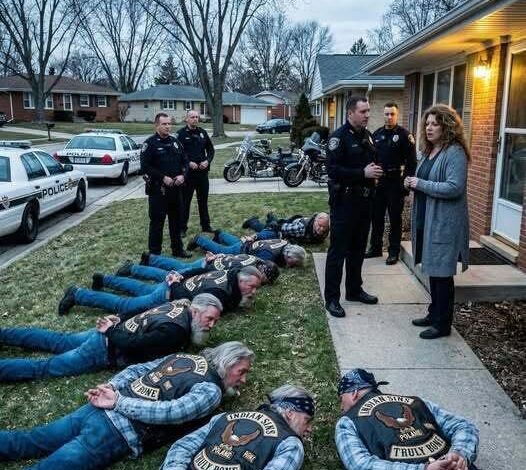
The headline might hint at something dramatic, but the truth is, it all started with routine.
Every Saturday morning, our motorcycle club gathered at the same small diner. Same booth, same orders, same rhythm. It was a ritual more than a meeting—coffee, conversation, and a break from everything else life threw at us. And every week, Melissa was there.
She was our waitress. Quiet, polite, efficient. But if you paid attention, you noticed things others might miss. The way her eyes drifted toward the door a little too often. The way she flinched at sudden noises. The long sleeves, even when the weather didn’t call for them.
At first, we didn’t say anything. It wasn’t our place—or at least, that’s what we told ourselves.
But over time, the small signs began to form a pattern. Her movements carried tension. Her smile didn’t quite reach her eyes. There was a kind of alertness about her, like she was always waiting for something to go wrong.
Eventually, she trusted us enough to share pieces of the story.
An ex-husband who wouldn’t let go. Repeated calls, unwanted visits, reports filed that led nowhere. She had tried to do everything the “right” way, but the help she needed never seemed to arrive in time.
There’s a moment in situations like that when staying out of it stops feeling like the right choice.
So we didn’t rush in or try to take control. We simply showed up more intentionally. We stayed a little longer. We made sure she wasn’t alone when closing time came around. We became a steady presence—nothing aggressive, nothing confrontational. Just visible.
Sometimes, that alone can change the atmosphere.
But not always.
The day Kyle showed up, the tension shifted instantly.
He walked in like he owned the place—loud, angry, certain of himself. His focus went straight to Melissa. What started as sharp words quickly escalated. His tone carried something heavier than frustration—control, maybe even entitlement.
We stood up, not to provoke anything, but to create space. To make it clear she wasn’t alone.
But things moved fast.
Voices rose. His anger sharpened. And when it crossed into physical territory, we stepped in—not to fight, but to stop it from going further.
Someone called the police.
When they arrived, everything changed.
Kyle was calm by then. Composed. He told his version of the story clearly, confidently. And for a moment, it sounded convincing.
We were the ones standing together, a group of men in a tense situation. From the outside, it didn’t look the way it felt from within.
So they took us in.
Twelve of us.
For trying to step in.
It didn’t feel heroic. It felt confusing. Frustrating. Like the truth had slipped through a crack.
But the story didn’t end there.
Quietly, and within legal limits, cameras had been installed in the diner—not out of paranoia, but precaution.
A few days later, Kyle came back.
This time, there was no misunderstanding.
Everything was captured clearly—his behavior, his threats, the way he forced his way in. There was no room for interpretation, no competing versions of events.
The evidence spoke for itself.
The charges against us were dropped.
Kyle was arrested—properly, this time.
Looking back, none of it feels like a story about being heroes.
It was never about that.
It was about paying attention when something didn’t feel right. About choosing not to ignore it. About standing nearby when someone needed to feel less alone.
Sometimes, showing up is enough to make a difference.
And sometimes, it takes more.
But either way, it starts the same way—
By deciding not to look away.