The Evolutionary Journey Of Love From Wide Eyed Idealism To Hard Won Wisdom Why Your First Second And Third Marriages Are Worlds Apart And The Secret To Making Final Love Stick

Marriage is rarely a fixed destination. It is not a place we arrive at and remain unchanged, but a living, shifting terrain—one that evolves as we do. With time, experience, and sometimes heartbreak, our understanding of love deepens, complicates, and ultimately matures. Moving from a first marriage into a second—or even a third—is not simply repeating the same commitment with a different person. It is often the outward expression of an inward transformation. Each union carries the imprint of the lessons learned before it, reshaping not only how we love, but how we see ourselves within that love.
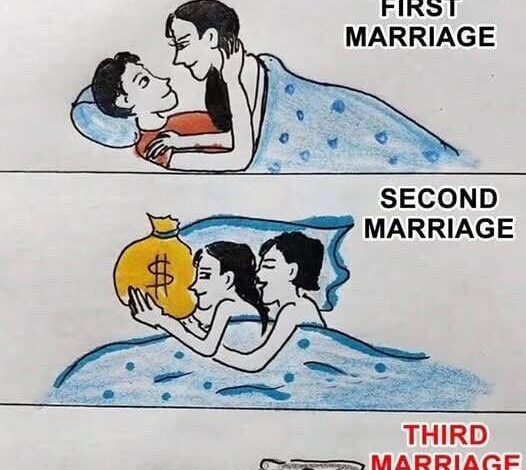
A first marriage often begins in a kind of emotional sunlight—full of optimism, possibility, and an almost cinematic belief in what love should look like. There is an eagerness to build something lasting, something meaningful, something that reflects both partners’ dreams. But what many don’t anticipate is how quickly idealism encounters reality. The early years of marriage reveal differences not just in personality, but in communication styles, expectations, and emotional habits. Conflict, when it arises, can feel disorienting, even threatening, because it clashes with the vision of effortless harmony. Without the tools to navigate those moments—without the patience or resilience that only experience can teach—many couples find themselves struggling to reconcile what they imagined with what actually exists. The gap between expectation and reality becomes a source of tension, and for some, a breaking point.
By the time someone enters a second marriage, the lens has shifted. The innocence of first love is often replaced by a more grounded awareness. There is a clearer sense of self—of boundaries, of needs, of non-negotiables. People are less likely to ignore red flags or sacrifice essential parts of themselves in the name of maintaining the relationship. There is often more intention in how love is approached: conversations are deeper, decisions more deliberate, and conflict handled with a greater sense of perspective.
Yet second marriages are not without their own complexities. They are, in many ways, more layered. There may be children involved, each with their own emotional landscape to navigate. There are financial histories, shared obligations from the past, and sometimes lingering emotional wounds that resurface in unexpected ways. Trust, once broken, takes longer to rebuild. Vulnerability can feel riskier. But within these challenges lies an opportunity—to love with awareness rather than illusion, to build something not from fantasy, but from truth. When approached with honesty and care, second marriages often become spaces where healthier patterns take root, where individuals begin to practice the kind of partnership they once only hoped for.
A third marriage often reflects an even deeper evolution. By this stage, many of the external pressures that once shaped earlier relationships—societal expectations, timelines, appearances—have lost their hold. What remains is something more essential: the desire for genuine connection, emotional safety, and shared peace. The focus is no longer on proving anything—to oneself or to the world—but on creating a life that feels authentic.
There is a quiet clarity in third marriages. People entering them often understand that love is not about perfection, nor is it about constant intensity. It is about steadiness. About being seen and accepted without the need for performance. There is less urgency to control outcomes and more willingness to allow the relationship to unfold naturally. Autonomy becomes just as important as togetherness, and there is a deeper respect for the individuality each partner brings into the union. Conflict, when it arises, is approached with less fear and more curiosity. The relationship becomes less about “winning” and more about understanding.
Across all stages of marriage, however, certain truths remain constant. Communication is the foundation—honest, open, and sometimes uncomfortable. Without it, even the strongest connection can erode. Empathy and patience act as stabilizers, allowing partners to navigate differences without losing sight of one another. And perhaps most importantly, there must be a shared commitment to growth—not just as a couple, but as individuals. Love that endures is rarely static; it adapts, evolves, and deepens alongside the people within it.
External forces also play a significant role. Cultural expectations, financial pressures, family dynamics, and personal ambitions all shape the structure of a marriage. In second and third unions especially, blending lives requires intentional effort. It means honoring past relationships without letting them dictate the present. It means creating new traditions while respecting old ones. It means setting boundaries that protect the relationship without isolating it. These are not passive processes—they require awareness, communication, and consistent care.
Ultimately, marriage is less about getting it right the first time and more about learning, adjusting, and continuing to show up with greater understanding. Each relationship, whether it lasts or ends, leaves behind a kind of emotional blueprint—one that informs the next chapter. The progression from a first to a second or third marriage is not a linear path of success or failure. It is a reflection of growth. Of resilience. Of the human capacity to begin again with more clarity than before.
At its best, marriage is not about completing one another, but about witnessing each other’s evolution. It is a mirror, yes—but also a partnership that asks us to grow into the people we are becoming. And when approached with humility, honesty, and compassion, it offers something rare: not just love, but a deeper understanding of what it means to share a life with another human being—fully, imperfectly, and truthfully.