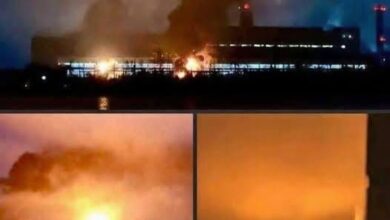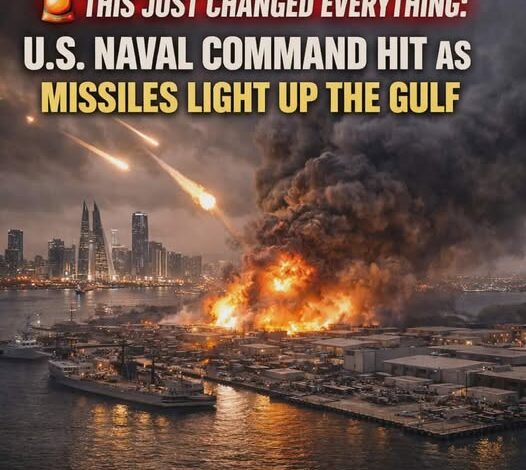
On the afternoon of March 1, 2026, the fragile balance of diplomacy in the Gulf region appeared to fracture as thick plumes of smoke rose above Manama, Bahrain. Early reports from regional sources suggested that Iran had carried out a retaliatory strike targeting facilities associated with the U.S. Navy’s Fifth Fleet headquarters. If confirmed, the incident would mark a significant escalation in Middle Eastern tensions, moving beyond proxy confrontations toward a direct clash involving U.S. forces. The strike reportedly came hours after a joint U.S.–Israel operation that allegedly destroyed key Iranian military infrastructure earlier in the day.
Authorities in Bahrain confirmed that an explosion occurred near the perimeter of Naval Support Activity Bahrain, a major installation that hosts the headquarters of the U.S. Fifth Fleet and thousands of American personnel. Witnesses described a powerful blast that shook nearby districts and triggered emergency sirens throughout parts of the city. Initial assessments indicated structural damage in the surrounding area, though officials had not yet released confirmed casualty figures as emergency teams continued to assess the scene.
Iran’s Islamic Revolutionary Guard Corps reportedly claimed responsibility for the strike, describing it as a measured response to what Tehran labeled a coordinated attack on its military capabilities. According to defense analysts, the earlier operation—reported to be called “Operation Epic Fury”—targeted Iranian missile systems and command facilities believed to be linked to regional military planning. The retaliatory strike in Bahrain suggests that the confrontation has moved into a far more direct phase, raising fears of a broader regional conflict.
The economic reaction was immediate. Global energy markets surged amid concerns that escalating hostilities could threaten shipping routes through the Strait of Hormuz, one of the world’s most critical oil transit corridors. Governments across the region began issuing security advisories, and several U.S. embassies instructed personnel to remain in secure locations while the situation develops.
Overview of the Escalation
| Phase | Event | Primary Target | Status |
|---|---|---|---|
| Initial Operation | “Epic Fury” (U.S.–Israel) | Iranian missile infrastructure | Reportedly successful |
| Retaliatory Strike | Iranian response | Area near U.S. Fifth Fleet HQ, Bahrain | Under investigation |
| Security Posture | Regional alert | U.S. and allied facilities | Heightened readiness |
| Economic Impact | Market reaction | Global energy supply | Highly volatile |
Military analysts are now focused on determining whether the attack was a limited retaliatory action or the opening stage of a larger campaign. The incident places Bahrain—traditionally a close U.S. security partner—in a difficult position as tensions between Washington and Tehran intensify. For the personnel stationed at the Fifth Fleet base, routine operations have shifted rapidly toward a high-alert security posture.
Attention is also turning to the strategic consequences of the earlier U.S.–Israel strike. While the operation was intended to weaken Iran’s missile capabilities, it may have triggered a cycle of retaliation that could destabilize the region further. Iranian leaders have long warned that attacks on their strategic infrastructure would provoke direct responses against U.S. military assets in the Gulf.
Although the base itself was not reported to have been completely destroyed, the damage near its perimeter highlights the vulnerability of even heavily defended installations. U.S. forces in the region have reportedly increased surveillance operations and deployed additional monitoring systems to detect any further hostile activity.
Diplomatic channels are now working urgently to prevent the situation from escalating into a wider war. International mediators are believed to be engaged in behind-the-scenes discussions aimed at reducing tensions and preventing additional strikes. Whether those efforts will succeed remains uncertain as both sides assess their next moves.
For now, the priority remains the safety of personnel in Bahrain and the stability of the surrounding region. The events of March 1 represent one of the most serious confrontations between the United States and Iran in recent years, and the coming days may determine whether the crisis expands or begins to de-escalate.
The smoke rising above Manama has become a stark reminder of how quickly geopolitical tensions can transform into open conflict. As investigators, diplomats, and military planners continue their work, the world is watching closely to see whether this moment marks a temporary crisis—or the beginning of a broader and more dangerous chapter in regional security.