A Routine Pizza Delivery Turned Into an Unforgettable Encounter When a Driver Met an Elderly Woman Trying to Pay With Coins in a Freezing Home, Leading to a Difficult Decision, Unexpected Consequences, and a Powerful Lesson About Compassion, Responsibility, and How the Right Choice Doesn’t Always Feel Right in the Moment

It seemed like just another stop at the end of a long, cold shift—another address, another delivery to check off the list. The kind of night where the chill seeps through your clothes and all you can think about is getting home. But something felt off even before I reached the door. The house looked neglected, the yard unkempt, the windows dark. No porch light, no sign of life. The instructions were brief but strange: “knock loud.” That alone made me hesitate. Most people are waiting, watching, expecting you. This felt different—like whoever was inside might struggle to answer, or might not hear me at all.
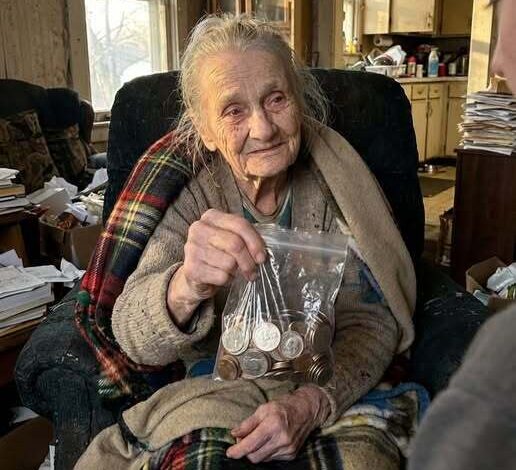
When the door finally creaked open, the cold outside didn’t feel much different from the air inside. The room was dim, lit only by a weak candle flickering on a table. No electricity, no background noise—just silence and a lingering chill. The elderly woman standing there was wrapped in layers, her hands unsteady as she reached for the pizza. She didn’t say much. Instead, she handed me a small plastic bag filled with loose coins—unorganized, clearly gathered with effort over time.
In that moment, it stopped feeling like a routine delivery. This wasn’t convenience—it was survival. A quick glance around told me everything: an empty kitchen, a lifeless room, the kind of cold that settles deep. That pizza might have been the only warm thing she’d have that day. Taking her money didn’t feel right. It wasn’t about the job anymore—it felt like taking from someone who barely had enough to give. So, without overthinking it, I told her it had already been paid for. She looked confused at first, then quietly grateful. I left before she could ask more.
But driving away didn’t sit right either. That image stayed with me—the candle, the cold, the silence, the coins. It felt incomplete, like I had only addressed the surface of something much bigger. I kept asking myself: was that enough? Or should I have done more? Acting on that uneasy feeling, I called for a welfare check. It seemed like the responsible thing to do, even if I wasn’t certain how it would turn out.
Later that night, I passed by the house again without really planning to. That’s when I saw the ambulance. The flashing lights cut through the darkness, and my stomach tightened. Paramedics were helping her outside, carefully guiding her into the cold air. When she noticed me, her expression shifted. There was recognition—and something sharper. “This is your fault,” she said.
I didn’t know what to say. I just stood there, questioning everything.
For days, her words stayed with me. I kept replaying the moment, wondering if I had crossed a line. Had I helped—or had I taken something from her? Her independence, her dignity? It’s easy to believe helping is always right, but reality isn’t that clean. Sometimes help feels intrusive. Sometimes it feels like judgment. And sometimes, even with good intentions, it doesn’t feel good at all.
A week later, her address came up again. I hesitated before accepting it. Part of me wanted to avoid it completely, to leave it unresolved. But another part needed closure. So I went.
This time, the difference was clear before I even reached the door. The house had light. The yard showed signs of care. When the door opened, warmth replaced the cold I remembered. She stood there again—but she seemed stronger, more present. Inside, there were groceries, signs of life, signs that something had changed.
She looked at me for a moment, then thanked me. Simply, sincerely.
Neighbors had gotten involved. People had noticed. Support had formed around her. What had started as an uncomfortable decision had grown into something larger than I could have done alone. The welfare check hadn’t taken anything from her—it had brought something back.
That’s when the weight I’d been carrying finally eased. What felt like a mistake had actually led to something meaningful. Not immediate, not easy, but real.
It made me realize that doing the right thing doesn’t always feel right in the moment. Sometimes it feels like doubt, like guilt, like stepping into something uncertain. But discomfort doesn’t mean it’s wrong.
Kindness isn’t always simple. It doesn’t always come with instant reassurance or gratitude. Sometimes it asks you to make choices that feel complicated because they matter more than your comfort. That night, I didn’t know if I was helping or interfering. I just knew I couldn’t ignore what I saw.
And in the end, that choice—uncertain as it was—made a difference.
Not every situation works out that way. Not every action leads to visible change. But sometimes, acting with compassion, even when it feels messy, opens the door for something better.
And sometimes, that’s enough.