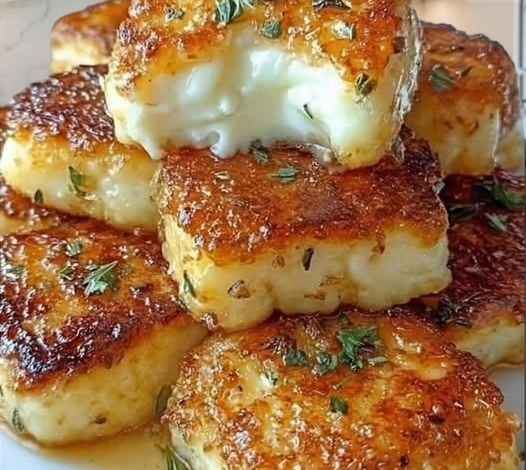
Some of the most satisfying dishes often come from the simplest ideas—meals that rely on just a handful of ingredients but still deliver comfort, flavor, and a sense of care in their preparation. Cooking doesn’t always need to involve complicated techniques or long ingredient lists to feel rewarding. Sometimes the most memorable foods come from straightforward methods done well, where each step allows the ingredients to shine on their own. Pan-fried halloumi is a perfect example of this kind of cooking. With only a hot skillet, a bit of oil, and a few minutes of attention, it transforms into something that feels both effortless and indulgent. The result is a beautifully crisp exterior surrounding a warm, slightly soft center, creating a texture and flavor combination that makes even a quick dish feel special.
Halloumi is particularly suited for pan-frying because of its unique composition. Unlike most cheeses that melt quickly when exposed to heat, halloumi holds its structure thanks to its higher melting point. This allows it to be cooked directly in a skillet without turning into a puddle, making it ideal for recipes that rely on browning and texture. As the cheese heats in the pan, the outer surface slowly develops a golden crust that becomes lightly crisp and slightly caramelized. Meanwhile, the interior warms and softens just enough to create a satisfying contrast. Its naturally salty, savory taste means it rarely needs extra seasoning, which is why many cooks enjoy preparing it with only a touch of olive oil or butter. The simplicity of the ingredient allows the cooking process itself to enhance the flavor.
One of the reasons halloumi has become so popular in home kitchens is its reliability. When handled with a little patience, it consistently produces great results. Slicing the cheese into pieces about half an inch thick helps ensure that each piece heats evenly without becoming too firm or dry. Before cooking, it’s helpful to gently pat the slices with a paper towel to remove any surface moisture. This small step makes a noticeable difference, as it encourages the cheese to brown more effectively and prevents excess splattering when it meets the hot pan. Preparing the pan properly is equally important. Allowing a skillet to warm gradually with a thin layer of olive oil or butter creates the ideal cooking environment, ensuring the halloumi begins to sizzle the moment it touches the surface.
Once the slices are placed in the pan, the key is to let them cook without moving them around too quickly. Leaving the cheese undisturbed for a few minutes allows a crisp crust to develop naturally. This not only improves the texture but also gives the halloumi its characteristic golden color. When the underside becomes evenly browned, the slices can be carefully turned over to cook the other side. During this stage, some people enjoy adding a light sprinkle of herbs such as oregano or thyme, which release their aroma as they warm in the pan. Others prefer to keep the dish entirely simple and allow the cheese’s natural flavor to stand on its own.
After both sides are beautifully golden, the halloumi should be served immediately while it is still hot. This is when the contrast between the crisp outer layer and the tender interior is at its best. Pan-fried halloumi is wonderfully versatile and can be enjoyed in many ways. It can be served as a quick appetizer, paired with fresh tomatoes and cucumbers, layered into warm flatbreads, or added to salads and grain bowls for a savory element. It also works well alongside roasted vegetables or a squeeze of lemon for brightness.
More than anything, dishes like this highlight the beauty of uncomplicated cooking. With only a few ingredients and a bit of attention to detail, it’s possible to create something deeply satisfying. Pan-fried halloumi reminds us that good food doesn’t always require elaborate preparation or complex recipes. Sometimes the best meals come from simple ingredients treated with care—proof that when cooking focuses on flavor, texture, and timing, even the easiest dish can feel memorable and rewarding.