When purchasing natural foods, it’s essential to understand exactly what you’re buying. Honey, often referred to as “liquid gold,” has been valued for centuries because of its natural sweetness, health benefits, and purity. However, not every jar labeled as honey on store shelves is as authentic as it appears. Many products are diluted, overly processed, or mixed with additives, making it important for consumers to know how to recognize the real thing.
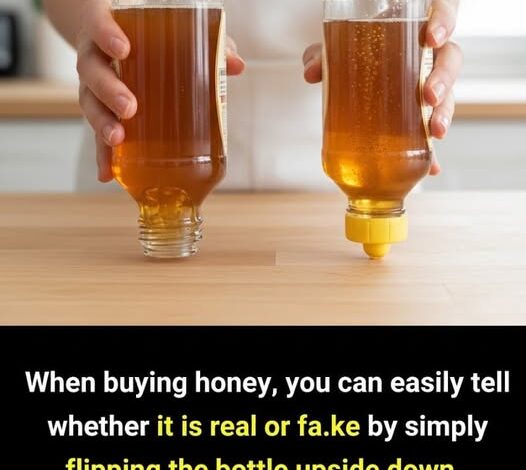
You may have come across a popular trick online that claims you can test honey by simply turning the bottle upside down. According to this idea, real honey should move slowly due to its thickness, while fake or diluted honey will flow quickly like syrup. While this method sounds simple and convincing, it’s not always a dependable way to judge quality.
The reasoning behind this test comes from the natural consistency of honey. Pure honey is generally dense and viscous, meaning it doesn’t move easily. But in reality, several factors can influence how honey behaves. Temperature is one of the biggest variables—when honey is warm, it becomes thinner and flows more easily, while cooler honey thickens and moves more slowly. So depending on the environment, even genuine honey can appear “fake” using this test.
In addition to temperature, the way honey is processed plays a major role in its texture. Raw honey, which is minimally processed, tends to be thicker and may even crystallize over time. On the other hand, commercial honey is often filtered and pasteurized, which removes particles like pollen and makes it smoother and more liquid. This can cause real honey to behave differently than expected during simple tests.
Even packaging can affect perception. The shape and size of the container, along with how much air is inside, can influence how quickly the honey appears to move. Because of all these variables, the upside-down bottle test is far from reliable and can easily lead to incorrect conclusions.
Another important point is that some imitation or adulterated honey products are specifically designed to mimic the look and consistency of real honey. Manufacturers may add sugars or syrups that closely replicate honey’s thickness, making it nearly impossible to distinguish using basic visual tricks alone.
If you’re looking for more dependable ways to assess honey, there are a few simple methods that can offer better clues. For example, placing a small drop of honey on your thumb can reveal its consistency—pure honey tends to stay in place and hold its shape, while diluted honey may spread or run. Similarly, when added to a glass of water, real honey often settles at the bottom rather than dissolving immediately, although even this test is not foolproof.
The most reliable approach, however, is to pay close attention to product labeling and sourcing. Look for honey that clearly states it is “raw,” “unfiltered,” or “pure,” and avoid products that list added sugars, corn syrup, or other sweeteners. Certifications and trusted brands can also provide reassurance about quality.
Another excellent option is to buy directly from local beekeepers or farmers’ markets. Locally sourced honey is often less processed and more transparent in origin, giving you greater confidence in what you’re consuming.
While quick tests and viral tips can be fun to try, they shouldn’t be your only method of judging honey. Being informed, reading labels carefully, and choosing trustworthy sources are far more effective ways to ensure you’re enjoying genuine honey with all its natural flavor and benefits—without being misled by clever imitations.