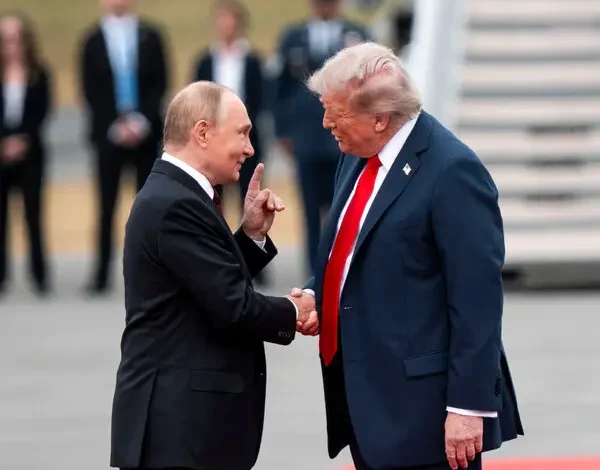
Greenland has unexpectedly become the center of a geopolitical conversation that blends climate change, military strategy, and global politics. Renewed comments from Donald Trump about the possibility of the United States gaining control over the island clash directly with Denmark’s firm position that Greenland remains under its sovereignty. At the same time, NATO faces the challenge of maintaining unity while strategic tensions grow in the Arctic region. For Russia, any sign that the United States might expand missile defense systems in the Arctic is not merely a diplomatic issue—it is seen as a direct threat to the credibility of its nuclear deterrent, which sits at the core of its national security strategy.
Beneath the public statements and political messaging lies a delicate and potentially dangerous balance. Military patrols overlap across Arctic air and sea routes, new bases are being discussed or expanded, and early-warning radar systems monitor activity in a region where misunderstandings can easily occur. In such an environment, routine military movements could be interpreted as hostile actions if signals are misread.
The concept sometimes referred to as a “Golden Dome” missile defense system—though still unclear in detail—highlights the underlying tension. To Washington, stronger defensive systems represent protection and strategic stability. To Moscow, they raise fears of encirclement and the weakening of its nuclear deterrent.
Whether Greenland ultimately becomes a point of confrontation or remains a carefully managed area of strategic competition will depend largely on the choices made by political leaders. Diplomacy and quiet negotiation may prove far more important than public political theater in a region where a single miscalculation could carry global consequences.