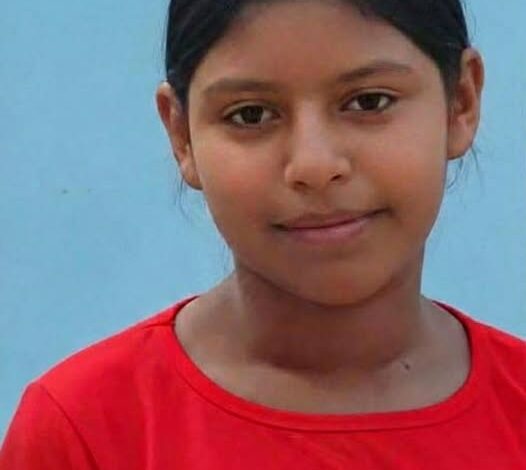
Perla’s last walk was meant to be forgettable.
A quick trip to buy candy. A simple errand. The kind of everyday moment that blends into the rhythm of ordinary life without leaving a trace. But instead of fading into routine, it has come to represent something far heavier—a rupture in the sense of safety families rely on, and a growing fear that even the most familiar spaces can no longer be trusted.
When her body was found in an abandoned lot near the Constitución de 1917 station, the shock spread far beyond her immediate neighborhood. What followed was not only grief, but recognition. People understood, almost instinctively, that while the ending was tragic, the beginning was painfully familiar.
A child steps outside.
A family assumes she will return.
That assumption is what has been broken.
In the days after the discovery, authorities acted quickly, announcing the arrest of four suspects. On the surface, it suggested progress—a sign that the case was moving forward. But for many, it felt incomplete. Arrests, while necessary, do not resolve the deeper unease that cases like this leave behind.
Questions began to surface, not just about what happened, but about everything surrounding it.
Could this have been prevented?
Were there missed warning signs?
Did the response come fast enough?
And perhaps most importantly—will this case be handled with the transparency and persistence needed to restore even a fraction of public trust?
These are not new questions.
They echo through past cases, through other communities, following a pattern that many now recognize too well: initial outrage, intense attention, official statements—and then, gradually, silence.
It is that silence people are pushing against.
Because Perla’s story is not being viewed in isolation. It is part of a broader, accumulating sense of vulnerability that has been building over time.
In many parts of Mexico, especially in areas that feel overlooked or underserved, safety is not something taken for granted. It is something negotiated daily. Parents create routines not just for convenience, but for protection—walking children to school, checking in constantly, limiting where and when they can go.
Even then, there are no guarantees.
Only precautions.
Perla’s story has made that reality impossible to ignore.
Near her home and around the metro station where her path ended, people have gathered—not only in protest, but in quiet remembrance. Candles line the pavement, their small flames flickering in the dark. Some signs carry anger, others sorrow. Many simply carry her name.
These moments are not loud, but they are powerful.
They are a refusal to let her be reduced to a statistic.
Her family, overwhelmed by grief, has asked for privacy. At the same time, they have made it clear that they do not want her story to disappear into a system that often forgets too quickly. That balance—between mourning privately and demanding justice publicly—has become part of the community’s response.
Because Perla is no longer just one child in one case.
She has become something more.
A reflection.
Parents see their own children in her. They imagine the same small trip, the same moment of trust, the same belief that everything will be okay. And in that reflection, fear becomes real—not distant or abstract, but immediate and personal.
That is why the reaction has not faded with the arrests.
If anything, it has grown stronger.
People are asking for more than accountability after tragedy. They are asking for prevention before it happens. Stronger systems for protecting children. Faster, more coordinated responses when someone goes missing. Clear communication from authorities—not just in crisis, but consistently.
At the center of these demands is a word that carries deep weight: impunity.
For many, the concern is not only that crimes occur, but that consequences are uneven, delayed, or incomplete. That perception shapes how people view the institutions meant to protect them. And once trust begins to erode, rebuilding it becomes far more difficult.
Perla’s case now stands at a critical intersection.
Between grief and justice.
Between public pressure and institutional response.
Between what has been revealed—and what still remains unclear.
But beyond the legal process, something else is unfolding.
A shift in how stories like hers are told.
Her name is being spoken not only in mourning, but in determination. Schools, advocacy groups, and community leaders are using her story as a call to action—pushing for changes that ensure no disappearance is treated lightly, and no case is allowed to fade into the background.
Because what makes this tragedy so deeply unsettling is not just how it ended.
It’s how easily it began.
There was no extraordinary circumstance. No warning that stood out.
Just a child stepping outside into a world that should have been safe.
That is what people are refusing to accept.
And that refusal carries weight.
Because long after the candles burn out and the headlines move on, the question will remain: will this be another story absorbed into a long history of unresolved pain, or will it become a turning point?
For now, Perla’s name carries both sorrow and expectation.
Sorrow for what was lost.
Expectation for what must change.
And a quiet, collective promise—that her story will not disappear, and that one day, the simple act of a child stepping outside will feel safe again—not because people hope it is, but because they know it is.