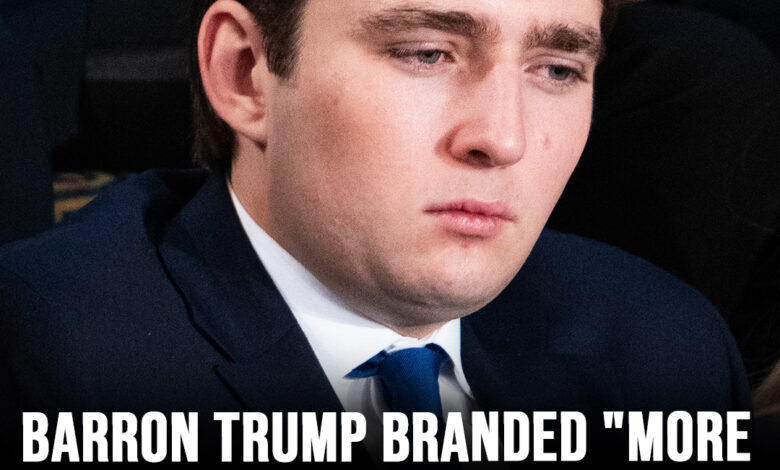
As the conflict involving Iran stretches into its second month, public attention has begun to drift away from battlefield developments and toward the personal lives of political leaders. With no clear resolution in sight, a growing segment of public discourse has focused on Barron Trump, the youngest son of former President Donald Trump. What began as scattered commentary online has evolved into a broader media conversation, with some commentators raising questions about privilege, civic duty, and expectations during times of war.
The issue gained visibility after several high-profile media segments highlighted the contrast between political leadership and personal sacrifice. MSNBC host Lawrence O’Donnell, among others, drew historical comparisons to past figures such as President Franklin D. Roosevelt—whose sons served in World War II—and Queen Elizabeth II, who contributed to the war effort as a young woman. These comparisons have fueled a wider debate about whether families connected to political power should be held to different—or higher—standards during national crises.
At the same time, social media has amplified the discussion. Hashtags like #SendBarron have circulated widely, reflecting frustration among some users about perceived inequalities, especially in scenarios where military service or potential conscription becomes part of national conversation. Critics argue that visible participation from prominent families could symbolize unity and shared sacrifice, while others see such expectations as misplaced or unfair.
However, the situation is more complex than online narratives often suggest. In the United States, military service—whether voluntary or through selective service—follows specific legal, medical, and logistical criteria. While Barron Trump is within the age range typically associated with draft eligibility, there are numerous factors that determine actual service, including education status, health, and physical requirements. Height, for example, can limit eligibility for certain roles, particularly those involving confined equipment such as aircraft or armored vehicles, though it does not automatically disqualify someone from all forms of service.
Supporters of Barron argue that he is a private individual who has not held public office and should not be subjected to political scrutiny or expectations tied to his father’s role. They view the criticism as an unfair extension of partisan conflict into the life of someone who has largely remained out of the public spotlight. On the other hand, critics contend that moments of national hardship often reshape expectations of leadership and accountability, including symbolic gestures from those connected to power.
Ultimately, the debate reflects a broader tension within society—between ideals of shared sacrifice and the realities of personal circumstance, privacy, and institutional rules. As the geopolitical situation continues to unfold, conversations like these highlight how modern conflicts are not only fought on the ground, but also within public opinion, media narratives, and differing views of responsibility.