The air in Oakhaven had grown thick with worry, as if the entire valley was holding its breath.
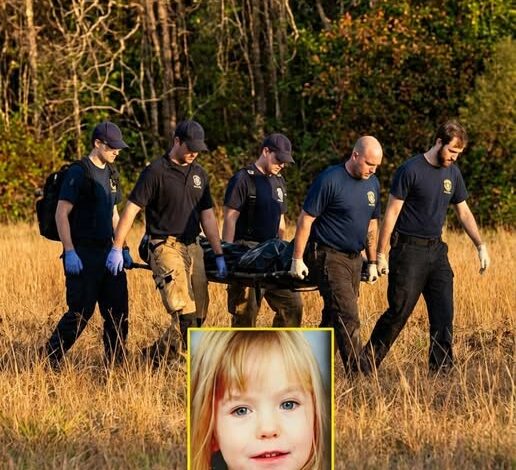
For six long days, the town moved in a strange rhythm—part urgency, part quiet dread. Search teams combed through the dense woods that surrounded the community, their flashlights cutting through early morning fog, their voices calling a name that seemed to echo endlessly through the trees.
Maya.
The golden-haired eight-year-old had vanished from her own backyard, and the story felt painfully familiar. It followed the pattern people feared most—the kind replayed in headlines and documentaries. A child disappears. A gate left open. A moment of distraction. Somewhere, a predator waiting.
The town didn’t hesitate.
Businesses closed without question. People left their jobs, their routines, their own lives on pause to help. Volunteers moved through ravines, across fields, and deep into the forest, driven by a shared determination to bring her home. Neighbors who barely spoke before now stood shoulder to shoulder, united by a single purpose.
At the center of it all was Elena, Maya’s mother.
Each night, she stood before cameras, her face pale, her voice trembling as she begged for her daughter’s safe return. Her grief felt raw, almost unbearable to witness. She looked like a woman unraveling in real time, clinging to hope with everything she had left.
The town grieved with her.
Then, on the sixth day, everything changed.
Maya was found.
The news spread like wildfire—she was alive. Discovered in a remote, abandoned ranger’s cabin nearly ten miles into the woods. She was weak, frightened, and hungry, but physically unharmed.
Relief exploded across Oakhaven.
People cried openly in the streets. Church bells rang. Strangers hugged one another. After days of fear, it felt like a miracle had been delivered back to them.
The nightmare was over.
Or so they believed.
As investigators began piecing together the details of Maya’s disappearance, something didn’t sit right.
The first inconsistencies were subtle—small gaps in the timeline, details that didn’t align. Then came the discovery that changed everything: the cabin where Maya was found wasn’t random.
It was connected to Elena’s extended family.
Worse, it had already been “searched” days earlier—by people close to her.
The sense of relief that had filled the town began to shift, slowly at first, then all at once.
Forty-eight hours after Maya’s rescue, the lead detective stepped forward to address the public.
There would be no search for a stranger.
There was no kidnapper.
There never had been.
The truth was something far more disturbing.
Maya’s disappearance had been staged.
Elena had driven her daughter to the cabin herself, presenting it as a “secret game.” She left her there with food, instructions, and the promise that she would return. Everything that followed—the tears, the televised pleas, the desperate performances—had been carefully constructed.
What the town had believed to be a mother’s grief was, in reality, a performance.
A calculated one.
The reaction was immediate and overwhelming.
Shock turned into anger. Compassion twisted into something sharper—betrayal.
The same neighbors who had spent sleepless nights searching the woods now struggled to process what they had been part of. They had given their time, their energy, and their hearts to a situation built on deception.
It wasn’t just a lie.
It felt like a violation.
Meals left at Elena’s doorstep, comforting words, prayers whispered into the night—all of it had been used as part of a narrative that wasn’t real.
The town didn’t just lose trust in one person.
It lost something deeper.
For many, the hardest part to understand was not the act itself, but what it revealed.
People are taught to fear the unknown—the stranger in the dark, the unseen threat lurking beyond the edge of safety. That fear is easier to process. It has shape. It has distance.
But this?
This was something else entirely.
The danger had not come from outside the community.
It had come from within a home—from the one person meant to protect.
And that realization cut far deeper.
Maya was quickly placed into protective care.
Physically, she had survived without injury. But the emotional damage was far more complex. The person she trusted most had turned her into part of a story she didn’t fully understand—a situation that blurred the line between love, manipulation, and control.
Her recovery would not be immediate.
It would take time—years, likely—to rebuild a sense of safety and trust.
In Oakhaven, the noise of the search was replaced by a heavy silence.
People gathered in small groups, not to organize rescues, but to talk. To try to understand. Conversations shifted from “where could she be?” to “how did we not see this coming?”
There was a growing awareness that struggles don’t always show themselves openly. That sometimes, beneath ordinary lives, there are fractures no one notices until they break apart completely.
The fear in the town changed.
It was no longer about unlocked doors or dark woods.
It became a quieter, more unsettling question: what lies beneath the surface of the people we think we know?
As legal proceedings against Elena began, the media slowly moved on, chasing the next story.
But Oakhaven didn’t have that luxury.
The town was left to rebuild—not just routines, but trust. To find a balance between compassion and caution. To remain a community that cares, without becoming one that is easily deceived.
And at the center of it all was Maya.
A child who would now have to grow up carrying a story she never chose.
The woods have gone quiet again.
The search lights are gone. The voices have faded.
But something lingers.
A reminder that not all danger announces itself.
That not all stories are what they seem.
And that sometimes, the most unsettling truths are spoken not by strangers—but in voices we trust the most.