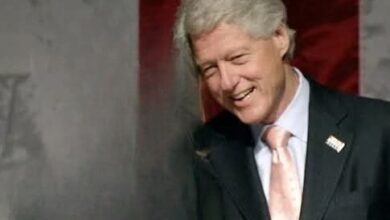
The interview began with the smooth, conversational tone typical of daytime television. Kelly Ripa, widely recognized for her approachable style and ability to engage viewers from all walks of life, initially guided the discussion through familiar topics. The exchange appeared relaxed and friendly—until the conversation shifted toward questions of character, public accountability, and ongoing scrutiny surrounding past legal records.
As the topic moved into more sensitive territory, viewers noticed a visible change in the atmosphere of the studio. The tension escalated when the discussion turned to historical associations that have repeatedly resurfaced in public debate, including references to the late financier Jeffrey Epstein. The shift transformed what had started as a light, lifestyle-style interview into a much more serious and confrontational exchange.
Rather than redirecting the conversation in the typical political manner, the president directly challenged the premise of the questioning. Trump firmly repeated his longstanding denial of any wrongdoing and reiterated that he had cut off contact with Epstein years before the financier’s later legal troubles became widely known. The moment quickly became less about factual details and more about control of the narrative. What unfolded on-air was not simply a disagreement but a clash over how the issue should be framed in front of a national audience.
Despite the tension, Ripa maintained a steady and professional demeanor throughout the exchange. Media commentators later noted that she resisted backing away from the question while still keeping the conversation measured. By calmly returning to the broader issue of transparency and accountability, she demonstrated how the role of television hosts has evolved in recent years. Interviews once considered purely entertainment-focused now frequently cross into areas traditionally associated with political journalism.
The reaction online was immediate and deeply divided. Clips of the moment circulated widely across social media platforms within minutes, with viewers dissecting every pause, expression, and response. Supporters of the president argued that the line of questioning reflected hostile or sensationalist journalism, praising his willingness to confront it directly. Critics, on the other hand, viewed the confrontation as evidence of the pressure journalists face when questioning powerful political figures.
Beyond the viral clips and commentary, the interview has sparked a broader discussion about the changing nature of media appearances in modern politics. Strategists and analysts are increasingly weighing the advantages and risks of placing political leaders on entertainment-based platforms. These appearances allow leaders to reach audiences that may not follow traditional news outlets, but they also create unpredictable environments where conversations can quickly move into controversial territory.
The resurfacing of past associations also highlights how political reputations remain shaped by historical records. Even years after events have passed, names and connections can re-emerge in public conversation, fueling renewed debate. This dynamic often places both journalists and public figures in a delicate position—balancing the public’s demand for answers with the complexities of interpreting historical context.
For many observers, the encounter also illustrates how the boundary between entertainment media and political accountability has blurred. Interviews once intended to showcase personal stories or lighter topics now frequently become moments of real scrutiny. Hosts who were once expected to keep conversations upbeat increasingly find themselves navigating difficult questions that carry national implications.
The long-term significance of the interview may lie less in the specific exchange itself and more in what it represents for modern communication. The moment has encouraged journalists and television personalities to feel more comfortable asking challenging questions, even in formats traditionally viewed as informal. At the same time, it reinforces the defensive posture many political teams adopt when dealing with unpredictable interview environments.
In a broader sense, the episode reflects the complicated relationship between media, politics, and public expectations. Audiences today are accustomed to seeing conversations unfold live and unfiltered, and that immediacy often intensifies moments of conflict. When those tensions play out in front of millions of viewers, they can quickly shape the national conversation.
Looking ahead, the ripple effects of the interview may influence how future media appearances are planned and conducted. Both political figures and broadcasters are likely to reassess the balance between candid discussion and controlled messaging. Some commentators have called for a renewed focus on respectful but direct dialogue—one that allows difficult questions to be asked without turning interviews into confrontations.
Ultimately, the exchange served as a reminder that public leadership is judged not only by policy decisions but also by how individuals respond when placed under scrutiny. For viewers who tuned in expecting a routine daytime conversation, the interview offered something very different: a revealing look at the complex dynamics between power, media, and accountability in the modern era.
In that sense, the moment may be remembered as more than a brief television controversy. It reflects a broader shift in American media culture, where even the most casual platforms can suddenly become stages for serious political debate.