Billionaire Susan Dell’s ‘Creepy’ White House Moment With President Donald Trump Goes Viral as $6.25 Billion Child Savings Pledge Is Overshadowed by Social Media Speculation Over Her Appearance and Alleged Cosmetic Procedures During Press Conference Announcement

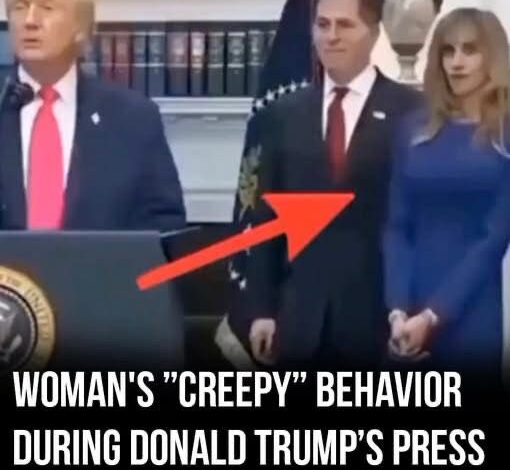
A recently resurfaced clip from a White House press conference has sparked intense discussion online—but not for the reasons many might expect. What began as a major announcement about billions of dollars in charitable funding quickly shifted into a viral debate about facial expressions, appearance, and social media speculation. At the center of the attention was Susan Dell, a philanthropist who appeared alongside President Donald Trump during the event.
A Major Philanthropic Announcement
In December, Susan Dell and her husband, technology entrepreneur Michael Dell, attended a White House event to announce a significant philanthropic commitment. The couple pledged $6.25 billion toward a program designed to help millions of American children build long-term savings accounts.
The initiative was connected to a legislative proposal referred to as the “One Big Beautiful Bill,” which aims to expand economic opportunity by encouraging structured savings programs for young people across the country. If implemented fully, the plan could support investment accounts for more than 25 million children, providing them with financial resources intended to grow over time and promote long-term stability.
By any measure, the pledge represented one of the largest private contributions connected to a federal financial initiative.
However, online conversation soon shifted away from the policy announcement.
A Moment That Went Viral
Short clips from the press conference began circulating across social media platforms. Instead of focusing on the details of the funding or its potential impact, many commenters zeroed in on Susan Dell’s facial expressions during the event.
Some users described her appearance as unusual or “wide-eyed,” while others posted humorous or exaggerated interpretations of what they believed they saw. Memes and edited screenshots began spreading quickly, and the discussion escalated as more people shared the video.
Within hours, the viral conversation had largely moved away from the philanthropic announcement and toward speculation about Dell’s appearance.
Who Is Susan Dell?
Amid the online commentary, many people unfamiliar with Susan Dell began asking who she was.
Dell is the co-founder and chair of the Michael & Susan Dell Foundation, a global philanthropic organization that has directed billions of dollars toward initiatives in education, healthcare, and economic opportunity. The foundation has supported projects ranging from improving public school systems to expanding healthcare access for underserved communities.
For decades, the organization has funded programs focused on helping families improve financial stability and expand opportunities for children.
Despite the scale of that work, Susan Dell has generally maintained a relatively low public profile compared with other high-profile philanthropists, which may explain why some viewers were unfamiliar with her when the clip began circulating online.
Speculation About Cosmetic Procedures
As online discussion intensified, some media outlets asked medical professionals to comment on whether cosmetic procedures might explain what viewers perceived as unusual facial expressions.
Several doctors offered general observations based on publicly available images, mentioning that certain cosmetic treatments—such as Botox, dermal fillers, or facial surgery—can sometimes affect facial movement or expression. They emphasized, however, that they had not examined Dell personally, and their remarks were speculative rather than diagnostic.
Without direct confirmation, such commentary remains conjecture.
The Speed of Viral Narratives
The situation highlights how quickly public attention can shift in the age of viral media.
A press conference intended to highlight a multi-billion-dollar philanthropic initiative affecting millions of children was quickly overshadowed by commentary about a brief visual moment captured on camera.
In earlier decades, press events were typically summarized through written reports or short television segments focused primarily on policy announcements. Today, high-definition video and social media allow viewers to replay and analyze tiny moments—sometimes giving them disproportionate attention.
Algorithms that prioritize emotional reactions, humor, or surprise can amplify those moments even further.
The Scrutiny Faced by Women in Public Life
Observers also noted that women who appear in public roles often face heightened scrutiny over their appearance.
Whether they are politicians, executives, philanthropists, or public figures connected to powerful institutions, women frequently encounter commentary about clothing, aging, cosmetic choices, or facial expressions. Men appearing in similar settings are more often discussed in terms of policy, strategy, or business decisions.
Social media can intensify this dynamic, turning fleeting moments into widely shared memes or debates.
Philanthropy and Public Attention
Ironically, the $6.25 billion pledge announced during the event could have far-reaching effects if implemented as planned. Programs aimed at establishing investment accounts for children are designed to help families build savings over time, potentially supporting education, entrepreneurship, or other opportunities in adulthood.
Supporters argue that early investment programs can teach financial literacy while helping reduce long-term economic inequality.
Yet engagement data from social media suggests that the viral conversation about Dell’s appearance received far more attention than the details of the funding initiative itself.
Why Small Moments Go Viral
Psychologists sometimes refer to the “uncanny valley” effect, a concept describing how subtle differences in facial expressions or appearance can create a sense of discomfort or curiosity. When those moments are captured in still images or short clips, they can appear more unusual than they do in real time.
Lighting, camera angles, momentary facial tension, or even the act of concentrating while standing in front of cameras can change how someone appears on screen.
Once a narrative begins spreading online—especially if framed humorously or dramatically—it often reinforces itself through repetition.
A Broader Reflection on Public Discourse
The episode illustrates several broader trends shaping modern media and public discussion:
- Viral clips can overshadow major policy announcements
- Public figures are often judged instantly based on appearance
- Online algorithms reward emotional reactions more than detailed analysis
- Context can quickly disappear once a narrative gains traction
In this case, a press conference announcing billions of dollars in philanthropic support became widely discussed primarily because of a few seconds of video.
The Lasting Impact
While social media discussions will likely fade, the philanthropic commitment itself remains significant. If the proposed program moves forward, millions of children could benefit from long-term savings accounts designed to grow as they age.
Long after the viral memes disappear, the initiative may continue operating quietly in the background.
Ultimately, the moment highlights the strange dual reality of modern public life: meaningful policy decisions and viral distractions often unfold at the same time.
For some observers, the story became about online speculation and appearance.
For others, it remained about a major philanthropic investment.
And for many, it served as another reminder that in the age of viral media, even a historic announcement can be overshadowed by a single freeze-frame shared across the internet.