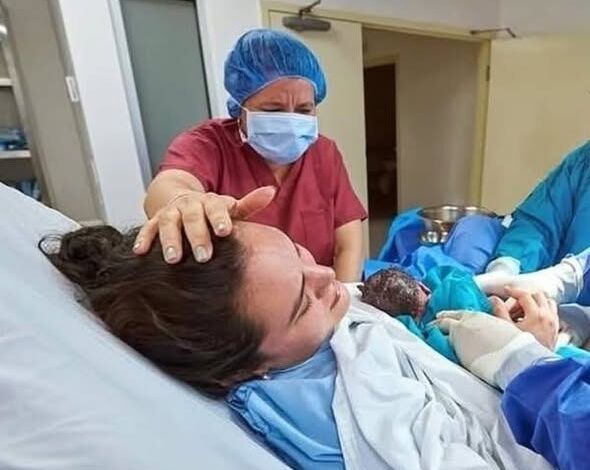
The fight for survival began in a moment no parent ever expects. When Lennox was born at just 24 weeks of pregnancy, weighing only 1.8 pounds, the fragile reality of life became clear to everyone around him. Doctors struggled to understand the complications that led to his extremely early arrival, but one thing was certain—immediate medical intervention was his only chance.
Lilly, his mother, watched as doctors carefully placed her tiny newborn into a plastic wrap to preserve heat and moisture. It was a necessary step for babies born so early, whose delicate skin is not yet ready to face the outside world.
Lennox’s tiny chest rose and fell beneath a complex network of tubes and machines. High-frequency ventilators helped him breathe while monitors beeped constantly beside his incubator. Every sound seemed to carry the same question: would he survive long enough to one day go home?
While Lilly stayed almost constantly at his bedside in the neonatal intensive care unit (NICU), Brodie focused on keeping life stable for their three other children. He handled school routines, meals, and bedtime stories, doing everything he could to maintain a sense of normalcy while their youngest child fought for every breath.
The Long Journey Through the NICU
For 111 days, the family’s world revolved around hospital hallways and whispered updates from doctors. Each visit began with careful hand scrubbing before touching Lennox’s fragile skin.
The medical team monitored him closely, checking his vital signs around the clock. Babies born this early face serious risks, including brain bleeding, lung complications, and infections. Every day required careful attention, quick decisions, and constant hope.
| Milestone | Medical Condition | Family’s Response |
|---|---|---|
| Birth (24 Weeks) | 1.8 lbs, unstable breathing | Shock and fear |
| First Critical Hours | Stabilized with intensive care | Parents remain constantly at bedside |
| Day 50 | Gradual weight gain, fewer tubes | Growing hope |
| Day 111 | 9 pounds, stable health | Finally able to go home |
Life in the NICU teaches families difficult truths. Progress often comes slowly, measured in tiny victories—a stronger heartbeat, a little weight gain, or the first time a tube can be removed.
Lilly’s careful attention and constant presence became an important part of Lennox’s care. She asked questions, followed every update closely, and trusted her instincts as a mother. In a place where every gram of weight and every breath mattered, even the smallest improvements felt like huge steps forward.
Slowly Turning Toward Hope
Over time, the atmosphere in the hospital began to change. As Lennox grew stronger, some of the medical tubes were removed. His lungs improved, and his weight steadily increased.
The fear that had dominated the early days slowly gave way to cautious optimism. Each milestone brought the family one step closer to the moment they had been hoping for—the day Lennox could finally leave the hospital.
Meanwhile, Brodie continued to support the family from home, making sure their other children felt loved and secure despite the difficult circumstances.
A Nine-Pound Miracle
After 111 days in the NICU, Lennox was finally ready to go home. The tiny 1.8-pound baby who once struggled to survive had grown into a healthy nine-pound infant.
Now the small moments at home mean everything—his sleepy smiles, soft sounds, and tiny hands reaching for toys. Each ordinary moment feels extraordinary after the long and uncertain journey they endured.
Lennox’s story is a powerful reminder of the strength of modern medicine, the dedication of medical teams, and the determination of families who refuse to give up hope.
For Lilly and Brodie, their son’s survival represents something even greater: resilience, love, and the incredible power of perseverance.