Sometimes it begins in the most ordinary moment.
You might be helping your child get ready for school, braiding their hair after a bath, or simply sitting beside them while gently brushing through soft strands. Then suddenly, you notice something unusual.
A tiny dark speck.
And it moves.
Your heart jumps. Your mind immediately fills with questions.
Is that a tick?
Could it be lice?
Is it dangerous?
How long has it been there?
Did it spread to others?
For many parents, discovering an insect in their child’s hair can trigger immediate anxiety. It feels unsettling and deeply personal. Yet the reassuring reality is this:
Most scalp insects are manageable.
Most situations are not urgent.
And most parents handle them successfully once they understand what they’re dealing with.
This guide is designed to help you stay calm, identify what you’re seeing, and respond confidently.
Take a breath. Let’s go step by step.
Why Finding a Bug in Hair Feels So Disturbing
The scalp feels like sensitive territory. It’s close to the face and head, part of someone’s appearance and identity. When an unfamiliar insect appears there, it can feel alarming.
Part of that reaction is biological. Humans are wired to respond quickly to possible parasites or threats. That instinct is meant to protect us.
But in everyday life, most insects found in hair fall into a few predictable categories. Once you understand those possibilities, the situation becomes much easier to manage.
Before rushing for treatments or assuming the worst, the most helpful first step is identifying the insect.
Common Possibilities
When a bug appears in a child’s hair, it usually falls into one of three groups:
- Head lice
- Ticks
- Random outdoor insects
Each behaves differently and requires a different response.
Head Lice
Head lice are among the most common culprits.
Appearance
- Very small, about the size of a sesame seed
- Pale gray, tan, or light brown
- Wingless insects that crawl quickly
- Grip hair shafts tightly
- Cannot jump or fly
The Key Sign: Eggs (Nits)
Nits are tiny eggs attached firmly to hair strands. They are often found:
- Behind the ears
- At the back of the neck
Unlike dandruff, nits stay stuck to the hair and don’t easily brush away.
If you see several eggs attached to hairs in the same area, lice are likely present.
Current Treatment Approach
Many pediatric specialists now recommend manual removal through wet combing, since some lice populations have developed resistance to chemical treatments.
Wet combing involves using conditioner and a fine metal comb to remove lice and eggs systematically. It’s safe and effective when done consistently.
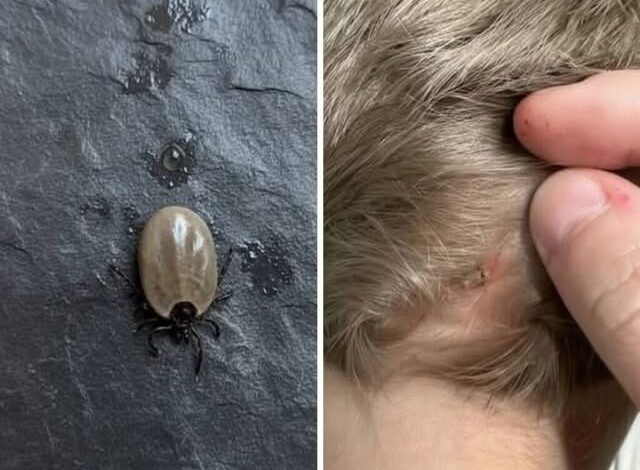
Ticks
Ticks look very different from lice.
Appearance
- Oval and flat before feeding
- Dark brown or black
- Eight legs
- Attach firmly to skin rather than moving through hair
Ticks can carry diseases like Lyme disease and other regional infections. While most bites do not lead to illness, proper removal is important.
Accidental Insects
Sometimes the insect isn’t a parasite at all.
Children may pick up small bugs while playing outdoors or lying on carpets or grass. These insects may include tiny beetles, ants, or other harmless visitors.
Signs it’s just a temporary hitchhiker:
- Only one bug present
- No eggs attached to hair
- No scalp irritation
- No additional insects nearby
In these cases, simply removing the insect and washing the hair is usually enough.
Why Itching Isn’t Always a Reliable Sign
Many people assume lice always cause immediate itching. That’s not necessarily true.
The itching actually comes from an allergic reaction to lice saliva. That reaction can take time to develop.
Some children may carry lice for days or weeks without scratching at all.
Because of this, routine scalp checks are often more useful than waiting for symptoms.
What To Do Immediately
If you notice an insect, stay calm and follow three simple steps.
1. Stay Calm
Children react strongly to their parents’ emotions. If you remain calm, they will too.
Use reassuring language such as:
“Let’s take a closer look.”
Avoid dramatic reactions that might make them anxious or embarrassed.
2. Remove the Insect Safely
- If it’s crawling: use a tissue or tweezers and place it in a container.
- If it’s attached (possible tick): use fine tweezers to grasp it close to the scalp and pull upward steadily.
After removal, clean the area with soap and water.
3. Check the Scalp
Under bright light, examine areas where insects often hide:
- Behind the ears
- Along the neckline
- On the crown of the head
Look for eggs, additional insects, redness, or irritation.
Treating Lice Safely
Wet Combing Method
- Apply conditioner to damp hair.
- Divide hair into small sections.
- Comb from the scalp to the ends using a metal nit comb.
- Wipe the comb after each pass.
- Repeat every few days for about two weeks.
Chemical Treatments
If you choose medicated treatments:
- Follow instructions carefully.
- Avoid mixing different products.
- Ask a pediatrician if you’re unsure which option is best.
Aftercare for Tick Bites
If a tick was attached:
- Save it in alcohol for identification.
- Note the date and location of the bite.
- Watch for symptoms such as rash, fever, fatigue, or joint pain.
Contact a healthcare provider if any symptoms appear.
Cleaning Your Home
Fortunately, extensive cleaning is rarely necessary.
Simple steps are enough:
- Wash pillowcases and recently worn hats.
- Clean bedding on a warm cycle.
There’s no need for extreme measures like fumigation or bagging every toy.
Addressing Social Myths
Many misconceptions surround lice.
Myth: Lice mean poor hygiene.
Reality: Lice actually cling more easily to clean hair.
Myth: Only certain families get lice.
Reality: Lice spread through normal childhood contact.
Myth: Lice indicate bad parenting.
Reality: They are a common part of school-age life.
Talking to Your Child
Reassure them calmly:
“This happens to many kids.”
“It’s not your fault.”
“We’ll fix it together.”
Your confidence will help prevent embarrassment or fear.
Prevention Without Anxiety
Simple habits can help reduce risk:
- Check hair regularly
- Tie long hair back during school
- Reduce direct head-to-head contact
- Maintain normal hygiene routines
The goal is awareness—not worry.
When To Seek Medical Advice
Contact a healthcare provider if:
- A tick bite becomes inflamed
- Fever or rash appears
- Lice remain after repeated treatment
Most situations resolve without complications.
A Helpful Perspective
Finding an insect in your child’s hair can feel overwhelming at first. But remember:
You noticed it.
You responded calmly.
You learned how to handle it.
These situations are simply part of childhood—like scraped knees or colds.
Handling them with patience teaches your child resilience.
Final Thought
A tiny moving speck can cause a surprising amount of worry. But most scalp insects are:
- Temporary
- Treatable
- Completely manageable
With calm observation, a good comb, and clear information, you can handle the situation confidently.
Sometimes all it takes is a steady approach—and the reassurance that you’re already doing exactly what your child needs.