Breaking News: Thirteen Nations Form Military Coalition Amid Escalating Global Tensions

Behind the carefully chosen phrase “defensive coordination” stands a far more complicated reality—one shaped not by idealism, but by the quiet calculations of governments that understand the cost of being alone in a dangerous moment. The coalition now forming is not built on perfect trust or shared history. In fact, many of the thirteen governments involved carry decades of disagreements, territorial disputes, economic rivalries, and political suspicion. Yet despite those fractures, they have reached the same conclusion: the strategic environment has changed enough that standing apart is now riskier than standing together.
In public statements, officials emphasize stability, cooperation, and deterrence. They speak of joint planning, intelligence sharing, and defensive readiness. But beneath the formal language is an unmistakable message about power and survival. Each member of the coalition understands that the next crisis—whether sparked by territorial tension, cyber conflict, or military escalation—could unfold faster than diplomacy alone can contain. In that context, unity becomes less about friendship and more about insurance.
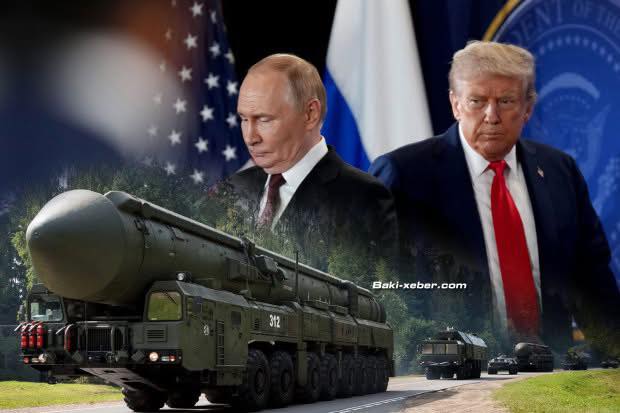
The carefully staged photographs released after high-level meetings capture this tension. Leaders sit side by side with expressions that reveal little, surrounded by advisors and military officials who understand the stakes behind every word. Maps, briefing documents, and threat assessments fill the conference tables. Outside the meeting rooms, cameras record images of missile systems, naval patrols, and military exercises—visual signals meant to communicate resolve without firing a single shot.
These images are not necessarily promises of conflict. More often, they are warnings designed to prevent it. By demonstrating capability and coordination, the coalition hopes to send a clear signal to potential adversaries: any attempt to exploit division will face a unified response. Deterrence, after all, depends not only on strength but on the perception that strength will be used if necessary.
Still, deterrence is a delicate balance. History shows that alliances meant to prevent war can sometimes create the very tensions they were meant to avoid. When one side strengthens its defenses, others often interpret the move as preparation for aggression. Each new agreement, joint exercise, or deployment can shift the strategic landscape in ways that force rival powers to respond with their own countermeasures.
Diplomats understand this dynamic well. In capitals around the world, foreign ministers and national security advisors are working through long nights, holding emergency consultations and quiet negotiations aimed at preventing miscalculation. Phone lines between governments remain active well past midnight, with officials carefully choosing their words to avoid statements that could escalate rhetoric into something more dangerous.
The coalition itself is far from simple. The thirteen participating governments bring different priorities, political systems, and domestic pressures to the table. Some face elections at home that make displays of strength politically necessary. Others worry about economic stability and the risk that prolonged tension could disrupt trade routes, energy supplies, or financial markets. A few members remember past conflicts too vividly to ignore the warning signs appearing again on the geopolitical horizon.
Despite these differences, a shared sense of vulnerability has proven stronger than old divisions. Intelligence assessments circulating among member states describe a world where crises can ignite quickly and spread across multiple domains—military, economic, cyber, and informational. A conflict that once might have remained regional could now ripple outward through alliances, supply chains, and digital networks.
For that reason, coalition planners are focusing not only on military coordination but also on resilience. Discussions include protecting critical infrastructure, securing communication networks, and ensuring that economic pressure cannot easily fracture the partnership. The idea is to create a framework where each member knows that support will extend beyond symbolic statements if tensions rise.
But unity, however necessary, also sends signals beyond the coalition itself. Other governments are watching closely, trying to determine whether this new alignment represents a temporary response to a specific crisis or the early shape of a broader geopolitical shift. Analysts debate whether the alliance will stabilize the region by discouraging aggression—or intensify competition by pushing rival powers to deepen their own partnerships.
Every alliance redraws strategic boundaries. What one group views as a defensive measure, another may interpret as an attempt to reshape the balance of power. The result is a landscape where caution and suspicion coexist, and where even routine military exercises can trigger alarm in neighboring states.
That is why so much effort is now being invested in diplomacy alongside deterrence. Coalition leaders know that military coordination alone cannot guarantee stability. They must also maintain open channels with those outside the alliance, reassuring them that the purpose of cooperation is to prevent conflict rather than provoke it.
In many ways, the current moment reflects a familiar pattern in international politics. Periods of uncertainty often lead nations to seek safety in numbers, forming partnerships that might have seemed unlikely only a few years earlier. These arrangements can serve as stabilizing forces, creating clear expectations about how countries will respond to threats. But they also introduce new complexities, as each commitment ties the security of one nation to the decisions of another.
For ordinary citizens watching events unfold through headlines and television broadcasts, the situation can appear both distant and unsettling. Images of missile systems, warships, and military briefings evoke memories of past crises when the world stood dangerously close to confrontation. Yet behind those images is also a quieter effort to ensure that such moments never escalate beyond control.
The coalition’s strategy ultimately rests on a simple but fragile principle: that the fear of catastrophic consequences will continue to outweigh the temptation to test the limits of power. As long as that calculation holds, displays of strength can serve their intended purpose—preventing conflict rather than triggering it.
For now, the world remains suspended in a narrow space between deterrence and disaster. Governments are maneuvering carefully, aware that every decision carries implications far beyond their own borders. Each statement, each deployment, each diplomatic exchange becomes part of a larger signal sent across an increasingly tense international landscape.
Whether this coalition will succeed in stabilizing that landscape remains uncertain. Much will depend on restraint—on the willingness of leaders on all sides to recognize the difference between demonstrating resolve and crossing the threshold into irreversible escalation.
In the end, the thirteen governments standing together today are not simply forming an alliance. They are participating in a broader effort to manage fear in an era when the consequences of miscalculation have never been greater. Their unity reflects a recognition shared quietly across the halls of power: in the next crisis, isolation could be the most dangerous position of all.