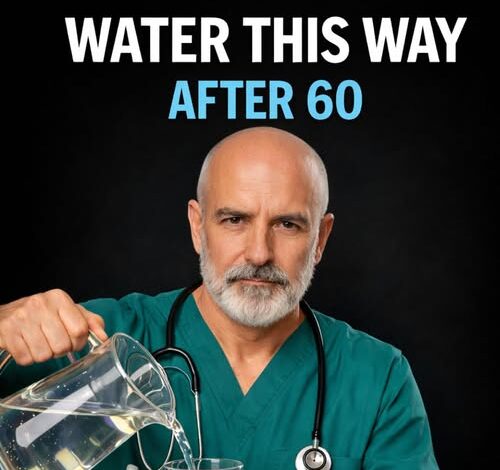
As people move into their sixties and beyond, many health experts emphasize that hydration remains essential—but the body’s needs and responses begin to change with age. While drinking water is often considered one of the simplest habits for maintaining health, cardiologists and geriatric specialists say the way we hydrate later in life deserves a more thoughtful approach.
Aging affects several systems involved in fluid balance. Blood vessels gradually lose some elasticity, kidney function may decline slightly over time, and the heart can become more sensitive to sudden changes in blood volume or electrolyte levels. Because of these changes, hydration after 60 is not just about how much water you drink, but also how and when you drink it.
Avoid Extremely Cold Water
One recommendation often mentioned by specialists is to avoid drinking very cold or ice-cold water, especially immediately after exercise or exposure to heat. In some cases, extremely cold fluids can stimulate the vagus nerve, which influences heart rate and blood pressure.
For older adults, a sudden drop in heart rate or temporary blood pressure changes may cause dizziness or discomfort. Drinking room-temperature or slightly cool water is generally easier for the body to handle.
Drink Gradually Instead of All at Once
Another common issue is drinking large amounts of water quickly after realizing you have not hydrated enough. Consuming excessive fluid in a short period can place extra strain on the kidneys and circulatory system.
Instead, experts recommend small, consistent amounts throughout the day. Regular sipping allows the body to absorb fluids more efficiently and helps maintain steady hydration levels.
Limit Large Amounts Before Bed
Nighttime hydration habits also become important with age. Hormonal changes often make nighttime urination more frequent for older adults. Drinking a lot of water right before bed can disrupt sleep and increase the risk of falls when getting up during the night.
Many doctors suggest reducing fluid intake about two hours before bedtime, while still allowing small sips if needed.
Don’t Rely Only on Thirst
As people age, the body’s thirst signal becomes less sensitive. This means dehydration can develop before someone even feels thirsty. Because of this, older adults benefit from establishing a routine—such as drinking water at regular intervals throughout the day.
Staying consistently hydrated helps maintain healthy circulation and supports normal blood pressure levels.
Consider Mineral Balance
Some cardiologists also note that extremely purified or demineralized water may lack naturally occurring minerals like magnesium and potassium. These minerals play a role in muscle and nerve function, including the heart’s rhythm.
While purified water is safe, maintaining a balanced diet that provides essential electrolytes is important for overall cardiovascular health.
Pay Attention to Timing With Meals
Drinking very large quantities of water during meals may dilute stomach acids slightly and can contribute to digestive discomfort in some individuals. A common recommendation is to drink fluids about 20–30 minutes before eating and then sip lightly during meals if needed.
A Smarter Hydration Routine
The key message from health professionals is not to drink less water—but to hydrate more thoughtfully. Regular intake, moderate temperatures, and attention to timing can help the body process fluids more comfortably.
For adults over 60, these small adjustments can support heart health, kidney function, and overall well-being. With consistent habits, hydration remains one of the simplest and most powerful tools for maintaining vitality and health later in life.