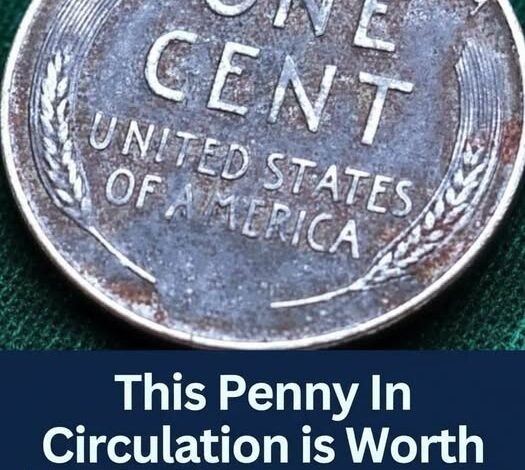
A simple jar of loose coins sitting on a shelf may seem unremarkable at first glance. Many people treat spare change as little more than clutter—something to be dropped into a container and forgotten until it’s time to roll it up or feed it into a coin-counting machine. Yet for those who take a closer look, that ordinary jar can become a small gateway into history. Every coin carries a story: where it was minted, the era in which it circulated, and sometimes the unusual circumstances that shaped its design or composition.
Throughout history, coins have often reflected the challenges and priorities of their time. During periods of war or economic strain, governments sometimes altered the metals used in coin production due to shortages of key materials. For example, in the United States during World War II, copper was urgently needed for military equipment. As a result, pennies produced in 1943 were made from zinc-coated steel instead of the usual copper alloy. These so-called “steel cents” stand out immediately because of their silver color, and they remain a fascinating reminder of how global events can influence even the smallest everyday objects.
Changes in coin design can also mark important historical moments. Over the decades, the images and inscriptions on coins have evolved to reflect national values, political shifts, and commemorative events. A redesign might celebrate an anniversary, honor a historical figure, or symbolize a cultural milestone. To someone casually spending change, these details might go unnoticed, but to collectors or curious observers, they reveal layers of history embedded in metal.
Another feature that often captures attention is the mint mark, a small letter indicating where a coin was produced. In the United States, major mint facilities have historically included cities such as Philadelphia, Denver, and San Francisco. Occasionally, certain mint marks appear only briefly or during limited production periods. When that happens, coins from those runs can become particularly interesting to collectors because they represent a smaller slice of history.
However, the excitement of coin collecting is not always about discovering something worth a large amount of money. While rare coins do occasionally surface in circulation and can be quite valuable, those finds are relatively uncommon. For many enthusiasts, the real satisfaction comes from the process of discovery rather than the possibility of a financial windfall.
Examining coins encourages a different way of looking at everyday objects. Instead of seeing spare change as insignificant, you begin to notice the tiny details—dates, designs, textures, and symbols—that connect a small metal disc to a much larger historical context. A worn penny might have passed through thousands of hands over decades, traveling across cities and generations before ending up in a jar on someone’s shelf.
With a little research, even common coins can reveal fascinating stories. Learning about how coins were produced, why certain metals were chosen, or what events prompted design changes can transform a casual glance into a deeper appreciation of the past. Books, online guides, and collector communities offer a wealth of information for anyone interested in exploring these details further.
This process also helps develop an important skill: the ability to distinguish between myth and reality. Stories about extremely valuable coins often circulate widely, sometimes leading people to believe that every old coin might be worth a fortune. In truth, rarity, condition, and historical context all play important roles in determining value. Understanding these factors helps collectors and hobbyists evaluate what they find with a clearer perspective.
Over time, checking the coins in your pocket or jar can evolve into a quiet habit of curiosity. Each new coin becomes a small puzzle—where it came from, how long it has been circulating, and what period of history it represents. Even when the coin turns out to be ordinary, the act of looking closely can still be rewarding.
This shift in perspective is perhaps the most valuable outcome of all. It encourages people to slow down, observe details, and appreciate the hidden stories embedded in everyday life. In a world that often moves quickly, taking a moment to examine something as small as a coin can feel surprisingly grounding.
Ultimately, a jar of spare change is more than just metal pieces waiting to be counted. It is a collection of tiny historical artifacts, each one reflecting a moment in time. Whether or not any of them turns out to be rare or valuable, they all carry the traces of the eras that produced them.
And that realization transforms a simple routine—glancing at the coins in your hand—into a small but meaningful adventure. What once seemed ordinary becomes a reminder that history often hides in the most familiar places, waiting for someone curious enough to notice.