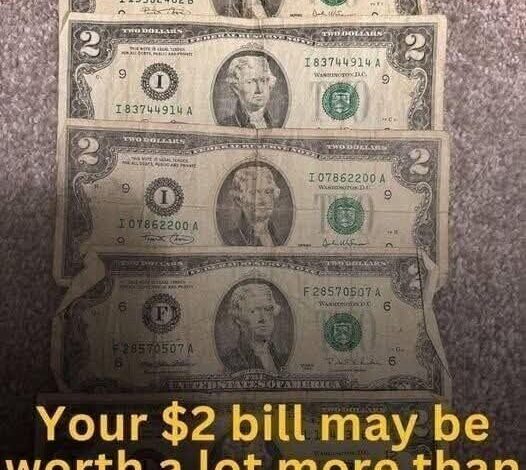
At first glance, a $2 bill rarely draws much attention. It’s often treated as a novelty—something to spend quickly or tuck away without a second thought. But among collectors, that same bill can carry a surprising range of value, and the difference between ordinary and desirable often comes down to details so subtle they’re easy to overlook.
One of the biggest factors is the series year printed on the note. Certain years correspond to lower print runs or historical changes in design, making them more appealing to collectors. The color and style of the Treasury seal can also matter—older notes with red seals, for example, tend to stand out compared to the more common green seals found on modern currency. These visual differences aren’t just aesthetic; they mark specific eras in U.S. currency production.
Serial numbers are another area where small quirks can make a big impact. Bills with unusually low numbers—like those starting with several zeros—are especially prized. Patterns also matter: repeating digits (like 77777777), palindromes that read the same forward and backward, or sequences that follow a recognizable order can all increase interest. To most people, these numbers are just part of the design, but to collectors, they’re what make a bill unique.
Condition plays an equally important role. A crisp, uncirculated $2 bill—one that has no folds, tears, stains, or signs of wear—can be far more valuable than one that’s been handled regularly. The sharpness of the paper, the brightness of the ink, and even how well the design is centered all contribute to its overall appeal. A bill that looks almost untouched stands out immediately against the softer, creased notes that have spent years in circulation.
There’s also a broader context shaping interest in bills like these. As digital payments become more dominant, physical currency is slowly becoming less common in everyday transactions. That shift gives paper money—especially less frequently seen denominations like the $2 bill—a kind of quiet historical significance. What was once just another piece of currency begins to feel more like a tangible link to a fading system.
Taking a closer look at a $2 bill doesn’t guarantee you’ve found something rare or valuable. Most will still be worth exactly what they say. But every so often, those small details—the date, the seal, the serial number, the condition—tell a different story. And in that moment, something ordinary becomes a little more interesting, carrying not just monetary value, but a sense of history and curiosity that’s easy to miss if you’re not paying attention.