Chuck Norris gave up his entire career to care for his sick wife, who was ”dying right in front of him”

He started as a quiet, uncertain boy from a troubled home in Oklahoma, carrying fears and instability that could have easily defined his future. Instead, Chuck Norris—born Carlos Ray Norris—found a way to reshape his life through discipline, faith, and sheer determination. His journey was not built overnight; it was forged step by step, through setbacks, self-doubt, and a refusal to stay where he began.
Joining the United States Air Force marked a turning point. It gave him structure, identity, and direction at a time when he needed all three. It was there that he discovered martial arts—a pursuit that quickly became more than just a skill. It became a foundation for his life, instilling focus, confidence, and purpose. What began as training evolved into mastery, eventually opening doors that led him far beyond anything he might have imagined as a child.
Hollywood later transformed him into something larger than life. Through films and television, Norris became a symbol of strength and resilience, the kind of figure audiences believed could overcome anything. His on-screen persona—stoic, unstoppable, and unwavering—turned him into a cultural icon. In time, that image took on a life of its own, evolving into internet folklore where exaggeration blurred into legend.
But behind the myth was always something more grounded.
He never lost sight of where he came from—the struggles of his early years, the influence of a mother who believed in him, and the failures that shaped his humility. Those experiences stayed with him, guiding not just his career choices but also his commitment to helping others. Through charitable work, particularly focused on supporting young people, he sought to give others the opportunities and guidance he once needed himself.
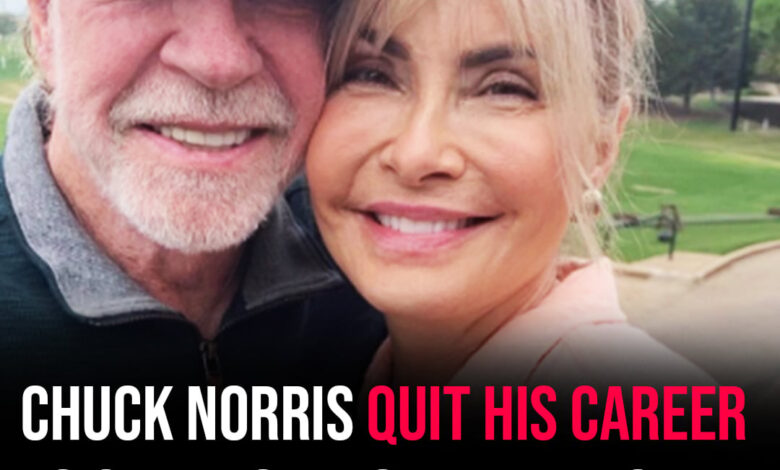
In the later chapters of his life, however, it was not fame or legacy that defined him most clearly—it was devotion. When his wife, Gena O’Kelley, faced serious health complications following medical procedures, Norris made a choice that revealed his priorities without question. He stepped away from the spotlight, putting his career on hold to focus entirely on her care. Reports of the time describe not just concern, but total commitment—emotional, physical, and financial—as he fought alongside her through a difficult and uncertain period.
That decision, quiet and largely out of view, said more about him than any action scene ever could.
It showed a man whose strength was not just physical, but deeply personal. A husband who chose presence over publicity. A father and believer whose values did not shift when fame faded into the background.
Today, the legend of Chuck Norris continues to live on—in films, in stories, and in the humor that turned him into a modern myth. But beyond the jokes and the larger-than-life image lies something far more enduring.
A life defined not just by toughness, but by loyalty.
Not just by discipline, but by compassion.
And not just by what he achieved in the spotlight, but by who he chose to be when it was gone.