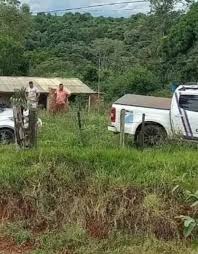
When the truck was finally opened, a heavy silence fell over the crowd, as if the entire community had collectively stopped breathing. What had once been a desperate search driven by hope and determination quickly transformed into something far more devastating. Families who had spent sleepless nights posting flyers, calling hospitals, checking every lead, and refusing to give up were suddenly confronted with a reality they had tried so hard to hold at bay.
In that moment, grief was only part of what they felt. The greater burden came from uncertainty. It wasn’t just about what had happened—it was about everything that remained unknown. How did children so young end up there? What series of events led to this outcome? Who were the last people to see them, and what did they notice—or fail to notice—before it was too late?
Questions spread faster than answers. Some parents replayed their last conversations over and over again, searching for anything that might now seem like a warning sign. Others struggled with the unbearable thought that crucial moments—moments where something might have changed—had slipped by unnoticed or unreported.
As investigators begin the slow and meticulous process of retracing the teenagers’ final movements, the town finds itself suspended in a fragile state between mourning and outrage. Every street corner, every familiar place now feels different, marked by a quiet tension that wasn’t there before. Conversations that once revolved around daily routines have been replaced with speculation, concern, and a shared sense that something deeply unsettling has touched their lives.
Candlelight vigils, initially organized as spaces for remembrance and unity, have evolved into something more complex. While candles still flicker in the night, symbolizing loss and solidarity, these gatherings have also become forums for expression. People speak openly—sometimes through tears, sometimes through anger—about what they believe went wrong. Stories are exchanged, doubts are raised, and a collective frustration begins to surface.
Some residents question whether warning signs were missed. Others wonder if there were opportunities for intervention that were overlooked. There is a growing feeling, difficult to define but impossible to ignore, that this tragedy may not be as simple as it first appeared.
Authorities continue to urge patience, emphasizing that investigations of this scale require time and precision. Behind the scenes, teams are working to reconstruct timelines, analyze digital footprints, review surveillance where available, and identify potential witnesses who may hold pieces of the puzzle. Every detail, no matter how small, is being examined in the hope that it will bring clarity.
Yet for the families and the wider community, patience feels like an almost unreasonable request. Each passing day without clear answers deepens the sense of unease. The absence of certainty creates space for fear, speculation, and doubt to grow.
In homes across the town, sleep comes with difficulty. Conversations linger late into the night. Phones remain close at hand, as if an update could arrive at any moment and change everything. But in the silence between official statements, the same questions continue to echo, louder than ever:
Could this tragedy have been prevented?
Were there moments when someone could have stepped in?
Who, if anyone, will be held accountable?
And perhaps most haunting of all—will the full truth ever come to light, or will some parts of this story remain forever unknown?
For now, the community waits—caught between the need to grieve and the need to understand, hoping that answers, when they finally come, will bring at least some measure of peace.