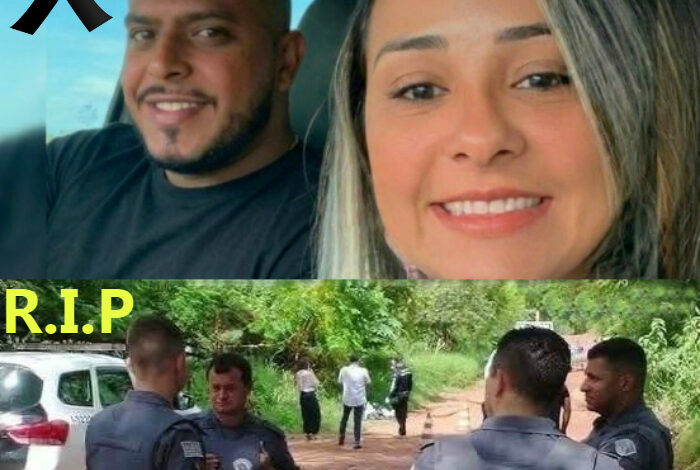
They were found the way everyone who knew them would have expected—together. Not as a headline meant to shock, not as a puzzle waiting to be solved, but as two people who had built a life side by side and never really learned how to be apart. The details of that moment will be written down in reports and timelines, reduced to coordinates and conclusions, but those who loved them refuse to let that be the story that defines them.
Because that’s not how anyone remembers them.
They remember laughter first. The kind that filled a room and made other people feel like they belonged there too. They remember the way they moved through the world as a pair—not in a way that shut others out, but in a way that quietly showed what it meant to choose someone, again and again, in ordinary moments. Holding hands crossing the street. Sharing glances across crowded rooms. Finishing each other’s sentences in ways that made everyone else roll their eyes and smile at the same time.
What happened in those final moments is something no one will ever fully know. Investigators will reconstruct what they can. They’ll chart out routes, analyze phone records, examine mechanical details, and determine the sequence of events with clinical precision. There will be answers to certain questions—there always are.
But there are questions that won’t be answered.
What they said to each other.
Whether there was music playing.
If they were laughing about something small, the way they so often did.
If one reached for the other’s hand out of habit, not fear, but something softer—something instinctive.
Those things are theirs. Untouched. Unrecorded.
And maybe that matters.
Because in the days since, something has shifted in the town they left behind.
It’s quieter, in a way that feels heavier but also more intentional. Conversations pause a little longer. People listen more carefully. There’s a kind of gentleness that has settled in—subtle, but unmistakable. Neighbors who once waved from a distance now stop and ask how you’re really doing. Old disagreements seem smaller, almost irrelevant, as if grief has rearranged the scale of what matters.
Meals have been arriving at doorsteps without anyone asking. Not elaborate gestures, just steady ones—containers of soup, casseroles, fresh bread still warm. Small acts that say, you are not alone in this, even when there aren’t words for anything else.
At the vigil, the air felt thick with both sorrow and something else—something quieter, almost reverent. Candles flickered in uneven lines, their light catching on tear-streaked faces. People stood close together, not because they had to, but because distance suddenly felt wrong.
And then the stories began.
Not the kind meant for speeches, but the ones that spill out when silence becomes too heavy to hold. Inside jokes that didn’t make sense to anyone else but still made people laugh through tears. The way they showed up—always, without hesitation—when someone needed help. The little habits that seemed ordinary at the time but now feel like proof of something rare.
Someone mentioned how they never crossed a street without reaching for each other’s hand. Not dramatically. Not for attention. Just… automatically. Like breathing.
Another person talked about how they argued sometimes—of course they did—but never in a way that made you doubt they would find their way back to each other. There was always that sense, even in disagreement, that the bond between them was steady, unshakable.
In that soft, flickering light, grief didn’t just sit there—it moved. It passed between people, reshaping itself into something almost like a promise.
A promise that their lives would not be reduced to the way they were found.
A promise that they would be remembered in motion—in laughter, in kindness, in the way they chose each other over and over again.
And maybe most importantly, a promise that something of them would continue.
Not in grand gestures, but in quiet changes. In the way people hold on a little longer when they hug goodbye. In the way they say the things they used to leave unsaid. In the way they forgive faster, show up more often, love more openly.
Because loss has a way of making time feel fragile.
And love—real, visible, undeniable love—has a way of reminding people what to do with the time they still have.
So the town carries them forward now.
In stories retold at kitchen tables.
In shared glances that say they would have loved this.
In the simple, deliberate act of reaching for someone’s hand when crossing the street.
They were found together.
And in a way that matters far more, they are still together—in memory, in impact, in the quiet ways they changed the people around them.
The world may have shifted the day they were lost.
But because of how they lived, it didn’t just break.
It softened.