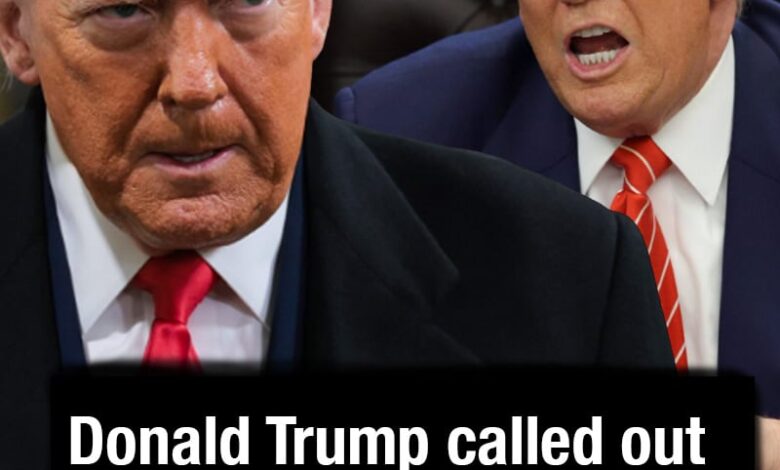
Donald Trump released his message at a moment when precision and clarity carried enormous weight. He claimed that the United States and Iran had engaged in “very good and productive conversations,” and added that he had ordered a delay on potential strikes targeting Iranian power infrastructure. In a tense geopolitical climate, the statement seemed intended to signal control and de-escalation.
But the reaction it sparked moved in a different direction.
Almost immediately, attention shifted from the substance of the message to its wording. Social media users began dissecting individual phrases—highlighting grammatical errors, unusual capitalization, and word choices like “witch” instead of “which.” What might have been minor mistakes in another context took on outsized significance given the stakes. For many observers, the tone and structure of the message raised questions about how carefully it had been prepared—and what that might imply.
Within a short time, the original post was deleted and replaced with a more polished version. Yet by then, screenshots had already spread widely. The initial version continued to circulate, often alongside commentary framing it as evidence of impulsive or unfiltered communication during a sensitive moment.
As a result, the broader conversation shifted. Instead of focusing primarily on the implications of potential military action or diplomatic progress, much of the public discourse centered on the message itself—how it was written, how quickly it was revised, and what it revealed about decision-making under pressure.
In situations involving international tension, communication is often as consequential as action. Words can reassure, escalate, or create uncertainty depending on how they are delivered. In this case, rather than easing concerns, the message introduced a different kind of unease—less about immediate conflict, and more about the signals being sent in real time.
The episode became a reminder of how, in the digital age, even brief statements can take on a life of their own. Once released, they are captured, shared, and interpreted at speed—often beyond the control of the person who wrote them. And in high-stakes moments, that dynamic can shape perception just as much as policy itself.