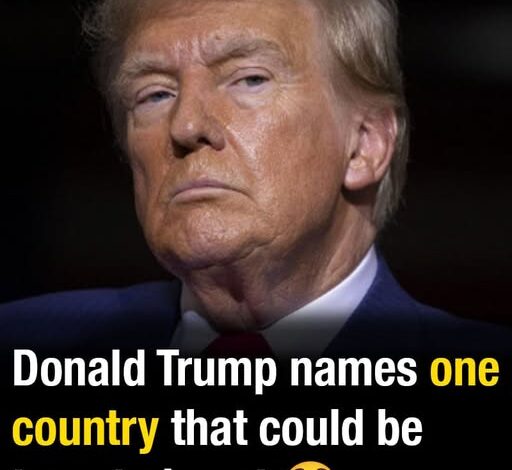
Tensions on the global stage continue to escalate, and a new wave of concern has emerged following remarks from Donald Trump suggesting that Cuba could “be next.”
Unlike dramatic declarations filled with detail, the statement itself was brief—almost offhand—but its implications have stirred debate, speculation, and unease among analysts and the public alike.
Since beginning his second term, Trump’s presidency has been marked by a series of bold and controversial geopolitical moves. Military operations in multiple regions, particularly in the Middle East and Latin America, have kept global attention fixed on U.S. foreign policy. At the same time, relationships with allies and adversaries have grown more strained, creating an environment where even a single remark can carry significant weight.
Beyond ongoing tensions with Iran, Trump has drawn criticism from European leaders earlier this year after expressing interest in acquiring Greenland, even hinting at the possibility of force if negotiations failed—comments he later softened under pressure. Meanwhile, U.S. actions have extended into other regions, including strikes against ISIS-linked targets in Somalia and involvement in Venezuela, where the capture of President Nicolás Maduro marked a major shift in regional power dynamics.
In parallel, Trump has repeatedly criticized neighboring countries like Mexico and Colombia, accusing them of failing to adequately address drug trafficking networks. These moves, taken together, reflect a broader pattern: an assertive and often unpredictable foreign policy approach that has kept both allies and critics on edge.
Against this backdrop, Trump’s recent comment about Cuba has amplified concerns.
Speaking at an investment forum in Miami, he stated, “Cuba is next,” while referencing what he described as successful U.S. actions in other regions.
Though he did not outline any concrete plans, the remark was enough to trigger widespread discussion. In fact, he appeared to immediately downplay the statement, even asking the media to disregard it—yet the words had already landed.
For many observers, the ambiguity is precisely what makes the situation unsettling.
Trump’s stance toward Cuba has long been confrontational. He has frequently described the country’s leadership in harsh terms and has pushed policies aimed at applying maximum pressure on the Cuban government. This includes economic measures such as sanctions and tariffs targeting countries that supply oil to the island—actions that have contributed to a severe energy crisis marked by blackouts and shortages.
Cuba, already facing deep economic strain, has responded cautiously but firmly. Officials have stated they are prepared to defend the country against any form of aggression, emphasizing sovereignty while navigating ongoing diplomatic tensions.
At the same time, the broader situation is complex and evolving. The United States has sought to isolate Cuba economically while also engaging in limited negotiations behind the scenes.
Recent developments—including a partial easing of restrictions to allow humanitarian fuel shipments—highlight the contradictions in current policy: pressure on one hand, selective flexibility on the other.
This dual approach reflects a larger strategic goal often attributed to the administration: encouraging political change within Cuba without committing to a clearly defined path for how that change might occur.
What makes Trump’s “Cuba is next” comment particularly significant is not just the statement itself, but the context in which it was made.
With ongoing conflicts in multiple regions, rising global instability, and a pattern of assertive U.S. actions, even a vague suggestion can be interpreted as a potential signal of future policy direction. For critics, it raises fears of escalation and overreach. For supporters, it may be seen as a continuation of a strategy aimed at confronting governments viewed as adversarial.
Ultimately, the situation remains uncertain.
There has been no formal announcement of military plans involving Cuba, and officials have not provided specific details to support the idea of imminent action. However, the combination of rhetoric, economic pressure, and recent global developments has created an atmosphere where speculation thrives.
In moments like this, the line between statement and strategy can feel blurred.
And while the comment may have been brief, its impact lies in what it suggests: that in a rapidly shifting geopolitical landscape, even a few words can reshape expectations—and raise questions about what might come next.