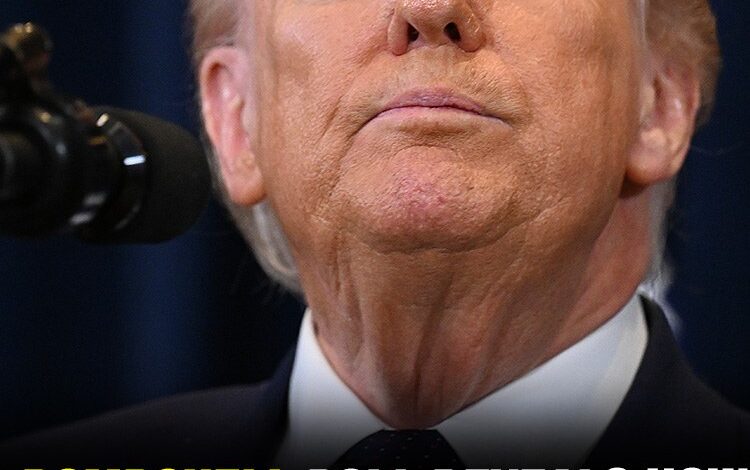
The recent strikes on Iran have revealed a rare and potentially risky political challenge for Donald Trump: visible dissent from voices that have long stood firmly in his corner. Commentators and influencers who once championed his every move—figures such as Tucker Carlson, Tim Pool, and several prominent MAGA personalities—have begun openly questioning the decision. Some have described the operation as a sharp departure from the “America First” foreign policy that many of their audiences believed defined Trump’s leadership.
Their criticism reflects a broader tension within parts of Trump’s political coalition. For years, many supporters rallied behind the promise of avoiding prolonged foreign conflicts and reducing U.S. involvement in overseas wars. Now, the possibility of deeper military engagement has stirred unease among commentators and voters alike. The reactions from these influential voices have amplified a debate inside conservative circles about what the movement’s priorities should be moving forward.
At the same time, public opinion in the United States remains cautious when it comes to new military commitments abroad. Memories of the long and costly wars in Iraq and Afghanistan still weigh heavily on many Americans. Across the political spectrum, there is widespread reluctance to see U.S. ground troops drawn into another extended conflict in the Middle East. That lingering war fatigue has shaped the response to the recent developments, with many citizens urging restraint and clearer explanations of long-term goals.
Despite these tensions, Trump continues to command strong loyalty among a large portion of Republican voters. His supporters often point to polling numbers and political momentum as evidence that his leadership still resonates deeply within the party. Allies in his orbit argue that his decisions reflect a willingness to project strength abroad while protecting American interests, and they frequently compare his political standing favorably with that of previous presidents.
Still, the situation has opened a broader conversation about presidential authority in matters of military action. Critics within and outside the Republican Party have raised questions about the scope of executive power, the clarity of the administration’s objectives, and the potential consequences of escalating tensions with Iran. Supporters, meanwhile, maintain that decisive action can deter adversaries and maintain global stability.
With upcoming elections approaching, the political stakes surrounding the issue could grow even higher. Foreign policy decisions have often shaped public perception of presidents during critical moments, and this episode may become a focal point for debates within both parties. For Trump’s coalition, the challenge will be balancing a reputation for strength with the anti-interventionist instincts that helped energize many of his voters in the first place.
In the months ahead, the trajectory of U.S. policy toward Iran—and the reactions from political allies and critics alike—may reveal whether this moment becomes a brief internal dispute or a deeper turning point within Trump’s political movement. Either way, it has already highlighted the complex pressures that arise when campaign promises, geopolitical realities, and the expectations of a loyal political base collide.