Cole Prochaska never set out to become a symbol of transformation. He wasn’t chasing recognition or trying to motivate others—he was simply a man in South Carolina confronting the quiet consequences of years that had slowly, almost imperceptibly, slipped out of control. The weight didn’t arrive overnight. It accumulated gradually, layering itself onto his body and his life until it became impossible to ignore.
At his highest, Cole weighed 585 pounds. It wasn’t just a number—it dictated everything. How he moved, how long he could stand, how he saw himself. Daily life became a series of physical negotiations, where even the smallest tasks required planning, effort, and endurance. His body felt less like something he lived in and more like something he carried.
There was no dramatic turning point, no cinematic realization. Change began with something far quieter. One day, the scale simply stopped registering his weight. In that moment, the reality became unavoidable. There was no denial left—only a stark understanding that if nothing changed, his future would be cut short.
He didn’t respond with grand gestures or a perfect strategy. There were no expensive programs, no immediate access to trainers or specialists. Instead, he started with the simplest thing available to him: walking. At first, it was incredibly painful. Each step was a reminder of how far things had gone, but he kept moving anyway. Slowly, consistently, he built tolerance for discomfort.
At the same time, he began reshaping his relationship with food. He didn’t adopt extreme diets or follow trends. Instead, he removed what he knew was harming him—fast food, sugar-heavy snacks, empty calories—and replaced them with straightforward, nourishing meals. His approach wasn’t about perfection. It was about control, repetition, and making better choices more often than not.
The progress didn’t come quickly. Weeks passed with little visible change. There were moments of doubt, frustration, and the constant pull of old habits. But each small decision—choosing to walk a bit longer, to eat a bit cleaner, to stay disciplined for one more day—began to add up. What felt insignificant in isolation became powerful through consistency.
Over time, those efforts compounded into something remarkable. In less than two years, Cole lost 360 pounds. To outsiders, it sounds extraordinary, almost unbelievable. But there was no shortcut behind it—no secret formula. It was built on persistence, discomfort, and a refusal to quit even when progress felt painfully slow.
His transformation began to attract attention not because it was flashy, but because it was real. There was no illusion of ease, no polished narrative. People connected with the honesty of it—someone ordinary, facing real struggles, and achieving something life-changing through sustained effort.
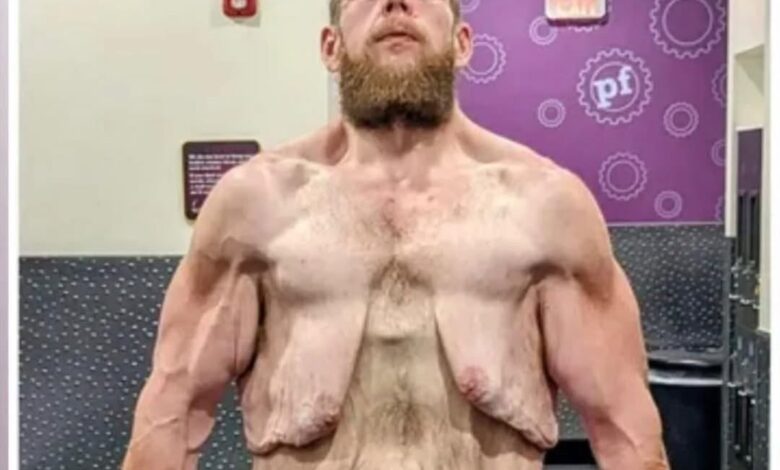
But success didn’t erase difficulty. It introduced new challenges. One of the most significant was the loose skin left behind after such rapid weight loss. It wasn’t just a cosmetic issue—it affected how he moved, how he trained, and how he experienced his own body. It was a physical reminder of the life he had lived and the transformation he had undergone.
Emotionally, it brought its own set of struggles. Despite everything he had achieved, the mirror didn’t always reflect the victory he deserved. There was a disconnect between the effort he had put in and the image he saw. It forced him to confront deeper questions about identity, self-worth, and what transformation really means.
Rather than hiding this phase, Cole chose transparency. He shared his reality openly, launching a GoFundMe campaign to support skin removal surgery. Alongside it, he posted an unfiltered photo of himself—vulnerable, honest, and unapologetically real. It wasn’t about sympathy; it was about truth.
That honesty resonated. Support came not just in donations, but in messages from people who saw themselves in his journey. They didn’t just see success—they saw struggle, imperfection, and persistence. They saw a story that felt human.
By December 2024, Cole had reached another milestone, meeting with a surgeon and preparing for the next stage of his transformation. Since then, he has stepped back from the spotlight, focusing on recovery and adjusting to a body—and a life—that feels entirely different from the one he once knew.
His journey isn’t just about losing weight. It’s about rebuilding a life piece by piece. It’s about showing up on days when motivation is absent, making decisions that don’t feel rewarding in the moment, and trusting that consistency will eventually create change.
He started with actions that seemed almost insignificant: walking a little more, eating a little better, staying consistent one day at a time. Over months, then years, those actions compounded into something profound. His story is a reminder that simplicity, when repeated relentlessly, can outperform even the most complex plans.
It also highlights something many overlook—the aftermath of success. Loose skin, emotional adjustment, identity shifts—these are all part of transformation. By facing them directly, Cole showed that growth doesn’t end when the weight is gone. In many ways, that’s when a new phase begins.
At the core of his journey was a shift in priorities. He wasn’t chasing perfection. He was chasing life—mobility, health, the ability to exist without constant limitation. That perspective reframed everything. It made the process sustainable, because it was rooted in something deeper than appearance.
His approach reveals a simple truth: there is no magic. Real transformation is built through repetition, discomfort, and daily decisions. It’s not about waiting for motivation—it’s about acting despite its absence.
Each day brought challenges. Pain, cravings, doubt, outside opinions. But by continuing—again and again—he built momentum that no single burst of effort could replicate. His success wasn’t defined by a moment, but by thousands of small choices made consistently over time.
He also learned to tune out noise. Praise and criticism both existed, but neither dictated his direction. His focus remained internal, grounded in the understanding that real progress is personal and measured by discipline, not validation.
The mental side of his transformation was just as demanding as the physical. He had to reshape habits, confront long-held beliefs about himself, and navigate the emotional weight that had accompanied his physical one. Losing hundreds of pounds meant facing parts of himself he could no longer avoid.
What began as a few steps around his home evolved into a complete restructuring of his life. Those early efforts—painful, slow, and seemingly small—demonstrated a powerful truth: change begins with actions that feel almost too difficult to sustain, until they become the foundation of something greater.
His eating habits followed the same principle. Nothing extreme, nothing unsustainable. Just intentional choices, repeated daily. Over time, those choices formed patterns, and those patterns created lasting change.
When the scale finally began to reflect his work, it wasn’t just validation—it was proof that persistence works. But even then, he understood that transformation goes beyond numbers. It touches identity, mindset, and the way a person moves through the world.
The challenge of loose skin reinforced that idea. It complicated his progress, both physically and emotionally, but he approached it with the same mindset that got him there—acknowledgment, planning, and forward movement.
His decision to share that phase publicly added another layer to his story. It showed that success isn’t clean or perfectly packaged. It comes with complications, and those complications are part of the journey, not a deviation from it.
Support followed because people recognized something genuine. Not perfection, not performance—just honesty. And in that honesty, they found something relatable.
As his body changed, so did his sense of self. Navigating that shift required time and reflection. It’s a reminder that transformation doesn’t end with physical milestones—it continues as a person adapts to a new reality.
Cole’s story reinforces the value of starting small. The first steps are often the hardest, and progress can feel invisible for a long time. But consistency transforms those small efforts into something powerful.
He also demonstrates the importance of facing challenges head-on. Whether physical or emotional, growth requires acknowledging difficulty rather than avoiding it. That willingness to confront reality is what allows real change to take place.
Mental resilience played a central role throughout his journey. Managing cravings, overcoming doubt, and staying committed without constant motivation required a level of discipline that goes far beyond physical effort.
Ultimately, his transformation wasn’t about proving anything to others. It was about reclaiming his life—his mobility, his independence, and his future. That internal motivation is what sustained him when external rewards were absent.
His method was simple: consistent action, repeated over time. No shortcuts, no illusions. Just effort, patience, and discipline applied daily.
His story also highlights that true health is multifaceted. Physical change is only one part. Emotional stability, mental strength, and lifestyle adjustments are equally important in creating lasting transformation.
For anyone facing overwhelming challenges, his journey offers a clear message: start small, stay consistent, accept discomfort, and trust the process. Progress may be slow, but it is never wasted.
By the end of 2024, Cole entered yet another phase—preparing for surgery, continuing his evolution. It’s a reminder that growth doesn’t have a finish line. It simply changes form.
His experience shows that transformation is rarely linear. There are setbacks, plateaus, and difficult periods. But with persistence and adaptability, progress continues.
In the end, what defines Cole Prochaska isn’t a single achievement, but the accumulation of countless decisions—small, often difficult choices made every day. Together, they reshaped not only his body, but his entire life.
His story resonates because it’s real. No shortcuts, no exaggeration—just steady effort, honesty, and accountability. And in that, it proves something powerful: meaningful change is always possible, but it demands patience, discipline, and the willingness to keep going when it would be easier to stop.