Let’s take a moment to look beyond filters, curated selfies, and the impossible beauty standards that saturate social media. Society often prioritizes appearance over substance, equating thinness with success, worth, or desirability, while ignoring the hidden struggles that lie behind these images.
Valeria Levitin’s story reveals the human cost of these pressures. Once labeled “the world’s thinnest woman,” her experience is not about sensational headlines—it’s about the deep, often invisible toll of chasing approval through extreme thinness.
Her journey began long before she entered the public eye. Growing up in Russia, Valeria was surrounded by messages, some subtle and some overt, that equated thinness with value. She was taught, explicitly and implicitly, that her worth depended less on character and more on her appearance. Family dynamics reinforced this belief: parents, relatives, and peers frequently praised weight loss and critiqued natural body shapes. Like many young girls, she internalized these messages, learning that self-control over her body could earn validation and love.
When Valeria moved to the United States as a teenager, the pressure only intensified. A new culture brought new standards, compounding the early conditioning she had experienced. At sixteen, she began dieting seriously, believing that a smaller frame would bring acceptance, confidence, and belonging.
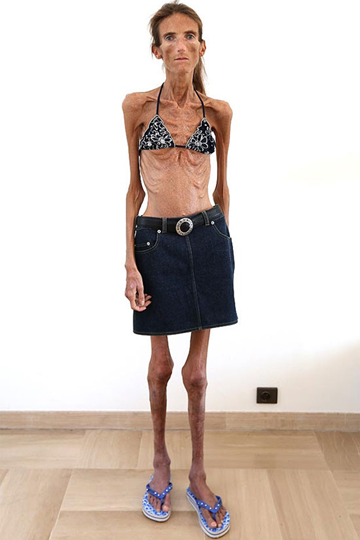
Her relationship with food soon shifted from habit to obsession. Eating was no longer about nourishment; it became a strict, relentless pursuit of an ideal reinforced by peers, media, and, later, the modeling industry she joined in her twenties. Within this world, thinness functioned as currency, yet the demand for perfection was insatiable. Agencies criticized her even as her body became dangerously fragile. The paradox of constant scrutiny despite extreme thinness fueled a cycle of self-harm and dangerous behaviors.
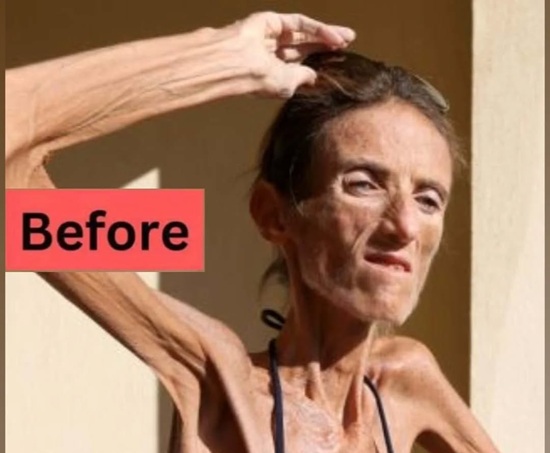
By her early twenties, Valeria’s health had become critical. Her bones weakened, her heart strained, and daily tasks—walking, sitting, even breathing—brought pain. Despite the severe physical consequences, she felt trapped, torn between fear, societal expectations, and the obsession with maintaining an image of extreme thinness.
Her weight eventually dropped below 60 pounds, a life-threatening condition. Eating became a battleground, with each bite a struggle between mind and body. Valeria described feeling like a ghost, a hollow version of the vibrant person she had once been.
Public fascination followed quickly. Media outlets labeled her the “world’s thinnest woman,” attracting attention from strangers online. Messages poured in from young girls seeking dieting advice, praising her extreme figure, and idolizing a dangerous image. Valeria refused to perpetuate that illusion. “I’m not here to teach girls how to disappear,” she declared—a phrase that would guide her mission going forward.
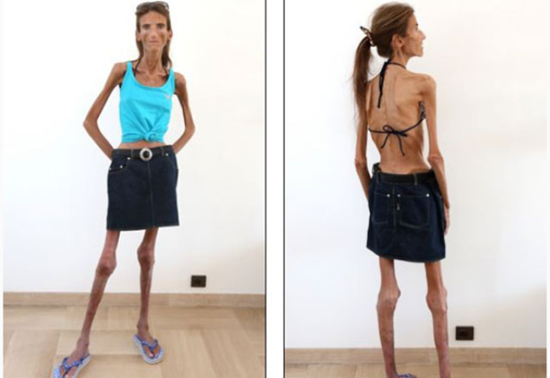
Turning her personal pain into advocacy, Valeria chose honesty over concealment. She spoke openly about her experience with anorexia, exposing the toxic influence of societal obsession with appearance and the real costs—both physical and psychological—of pursuing impossible ideals. Her story is not about fame or notoriety; it is about survival and awareness. By sharing her journey, she aims to prevent others from entering the same dangerous cycle of self-starvation and distorted body image.
Despite her struggles, Valeria looks to the future with hope. Her dream of becoming a mother motivates her daily, reminding her that life is measured not in pounds, dress sizes, or appearances, but in love, relationships, and meaningful experiences.
Her story resonates in today’s social media-driven culture, where filters, editing apps, and polished feeds amplify comparison and self-doubt. By sharing her truth, Valeria reminds audiences that behind every seemingly perfect image may lie hidden insecurity, fear, or suffering.
Eating disorders rarely emerge suddenly or dramatically. They often begin subtly—skipping meals, obsessing over a few pounds, or embracing new diets that seem harmless. These early signs can go unnoticed, quietly escalating over time. Early detection and support are crucial. Friends, family, and educators can make a life-saving difference by observing changes, asking gentle questions, and providing nonjudgmental guidance before behaviors become entrenched.
Valeria emphasizes that self-worth, health, and well-being must come before societal approval. “No job, trend, or photo is worth your health,” she asserts, challenging the cultural notion that thinness equates to success, beauty, or admiration. Her advocacy is about shifting perspective: beauty should not be measured by a scale or fleeting trends, nor should suffering ever be romanticized.
Her story also underscores the dual impact of eating disorders on body and mind. Malnutrition, fragile bones, and organ strain accompany intense psychological distress, including anxiety, emotional numbness, and isolation—experiences often invisible to outsiders. Support networks, including family, friends, and professional guidance, are essential for recovery.
Valeria highlights the dangers of idolizing extreme thinness. In her past, admiration from social media followers encouraged harmful behaviors, masking the reality of her condition and showing how praise can inadvertently normalize self-harm. By speaking candidly, she challenges the culture of comparison and emphasizes that self-worth cannot be determined by appearance, numbers, or online validation.
Her recovery demonstrates resilience. Focusing on meaningful personal goals—such as health, well-being, and building a family—allowed her to reclaim control over her body and life. Valeria’s journey proves that healing is possible, even after prolonged, life-threatening struggles.
Her story also illuminates the pervasive influence of media and cultural standards, which continue to glorify thinness while punishing natural body diversity. Education, awareness, and early intervention are vital to combating these pressures. Understanding that eating disorders are medical conditions—not lifestyle choices—reduces stigma, promotes empathy, and encourages timely support.
Valeria’s advocacy transcends personal experience. She reframes beauty and achievement as rooted in health, compassion, and connection, not outward appearance or online recognition. She demonstrates that the intersection of mental health and public scrutiny can be navigated with honesty, courage, and advocacy, inspiring those facing similar challenges.
Her message is clear: strength is not measured in pounds. Valeria’s journey embodies hope, resilience, and the power to transform personal suffering into purposeful action. She reminds us that early intervention, empathy, and supportive environments save lives and that every individual deserves care, respect, and the freedom to live fully.
Through her story, Valeria Levitin challenges societal norms, exposes the hidden costs of extreme body obsession, and advocates for mental and physical health over unrealistic ideals. Her life is a testament to survival, self-love, and empowerment, proving that it is possible to heal, thrive, and redefine beauty on one’s own terms.