Guess Who This Boy Is — The Young Talent Who Grew Up to Become One of the Most Famous Actors in the World, Captivating Audiences With Unforgettable Performances, Rising From Humble Beginnings to Global Stardom, and Leaving Fans Across Generations in Awe of His Incredible Journey

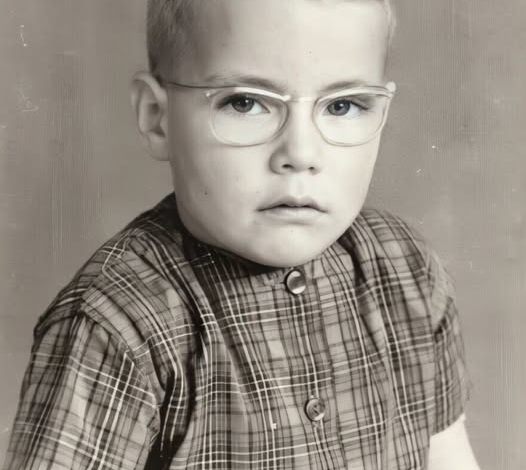
Before the world knew him as an action icon—before his name became shorthand for precision, power, and controlled violence—he was a quiet child who didn’t belong anywhere loud.
He was not born a fighter.
He was not raised in arenas of strength or dominance.
He was small, soft-spoken, and often invisible.
While other boys wrestled and shouted, he stood apart—not out of fear, but out of instinct. The noise of the world never felt like home to him. Instead, he watched. He studied. He absorbed.
Where others saw games, he saw movement.
Where others saw chaos, he saw rhythm.
Even then, he was learning a language few people ever understand: the language of the body.
A Boy Out of Place
He grew up in a modest European home, shaped by contradiction.
His father believed in hardness—discipline enforced through pressure and expectation. His mother, gentle but distant, offered kindness without presence. Between them, the boy learned early that softness had no obvious place.
At school, he didn’t fit.
He was too quiet, too inward, too different.
He wasn’t chosen for teams. He wasn’t part of the noise.
But in that isolation, something rare began to form.
He became an observer.
He watched how people moved, how they carried themselves, how emotion translated into gesture. The playground became a stage, and he—unseen—became its most attentive audience.
And then, unexpectedly, came ballet.
The Stillness That Built Strength
He was ten years old when he entered his first studio.
The room was quiet. Controlled. Structured.
For the first time, the world made sense.
Ballet gave him something no one else had:
Control.
Here, silence wasn’t emptiness—it was discipline. Every movement had purpose. Every position demanded precision. There was no wasted energy, no unnecessary motion.
It was the opposite of everything he had struggled with outside.
And he surrendered to it.
While other boys learned to fight, he learned to balance.
While they chased power, he mastered control.
His body changed. His mind followed.
He learned how to hold tension without breaking. How to endure pain without reacting. How to express emotion without speaking.
Ballet didn’t make him weak.
It made him formidable—quietly.
At home, his father disapproved.
“Real men don’t dance.”
But the boy didn’t argue.
He woke earlier. Trained harder.
Because inside the studio, he had found something no criticism could take away:
Belonging.
The Missing Piece
By his teenage years, he had become something unusual.
Strong—but not aggressive.
Disciplined—but not hardened.
Precise—but not confrontational.
And then one moment changed everything.
A confrontation in the street.
A push.
Laughter.
And his body froze.
Not because he lacked strength—but because he had never learned to use it that way.
That night, something shifted.
Ballet had taught him how to move.
Now he needed to learn how to stand his ground.
Where Dance Meets Combat
The dojo was nothing like the studio.
Where ballet was fluid, martial arts was sharp.
Where ballet was expressive, martial arts was direct.
But beneath the surface, they spoke the same language.
Structure. Timing. Discipline.
He recognized it instantly.
And so began the collision of two worlds.
At first, he struggled.
His movements were beautiful—but not yet effective.
His kicks were precise—but lacked force.
He moved like a dancer.
He had to learn to move like a fighter.
Slowly, something remarkable happened.
The two disciplines began to merge.
Balance became power.
Grace became speed.
Control became impact.
While others relied on brute force, he relied on efficiency. Nothing wasted. Nothing exaggerated.
His instructor noticed.
“You don’t fight,” the sensei told him. “You flow.”
That word stayed with him.
Flow.
It became his philosophy.
He trained relentlessly—ballet at dawn, martial arts at dusk. Pain became familiar. Fatigue became irrelevant.
He was no longer choosing between softness and strength.
He was mastering both.
The Body Becomes Language
By the time opportunity found him, he was ready.
Not because he chased it.
But because he had built something impossible to ignore.
A body that didn’t just perform—but communicated.
His first roles were small.
A stunt here. A background appearance there.
But even then, something stood out.
His movement had intention.
Every action carried rhythm.
Every fight looked… different.
When his breakthrough came, it wasn’t just success.
It was recognition.
Directors didn’t see a fighter.
They saw an artist.
His combat wasn’t chaotic.
It was choreographed emotion.
Violence, shaped into something almost… beautiful.
The Illusion of Strength
To audiences, he became something else entirely.
Powerful. Dominant. Untouchable.
But what they didn’t see was the foundation beneath it.
The years in quiet studios.
The repetition.
The stillness.
The softness that made the strength possible.
In interviews, he rarely spoke about ballet.
But when he did, it was simple:
“Dance taught me control.”
He didn’t need to say more.
Because it was in every movement.
A Life of Precision
As his career expanded, so did his influence.
He wasn’t just performing action.
He was redefining it.
He insisted that combat on screen should have rhythm. Structure. Meaning.
He choreographed his own sequences—not as fights, but as compositions.
Every movement deliberate.
Every moment earned.
Fans saw power.
But behind it was discipline.
Behind the discipline was stillness.
And behind the stillness was the quiet boy no one had chosen.
The Philosophy That Remains
Years later, when injuries accumulated and the pace of life slowed, his perspective remained unchanged.
Movement, to him, was never just physical.
It was expression.
Understanding.
Freedom.
He once said:
“Fighting and dancing are the same. Both require rhythm. Both require heart. The difference is intent.”
That duality defined him.
Creation and destruction.
Grace and force.
Silence and impact.
The Legacy of Contradiction
His story challenges something fundamental.
That strength must look a certain way.
That softness is weakness.
That power comes only from aggression.
He proved the opposite.
That control is stronger than chaos.
That precision is stronger than force.
That the quietest person in the room may be the most dangerous—not because they seek power, but because they understand it.
When audiences watch him now—every spin, every kick, every perfectly timed movement—they’re not just watching action.
They’re watching a lifetime of discipline.
A thousand mornings in silence.
A thousand repetitions no one saw.
A dancer, still present inside the fighter.
And maybe that’s the truth his story leaves behind:
Greatness doesn’t come from becoming someone else.
It comes from mastering everything you already are.
He didn’t leave the quiet boy behind.
He refined him.
Shaped him.
Choreographed him into something the world couldn’t ignore.
And in the end, the path from the ballet barre to the battlefield was never a contradiction.
It was always the same movement—
just with a different intention.