He Lost Billions, Faced Bankruptcies, And Was Written Off, Then He Shocked The World And Became President Of!

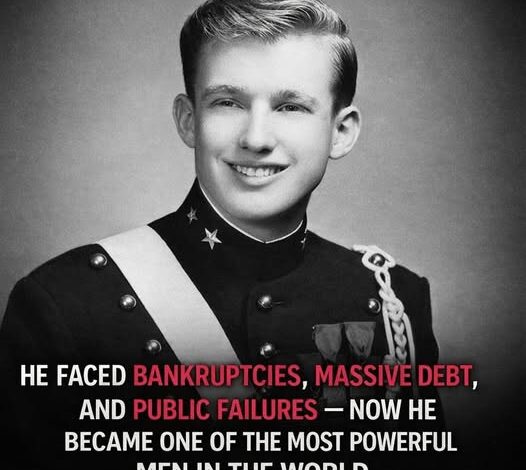
Donald Trump’s life has often unfolded like a high-stakes drama, driven by risk, reinvention, and an instinct for staying in the spotlight. From an early age, he was shaped by the influence of his father, Fred Trump, who approached business with a strict, competitive mindset. In that environment, success wasn’t just encouraged—it was expected—and image mattered almost as much as results.
When Trump stepped into Manhattan’s real estate world, he quickly understood that visibility could be as powerful as capital. His projects weren’t just buildings; they were branded statements, designed to project success and ambition. The now-familiar gold lettering and high-profile deals became part of a carefully cultivated identity—one that blurred the line between businessman and public figure.
That identity was tested during the financial crises of the late 20th century, when mounting debt threatened to collapse parts of his empire. Instead of disappearing from view, Trump leaned into publicity, using his name recognition as leverage in negotiations. Creditors weren’t just dealing with balance sheets—they were dealing with a brand that still held cultural weight. In many ways, perception became a tool for survival.
The next major transformation came through television. With The Apprentice, Trump reintroduced himself to millions as a decisive authority figure, reshaping public perception. The show presented a version of him that was controlled, confident, and commanding—qualities that would later carry into a very different arena.
That arena was politics. When Trump entered the 2016 presidential race, few expected the outcome that followed. Yet he managed to tap into voter frustration, reshape messaging within his party, and ultimately win the presidency. His rise disrupted traditional political norms, forcing both supporters and critics to rethink assumptions about campaigns, media influence, and voter behavior.
Throughout his time in office and beyond, Trump has remained a deeply polarizing figure. Supporters often view him as a disruptor who challenged entrenched systems, while critics argue that his approach intensified divisions and reshaped political discourse in lasting ways. Regardless of perspective, his influence on modern American politics is difficult to ignore.
What defines Trump’s trajectory is not just success or controversy, but persistence. At multiple points—whether in business setbacks, media reinvention, or political battles—he has demonstrated a refusal to step away from public life. Reinvention, for him, has not been an occasional strategy but a recurring pattern.
In the end, Donald Trump’s story is less about a single career path and more about adaptability under pressure. It reflects how image, timing, and narrative can intersect to shape both personal legacy and national conversation. Whether seen as a strategist, a showman, or a disruptor, one thing remains consistent: he continues to command attention in a way few modern figures can match.