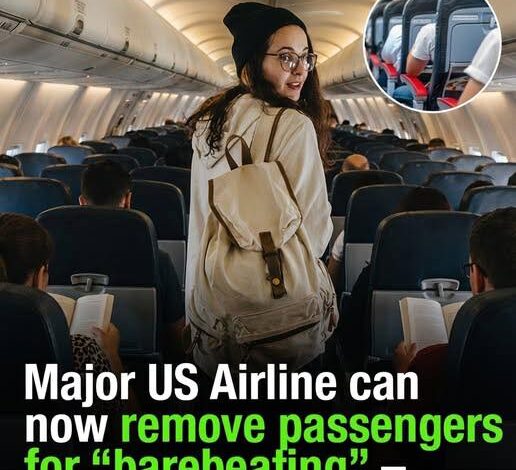
For years, air travel has carried an unspoken tension—one that had nothing to do with turbulence or delays, but with the quiet friction of shared space. Passengers often found themselves caught in an uncomfortable dilemma: endure the blare of someone else’s phone, music, or video, or risk an awkward confrontation at 30,000 feet. In that confined environment, even small disturbances can feel amplified, turning minor annoyances into long, draining experiences. What should be a routine journey becomes a test of patience, where silence is no longer guaranteed and courtesy feels optional.
United’s decision marks a shift in how that shared space is defined. Rather than treating noise as a minor inconvenience, it reframes it as a disruption that affects everyone onboard. This isn’t just about enforcing quiet—it’s about acknowledging that air travel relies on a delicate balance of mutual respect. When hundreds of people are placed in close quarters for hours, individual choices inevitably impact the collective experience. By placing speaker use in the same category as other disruptive behaviors, the airline is reinforcing the idea that consideration for others is not a suggestion, but a baseline expectation.
What makes this change significant is not just the rule itself, but the clarity it brings. In the past, flight attendants were often left navigating gray areas, relying on polite requests and hoping passengers would comply out of goodwill. That approach frequently led to tension, inconsistency, and, at times, conflict. Now, with a clearly defined policy, the responsibility shifts. It is no longer about asking for courtesy—it is about upholding a standard. This gives crew members the authority they need to act confidently, reducing ambiguity and making enforcement more straightforward.
For passengers, the impact is equally meaningful. Many travelers have quietly tolerated these disruptions for years, choosing discomfort over confrontation. This new approach offers a sense of reassurance—that their experience matters, and that they are not alone in expecting a certain level of respect. It transforms what was once a personal frustration into a shared understanding, backed by policy rather than social pressure.
Of course, not everyone will welcome the change. Some may view it as overly strict or unnecessary, arguing that such rules limit personal freedom. But air travel has never been a space of complete individual autonomy. It is, by nature, a collective experience where boundaries are essential. The same logic that governs seatbelt rules, carry-on limits, and smoking bans applies here: individual preferences must sometimes yield to the comfort and safety of the group.
At its core, this shift reflects a broader reality about modern travel. As technology becomes more integrated into daily life, the potential for disruption increases. Phones, tablets, and portable speakers have made it easier than ever to carry entertainment everywhere—but they have also blurred the lines between private and shared experiences. What might feel harmless in a personal setting can become intrusive in a confined public space like an airplane cabin.
By addressing this directly, United is not just enforcing a rule—it is redefining expectations. It is sending a clear message that respect is part of the journey, not an optional add-on. The idea is simple but powerful: comfort in a shared environment depends on collective responsibility. When one person’s actions affect everyone else, boundaries become necessary, not restrictive.
In the end, this policy is less about restriction and more about balance. It recognizes that a peaceful flight is not something that happens by chance, but something that is maintained through small, consistent choices by everyone onboard. Bringing headphones, lowering volume, and being mindful of others are simple acts, but they contribute to a far more comfortable experience for all.
And perhaps that’s the real takeaway. Air travel doesn’t need more conflict or negotiation—it needs clearer expectations. By turning an unwritten rule into a defined standard, United is removing uncertainty and replacing it with something more reliable: the understanding that in a space shared by hundreds, respect is not negotiable—it’s essential.