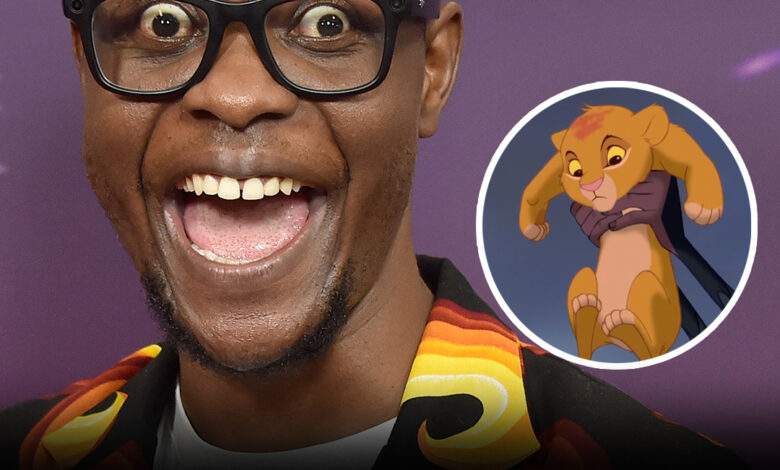
Lebohang “Lebo M” Morake sees the moment not as harmless humor, but as something far more personal. To him, the opening chant of The Lion King is not a throwaway soundbite—it is rooted in tradition, shaped by praise poetry that carries cultural and historical weight. It speaks to identity, to lineage, to a deeper sense of place. So when that chant is reduced to a simplified, comedic line, it doesn’t just lose accuracy—it loses meaning.
From his perspective, what millions hear as an iconic opening is tied to something living and intentional. It was never meant to be a meme or a punchline, but a bridge between cultures, bringing elements of African vocal tradition into a global spotlight. Seeing it reframed in a way that strips away that context can feel less like reinterpretation and more like erasure.
On the other side, Learnmore Jonasi approaches the moment through the lens of comedy, where exaggeration and distortion are part of the craft. Viral humor often thrives on taking something recognizable and reshaping it into something unexpected or absurd. In that space, accuracy is rarely the goal—reaction is. But when the subject carries cultural or artistic significance, that tension becomes harder to ignore.
The legal challenge now unfolding, reportedly involving ties to The Walt Disney Company, pushes that tension into sharper focus. It raises broader questions that go beyond any single performance: when does parody cross into misrepresentation? At what point does creative freedom begin to conflict with cultural ownership or personal legacy?
There’s no simple answer. Comedy has long tested boundaries, while artists and cultural figures have fought to protect the integrity of their work. What this moment reveals is how quickly something meaningful can be transformed once it enters global, digital circulation—and how difficult it is to control that transformation once it begins.
However the dispute resolves, it leaves behind a shift in perception. That opening chant—once universally received as pure atmosphere and emotion—now carries an added layer of debate. Between reverence and reinterpretation, something has changed, and it will likely shape how audiences hear it going forward.