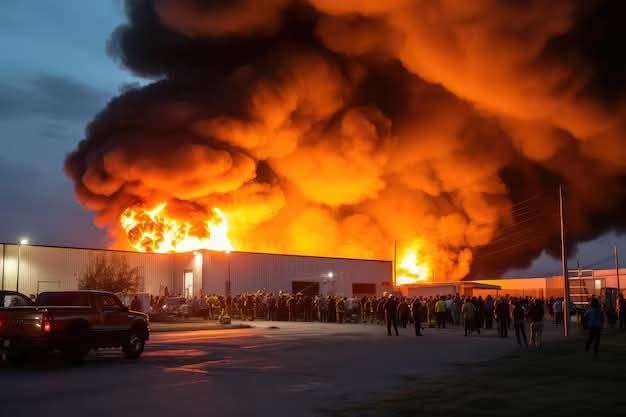
A calm Saturday afternoon in the Pamplona Alta area of San Juan de Miraflores quickly turned into a scene of devastation when a massive fire broke out, leaving the community in shock and hundreds of families without homes. What initially seemed like a small incident rapidly grew into a large-scale disaster, engulfing tightly clustered residential areas. Early reports from authorities and emergency teams estimate that between 100 and 300 houses were either heavily damaged or completely destroyed.
The fire spread with alarming speed due to a combination of environmental conditions and the way homes in the area are built. Many structures are made from flammable, makeshift materials such as wood, plastic, and scrap metal. Positioned close together along narrow hillside paths, these homes allowed the flames to move quickly from one structure to another. Residents described the fire as a fast-moving wave, leaping across rooftops and overwhelming their attempts to contain it with limited resources. By the time firefighters arrived, a thick column of smoke had already risen high above the district, visible from far across the city.
The situation worsened when the fire reached what is believed to be an illegal fireworks workshop within the neighborhood. Firefighters reported explosions that intensified the blaze, sending burning debris into nearby homes and making it even more dangerous for people to intervene. Videos captured by locals showed dramatic bursts of fire and sparks, highlighting the severity of the moment. Authorities are now investigating this site as the possible origin of the fire, though official confirmation is still pending.
As night approached, emergency crews managed to bring the fire under control, stopping it from spreading further. Despite this, the damage was already immense. Entire sections of the neighborhood were left in ruins, with homes reduced to ashes. Many residents fled with nothing but what they could carry, losing their belongings, memories, and sense of security in a matter of minutes.
Attention has now shifted to the growing humanitarian crisis. Local officials have set up temporary shelters and are calling for urgent assistance, including food, water, clothing, and medical supplies. For many affected families, the challenge ahead is overwhelming, as rebuilding their lives will require resources far beyond their means.
This tragedy highlights the dangers present in rapidly expanding urban areas where infrastructure and safety regulations have not kept pace. The combination of fragile construction materials and unregulated hazardous activities created conditions ripe for disaster. As recovery efforts begin, there is increasing pressure to improve housing safety standards and enforce stricter regulations to prevent such incidents from happening again.