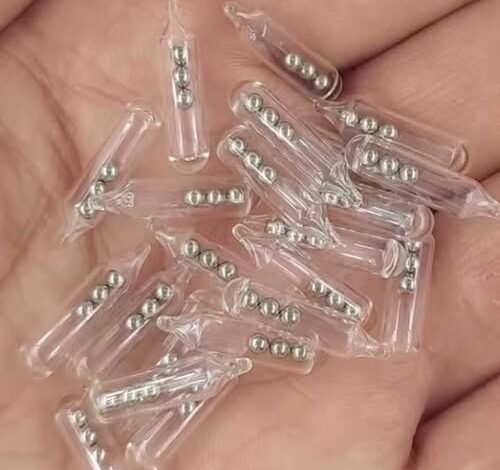
It’s funny how the smallest tweaks can completely change a day on the water. Those tiny glass rattles never magically turned me into a tournament angler, but they shifted the way I think about slow, lifeless water. Instead of assuming the fish had vanished or blaming the weather, the moon, or whatever unlucky streak seemed to follow me around, I suddenly had a simple tool to stir things up. Just a faint click buried inside a soft plastic lure—a small vibration, almost nothing at all—but sometimes that’s enough to make curious fish move in and investigate.
Fishing has a way of humbling you like that. You can bring the nicest gear money can buy, the newest rods, the flashiest reels, and still go home wondering why the lake refused to cooperate. Over time, though, you realize that most of the real difference happens in details nobody really talks about. It’s not always the brand of rod in your hands or the boat you’re standing on. Often it’s something tiny and easy to overlook—like a jelly-bean-sized rattle tucked into a plastic worm, quietly ticking each time it drifts across the bottom.
That soft sound can turn an otherwise ordinary presentation into something a little more alive. In murky water or on slow days, that subtle noise gives fish something extra to notice, something to track. Instead of a silent piece of plastic sliding by unnoticed, the lure suddenly carries a faint signal through the water. It’s not loud or aggressive—just enough to spark curiosity in a fish that might otherwise ignore the bait completely.
More than anything, using rattles reminded me that fishing is really a game of patience and experimentation. Every cast is a question, and every adjustment is a new attempt at the answer. Some days you change colors. Other days you slow down your retrieve or try a different depth. Adding a rattle is just one more small adjustment in that endless puzzle, another way to learn what the fish might respond to on that particular day.
Of course, it doesn’t solve everything. There are still mornings when the lake feels stubborn and quiet, when the line stays slack no matter what trick you try. But now when that frustration starts creeping in—when the water feels cursed and the dock seems to mock every cast—I don’t just sit there wondering what went wrong. I make a small change. Slide in a rattle. Tie on the bait again. Cast back out into the same water and wait.
And sometimes, just when you’ve convinced yourself nothing is happening at all, you feel it—that small, hopeful tap traveling up the line, reminding you why you keep casting in the first place.