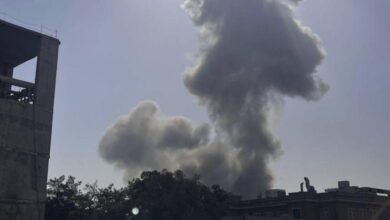
In a significant escalation of tensions in the Middle East, the United States and Israel carried out coordinated airstrikes on targets inside Iran early Saturday. The operation marks one of the most serious military confrontations involving the countries in many years and has heightened concerns about the possibility of a broader regional conflict.
According to officials in Washington, the strikes were part of a mission intended to weaken Iran’s military capabilities and reduce what U.S. leaders describe as threats related to missile development, regional proxy groups, and nuclear-linked infrastructure. Reports indicate that multiple locations were targeted, including sites associated with the Islamic Revolutionary Guard Corps (IRGC), missile launch facilities, air-defense systems, and other strategic installations. Areas near Tehran, Isfahan, Qom, Kermanshah, and Karaj were among the regions mentioned in early reports.
Political leaders in both Washington and Jerusalem defended the strikes as preventative action. U.S. President Donald Trump stated that the operation was aimed at countering what he described as “imminent threats” to U.S. interests and allies in the region. Israeli Prime Minister Benjamin Netanyahu echoed that message, saying the action was necessary to address what Israel considers a long-standing security risk posed by Iran’s military development and regional influence.
As often happens during the early hours after large military operations, conflicting reports circulated about some of the targets. Certain Israeli sources suggested that locations linked to Iran’s senior leadership might have been struck, leading to speculation about the safety of Supreme Leader Ayatollah Ali Khamenei. Iranian state media, however, rejected those claims and said that he remained “safe and sound.”
Beyond the physical damage caused by the strikes, analysts have focused on the language used by political leaders following the operation. Some statements referencing potential political change within Iran have raised concern among observers who interpret them as rhetoric that could hint at broader ambitions beyond limited deterrence. Historically, discussions that touch on regime change often carry far-reaching geopolitical consequences.
Iran responded quickly. Within hours, Iranian forces reportedly launched waves of ballistic missiles and drones directed toward Israel, while also targeting U.S. military installations throughout the region. Activity was reported around bases in Qatar, the United Arab Emirates, Bahrain, Kuwait, and other locations that host American personnel. Additional alerts and defensive responses were reported in Jordan, Iraq, and Saudi Arabia.
Explosions and air-defense activity were reported in several Gulf locations, illustrating how rapidly tensions can spread once multiple countries and alliances become involved in the same confrontation.
At the same time, concerns began to extend beyond military sites to one of the world’s most sensitive maritime corridors. Iran’s naval forces reportedly issued warnings to commercial vessels operating in the Persian Gulf and near the Strait of Hormuz. This narrow passage is a vital route for global energy supplies, carrying a significant portion of the world’s oil shipments.
Several ships reported hearing urgent radio messages warning that the waterway might not be safe due to the ongoing conflict. European and British maritime monitoring organizations acknowledged the reports and advised commercial shipping companies to proceed with caution while navigating the region.
Iranian state-linked outlets described the security situation in the Gulf as unstable, suggesting that shipping activity could face disruptions if hostilities continue.
The Strait of Hormuz has long been considered a key pressure point in global energy security. Even the possibility of restricted shipping through the strait can influence global markets. Oil prices, insurance costs for shipping companies, and broader economic conditions can all react quickly to instability in the area.
Events like this demonstrate how rapidly regional conflicts can intersect with global systems of trade, energy, and diplomacy. Military actions taken within a matter of hours can influence financial markets, political alliances, and security calculations around the world.
For now, governments and international observers are watching developments closely. Historically, the period immediately following a major escalation can be the most unpredictable phase of a conflict. The tone of public statements from leaders, along with any diplomatic efforts behind the scenes, may play a crucial role in determining whether the situation continues to intensify or begins to stabilize.
Moments like this often represent a crossroads between further escalation and cautious diplomacy. The direction the situation takes will likely depend not only on military strength, but also on the willingness of all parties involved to pursue dialogue and restraint in the days ahead.