Honoring the Life and Influence of a Visionary Behind Hip-Hop’s Most Iconic Collective: The Lasting Legacy of a Strategic Mind Who Helped Shape Culture, Business, and Creative Independence Within a Movement That Redefined Music History and Continues to Inspire Generations Worldwide

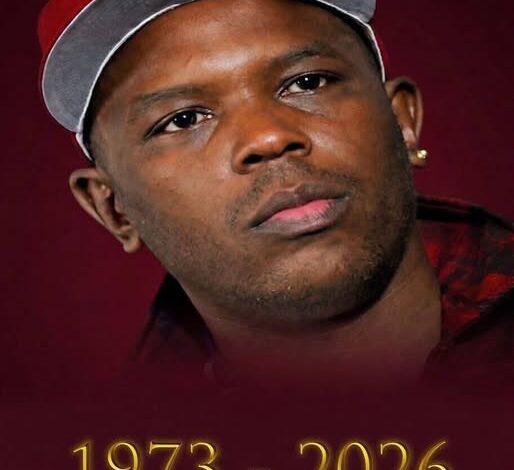
The death of Oliver “Power” Grant at 52 has stirred a deeper kind of reflection within hip-hop—one that goes beyond chart success or celebrity and turns attention to the architects behind the movement. While the spotlight often falls on the artists, the culture itself has always depended on individuals working quietly in the background, shaping direction, protecting vision, and building something durable. Grant was one of those figures—someone whose impact wasn’t performed, but constructed.
In the early 1990s, when hip-hop was still negotiating its place within the mainstream industry, the emergence of the Wu-Tang Clan disrupted expectations. Their model—both creative and structural—felt radically different. It wasn’t just a group; it was a collective built on autonomy, layered identities, and long-term strategy. Grant played a key role during that formative period, helping translate raw talent and ambition into something organized and scalable. He understood early on that Wu-Tang wasn’t just music—it was infrastructure.
That perspective proved critical. At a time when many artists were bound tightly to label systems, Wu-Tang pursued a more independent approach, maintaining control over their output while allowing individual members to branch out. That balance—collective unity paired with personal freedom—became one of the group’s defining strengths. Grant helped reinforce that framework, contributing to decisions that would later be seen as blueprint-level thinking in hip-hop.
One of the clearest examples of that foresight was Wu Wear. Long before artist-driven fashion became standard, Wu Wear demonstrated that music could extend into lifestyle, identity, and commerce. It wasn’t just merchandise—it was cultural branding. Grant’s involvement in that expansion helped solidify a new model: artists as entrepreneurs, not just performers. Today, that idea feels obvious. At the time, it was groundbreaking.
As Wu-Tang grew into a global force, the durability of its foundation became clear. The group didn’t just succeed—it sustained. That kind of longevity doesn’t happen by accident. It reflects early decisions about ownership, structure, and vision. Grant’s role in shaping those elements allowed the artists to remain creatively focused while the broader machine moved with intention.
What stands out about his legacy is how deliberately he stayed out of the spotlight. In an industry driven by visibility, he chose function over fame. Those who worked alongside him understood his value—not as a public figure, but as a stabilizing force. His influence wasn’t loud, but it was constant.
In the aftermath of his passing, that kind of contribution becomes easier to see. Not because it suddenly appeared, but because the absence reveals what was always there. The continued relevance of Wu-Tang—their sound, their structure, their business model—carries traces of his thinking.
Grant’s story is a reminder that culture isn’t built by performers alone. It’s shaped by the people who see beyond the moment, who understand how to turn energy into something lasting. His legacy doesn’t sit in a single achievement—it lives in the framework he helped create, one that continues to influence how artists think about ownership, identity, and longevity in hip-hop today.