I Married a Millionaire So I Could Afford My Son’s Surgery – That Night, He Said, ‘Now You Can Finally Learn What You Really Signed For’

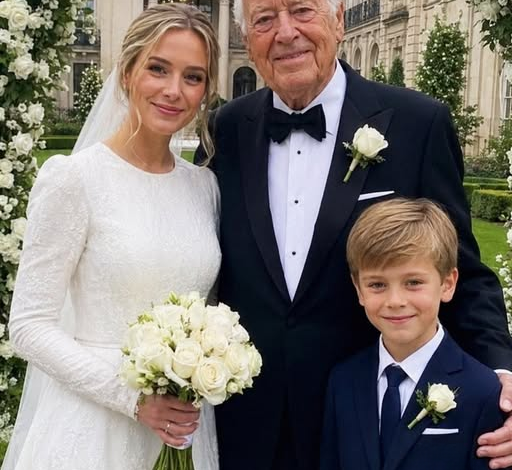
I married an eighty-one-year-old millionaire because my little boy needed surgery I could never afford.
At least, that was what I believed at the time.
I thought I had exchanged my future for Noah’s. I thought I had surrendered my pride, my peace, and whatever remained of my dignity so my son would have a chance to live.
But on our wedding night, Arthur shut the door to his office, placed a thick folder on his polished desk, and said, “The hospital has already been paid. Now it is time you understand what this marriage is really about.”
That was the moment I realized I had not simply married him for money.
This was about survival.
Mine.
My son’s.
And his sister’s.
Before Arthur, before the mansion, before the iron gates crowded with reporters and the lawyers who smiled without warmth, there had only been Noah and me.
He was eight years old, smaller than most boys his age, with gentle brown eyes and a laugh that could make even our hardest days feel less impossible. His father left before Noah was even born, saying he was not ready to be responsible for a family. By the time I bought the crib, he had already disappeared.
People told me I was too young, too broke, too alone.
Some even told me I should give Noah up.
I refused.
I worked until my feet ached. I stretched every dollar until it nearly snapped. I skipped meals when I had to and convinced myself that love could fill the spaces money left empty.
For a while, I almost believed it.
Then Noah was diagnosed with a heart defect.
I can still see him lying in that hospital bed, his small chest rising and falling beneath a thin white blanket while I sat beside him and prayed for a miracle I had no reason to expect.
A few hours later, the doctor pulled me into the hallway.
“Noah’s condition is getting worse,” he said gently. “He needs surgery within six months. If we wait too long, the damage may become irreversible.”
I could barely get the words out.
“How much?”
The doctor hesitated.
“With the procedure, hospital stay, medication, and aftercare… close to two hundred thousand dollars.”
The floor seemed to shift beneath me.
“I clean offices at night,” I whispered. “I care for elderly patients during the day. I do not have that kind of money. Nobody in my life has that kind of money.”
He looked down, helpless.
“There may be payment options, but—”
“Payment options will not save him in six months.”
He had no answer.
Two days later, Noah came home with new medication, stricter limits, and the warning that we could not afford to wait.
Three weeks after that, I thought I had finally caught a lucky break.
A wealthy family was looking for a caregiver for an elderly woman recovering from a stroke. The pay was more than double anything I had ever earned.
When I arrived at the mansion, a woman in a gray uniform guided me through a hallway so long that every step echoed.
“Miss Eleanor spends most of her time in the sunroom,” she explained. “She does not speak much since the stroke. We read to her. She likes that.”
“What about her family?” I asked.
The woman paused before answering.
“You will meet them soon enough. Just try not to be nearby when they start arguing.”
“Arguing about what?”
“Money,” she said flatly. “Always money.”
During my first week, I learned the rhythm of the house.
Arthur, Eleanor’s older brother and the man who had hired me, was eighty-one, widowed, and far more alert than his family seemed to realize. He walked with a cane and tired quickly, but his eyes missed nothing. The staff whispered that his health was failing.
His daughter, Vivien, arrived almost every afternoon wearing pearls and an expensive smile, usually with a lawyer close behind her. She spoke sweetly, but there was something sharp beneath every word.
“Daddy,” she would say, placing documents in front of him, “we only need your signature. This is about Aunt Eleanor’s care plan. We found a more affordable facility.”
Arthur never picked up the pen.
“Eleanor stays here.”
Vivien’s smile would tighten.
“She barely knows where she is.”
Arthur’s voice turned cold.
“She knows exactly where she is. She understands more than any of you think.”
One afternoon, Vivien noticed me standing in the doorway with Eleanor’s tea tray.
“And who is this?”
“Eleanor’s caregiver,” Arthur said. “She has been here for a month.”
Vivien looked me over slowly, as if deciding what kind of threat I might be.
“How lovely,” she said.
A few weeks later, the hospital called while I was reading to Eleanor in the sunroom.
I stepped into the hallway, already trembling before I answered.
“We need Noah to come in this afternoon for updated scans and testing,” the nurse said.
“Yes,” I whispered. “We’ll be there.”
After I hung up, I pressed my forehead against the cool wallpaper and tried not to break down.
When I turned around, Arthur was standing at the end of the hall in his robe, leaning heavily on his cane.
“Who calls you and leaves you shaking like that?” he asked quietly.
Maybe I was too exhausted to pretend. Maybe I simply had no strength left for another lie.
“The hospital,” I said. “My son needs heart surgery. Soon.”
Arthur studied me for a long moment.
“I am sorry,” he said. Then he tapped a hand lightly against his chest. “My own heart is failing too. I imagine I will need a caregiver before long.”
I tried to offer a polite smile.
“If there is anything I can do, sir—”
“Arthur,” he corrected gently. “Call me Arthur.”
The next morning, the hospital called again.
“Noah’s latest results came back,” the doctor said. “We need to move the surgery forward and begin pre-op treatment immediately. Can you confirm payment by Friday?”
Friday.
I gripped the phone so tightly my hand hurt.
“I need more time.”
But time was exactly what we did not have.
After the call ended, I sank onto the marble floor in Arthur’s hallway and covered my face with both hands. Ten minutes later, I heard the soft tap of his cane approaching.
“What happened?” he asked.
“My son,” I said, unable to hold back the tears. “They moved up the surgery. I cannot pay for it. I will never be able to pay for it.”
Arthur was quiet for so long that I thought perhaps he had not heard me.
Then he said the last thing I expected.
“Marry me.”
I stared at him.
He remained perfectly calm.
“Your son receives his surgery. I receive a wife my children cannot push aside or control.”
I shook my head.
“I will not be that kind of woman.”
“Not even to save your child?”
I left the mansion that night with those words burning in my mind.
Around midnight, Noah’s breathing became worse, and I rushed him to the emergency room. The doctors stabilized him, but their message was clear. The surgery could not wait.
By morning, I stood in the hospital parking lot with cold air stinging my face and called Arthur.
“If I agree,” I said, my voice shaking, “the money goes to the hospital today.”
“It will be done.”
I closed my eyes.
“Then yes. I will marry you.”
Noah was admitted for pre-op treatment that afternoon. Within days, a little color returned to his face. The doctor said he could attend the wedding briefly, as long as he returned to the hospital afterward.
White roses lined the mansion staircase.
Reporters gathered outside the gates, desperate for a glimpse of the millionaire’s mysterious young bride.
I wore a simple ivory dress that Arthur’s tailor had prepared overnight.
Noah stood beside me in a navy suit, smiling as if the whole day were something magical.
He had no idea I had agreed to the marriage to save his life.
Arthur’s children glared through the entire ceremony.
Vivien looked at me as though I had stolen something she believed already belonged to her.
That night, after the guests had gone and Noah was safely back at the hospital, Arthur brought me into his office and closed the door behind us.
“The hospital has already been paid,” he said. “Now you need to know what you have truly agreed to.”
My stomach tightened.
He slid a heavy folder across the desk.
“Open it.”
With trembling hands, I lifted the cover.
Inside were legal documents. On the first page, my name appeared beside Eleanor’s.
I looked up at him, confused.
Arthur said, “You are now Eleanor’s legal guardian. You are also the executor of my estate. I have changed my will. You will receive the largest share.”
I could barely speak.
“Why would you do that?”
“Because I know what my children are planning,” he said, “and I will not allow them to succeed.”
“I know they fight about the inheritance,” I said carefully.
Arthur’s expression hardened.
“This is not only about inheritance. Vivien wants to send Eleanor to the cheapest state facility she can find. I heard her call my sister a burden draining what should belong to her.”
I pressed a hand over my mouth.
“My children are waiting for me to die,” Arthur said. “They want the money, and they want Eleanor out of the way. But you do not look at her that way. You treat her like a person. Not an inconvenience.”
Before I could answer, the office door burst open.
Vivien stormed inside with two men in dark suits behind her.
“You gold digger,” she spat. “I know exactly what you are doing.”
Arthur’s jaw tightened.
“Vivien.”
She ignored him and pointed straight at me.
“You manipulated my father into signing away his fortune. My attorneys have already prepared a petition. Elder abuse. Undue influence.”
One of the men stepped forward with papers in his hand.
Vivien smiled.
“And that is not all. I have spoken with someone at social services. A woman who marries a dying millionaire for money raises serious concerns about her child’s welfare.”
The blood in my veins turned cold.
“Do not threaten my son.”
“Then leave quietly,” she said. “Or I will make sure your little boy is taken from you before the week is over.”
Arthur pushed himself to his feet too quickly.
“Vivien, stop.”
“You stop, Father. You have embarrassed this family enough.”
“I said stop—”
His hand flew to his chest.
The color drained from his face.
Then he stumbled and collapsed onto the carpet.
“Call an ambulance!” I screamed, falling to my knees beside him. “Arthur, stay with me. Please stay with me.”
His lips moved faintly.
“The Bible,” he whispered. “Eleanor’s Bible. Read it.”
“What?”
Behind me, Vivien snapped at her lawyers.
“Get the documents. Now.”
I stood and placed myself between them and Arthur’s desk.
“You will not touch a single paper in this room.”
For the first time in my life, I was not trembling because I was afraid.
I was trembling because I was furious.
“Move,” Vivien ordered.
“Your father is lying on the floor fighting for his life,” I said, “and you are reaching for paperwork. You want to accuse someone of elder abuse? Start with your own reflection.”
Sirens wailed in the distance. Someone from the staff had called for help.
Arthur was taken to the ICU that night.
One week later, I stood across from Vivien in court.
Arthur’s attorney, Mr. Hensley, stood beside me with a leather folder tucked under his arm.
“Your Honor,” Vivien said smoothly, “this woman married my dying father for financial gain. She took advantage of a vulnerable elderly man.”
Mr. Hensley stepped forward.
“Your Honor, may I submit documents signed by Mr. Arthur W. before the marriage took place?”
The judge nodded.
“These are guardianship papers concerning Eleanor,” Hensley said. “And this is a sealed letter Mr. W. instructed me to present only if his daughter attempted legal action.”
Vivien went pale.
“That letter should not be allowed.”
“It is notarized,” Hensley replied calmly. “And it directly concerns Eleanor’s care.”
The judge opened the letter.
The courtroom fell silent.
“My daughter Vivien,” the judge read, “has been preparing transfer documents for my sister, Eleanor, without Eleanor’s consent. She intends to remove Eleanor from my home and place her in the least expensive facility available, then use the reduced cost of care to strengthen her claim over my estate.”
“That is a lie!” Vivien shouted. “Eleanor does not even understand what is happening.”
Hensley reached into the folder again.
“Then perhaps Ms. Vivien can explain the letters Eleanor hid inside her Bible. They were written over the last six months. Each one is dated, signed, and witnessed by two members of the household staff.”
Vivien froze.
Eleanor’s Bible.
Arthur had known all along.
Hensley handed the letters to the clerk. The judge read them in silence.
Then he looked directly at Vivien.
“These letters state that Eleanor repeatedly refused to leave her brother’s home. They also state that you attempted to pressure her into signing documents after her stroke.”
“I was being practical,” Vivien snapped.
Hensley slid another document forward.
“We also have the unsigned transfer packet from the facility, along with emails showing Ms. Vivien requested the lowest-cost placement before Mr. W. had passed away.”
The judge folded his hands.
“I find no evidence that Mrs. W. manipulated Mr. Arthur W. I do, however, find substantial evidence that Ms. Vivien W. attempted to override Eleanor’s stated wishes for financial benefit.”
Vivien opened her mouth, but no words came out.
“Mrs. W. will remain Eleanor’s legal guardian,” the judge continued. “Ms. Vivien W. is removed from all decision-making authority regarding Eleanor’s care. I am also referring these materials for probate review.”
The gavel struck.
Three weeks later, Noah held my hand in the hospital hallway. His scar was healing, and his cheeks were pink again.
“Mom,” he whispered, “are we safe now?”
I kissed his forehead.
“Yes, baby,” I said. “We are safe now.”
Arthur passed away peacefully that winter.
Eleanor lived four more gentle years in my care. Some days she spoke only a few words. Some days she said nothing at all. But every afternoon, when I read to her in the sunroom, she reached for my hand.
After Arthur’s estate was settled, I created a foundation in his and Eleanor’s names.
Today, that foundation helps pay for surgeries for children whose mothers are standing where I once stood — frightened, exhausted, broke, ashamed, and one impossible decision away from losing everything.
People still ask whether I married Arthur for money.
I tell them the truth.
I married him to save my son.
But Arthur saved more than Noah.
He saved Eleanor from being discarded.
He saved me from spending the rest of my life begging powerful people for mercy.
And he gave me the chance to turn one desperate choice into an open door for someone else.
Because sometimes survival first appears dressed as surrender.
And sometimes the thing you believe will cost you everything becomes the reason you finally get to live.