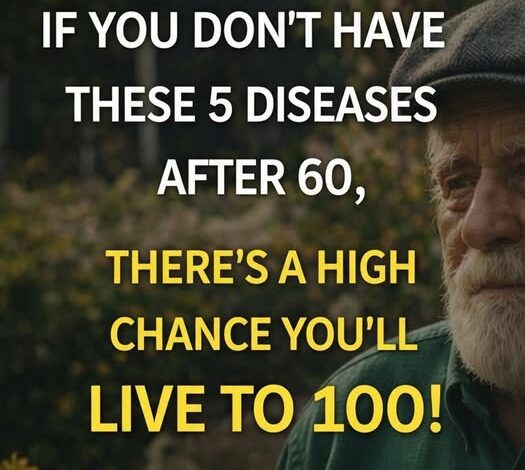
For generations, people have searched for the secret to a long life, often attributing exceptional longevity to rare genetics or the mysterious lifestyles of so-called “blue zone” communities. By 2026, however, medical research has pointed toward a clearer and more practical benchmark: reaching the age of 60 without developing five major chronic illnesses significantly increases the likelihood of living to 100. While aging itself cannot be avoided, the condition of the body’s internal systems plays a decisive role in how gracefully that process unfolds. When someone arrives at their sixth decade free from serious disease, it often indicates that their body has maintained a balance between inflammation, repair, and resilience despite decades of stress and environmental exposure. In essence, their biology has built momentum toward a longer life.
Longevity rarely comes from a single dramatic change or breakthrough treatment. Instead, it reflects decades of consistent daily habits—how we eat, how often we move, how we manage stress, and how we care for our bodies overall. Individuals who reach 60 without major chronic conditions often have what scientists describe as a lower biological age, meaning their bodies function more like those of younger people. Understanding the five major health challenges that commonly shorten life expectancy helps illuminate why avoiding them can dramatically improve the odds of reaching extreme old age.
The first—and perhaps most critical—factor is cardiovascular health. Heart disease remains the leading cause of death worldwide, largely because it develops quietly over many years. Plaque slowly accumulates in arteries, blood pressure rises, and the heart gradually faces increasing strain. Reaching 60 without coronary artery disease or a history of heart attack suggests that the circulatory system has remained strong and adaptable. Healthy blood vessels allow oxygen to flow efficiently throughout the body, supporting organs, muscles, and the brain. A resilient heart at this stage of life provides the foundation needed to maintain energy and mobility well into later decades.
Closely linked to heart health is metabolic stability, particularly avoiding Type 2 diabetes. In recent decades, diabetes has become increasingly widespread, and its effects extend far beyond blood sugar levels. Elevated glucose and insulin can damage blood vessels, impair kidney function, affect vision, and harm nerve endings. Perhaps more importantly, chronic metabolic imbalance fuels systemic inflammation, which accelerates aging at the cellular level. People who maintain stable metabolism into their sixties tend to enjoy better energy, clearer thinking, and fewer long-term complications. In many ways, preserving insulin sensitivity acts like maintaining the internal wiring of the body’s complex machinery.
Another major milestone for longevity is reaching 60 without experiencing a stroke or other major cerebrovascular event. The brain depends on a steady and uninterrupted supply of oxygen-rich blood. Strokes often occur after years of untreated hypertension or progressive arterial damage. Avoiding such an event indicates that blood flow to the brain remains healthy and that the vascular network supporting cognition is still intact. This matters not only for survival but also for maintaining independence, memory, and mental clarity in later life.
The fourth major obstacle to longevity is cancer. Although cancer can sometimes appear unpredictable, it often develops when the body’s internal defense mechanisms fail to eliminate abnormal cells. Every day, the human body produces mutated or damaged cells, and a healthy immune system typically identifies and destroys them. Reaching 60 without a cancer diagnosis often reflects effective immune surveillance and a lifestyle that minimizes harmful exposures such as tobacco smoke, excessive alcohol, or environmental toxins. It also suggests that the body’s DNA repair systems remain strong, providing protection against uncontrolled cellular growth.
The final key factor involves respiratory health. Conditions such as chronic obstructive pulmonary disease (COPD) or severe lung damage can dramatically limit quality of life. The lungs supply oxygen to every organ and tissue, powering the chemical reactions that sustain life. When lung capacity declines, fatigue increases, recovery slows, and vulnerability to illness rises. Maintaining strong lung function into one’s sixties allows the body to remain active and resilient, supporting both cardiovascular performance and cognitive health.
Taken together, these five conditions—heart disease, diabetes, stroke, cancer, and chronic lung disease—represent some of the most significant barriers to reaching advanced age. Avoiding them through the first six decades suggests that the body’s key systems are functioning efficiently and can continue doing so for years to come.
Of course, longevity is not determined solely by the absence of illness. People who live well into their nineties or beyond often share certain lifestyle patterns. They remain physically active, maintain strong social connections, and cultivate a sense of purpose that motivates them to stay engaged with life. Their diets emphasize balance and nourishment rather than restriction, and they often approach aging with curiosity rather than fear.
Modern research increasingly emphasizes the concept of “compression of morbidity.” The goal is not simply to extend life but to keep people healthy and independent for as long as possible, reducing the period of illness near the end of life. Reaching 60 without major chronic diseases is a powerful sign that this trajectory may already be in motion.
While no one can guarantee a lifespan of 100 years, maintaining health through the first sixty years provides a strong foundation. It suggests that the body’s systems—cardiovascular, metabolic, neurological, immune, and respiratory—have proven their durability. Ultimately, longevity is built not through dramatic interventions but through the small, consistent choices made every day. Those choices accumulate over time, shaping a future in which aging can be accompanied not only by added years, but by vitality, clarity, and a continued passion for life.