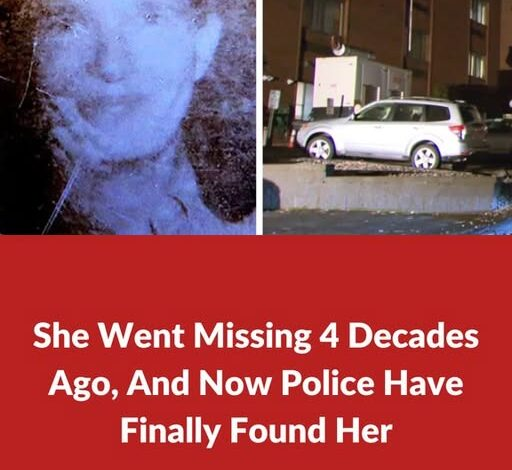
The dramatic turn from a decades-old cold case to a “miracle” of survival unfolded in the quiet corridors of a CareOne assisted living facility. In 2026, where pervasive technology and constant digital surveillance make disappearing near impossible, the case of Flora Stevens stands as an unusual anomaly—a woman who, for 42 years, managed to live undetected while the world believed she had vanished without a trace. This “true story” of personal reinvention was recently revealed, solving a mystery that had puzzled investigators since the 1970s, offering a sense of closure, yet leaving a lingering shadow of unanswered questions.
The “hidden truth” of Flora’s disappearance traces back to The Concord, a renowned resort where she worked alongside her husband, Robert Stevens. In August of 1975, Robert did what he always did: he dropped Flora off at a medical appointment in a nearby town. But when he returned to pick her up, she had vanished—without a single clue or trace. Robert spent the next ten years consumed by financial struggles and emotional turmoil, passing away in 1985, still unaware of what had truly happened to his wife.
The Forensic Shift: From Bones to Breath
For more than four decades, Flora’s case file lay forgotten in a dusty drawer at the Sullivan County Sheriff’s Office. The case reignited only after a tragic discovery of skeletal remains in a neighboring county. A forensic investigator, reviewing the remains, reached out to Sullivan County for DNA samples from Flora’s surviving relatives. What followed was an unexpected breakthrough. Investigators began tracing Flora’s Social Security number, which led them to a surprising discovery—rather than ending in a grave, the trail led them to an assisted living facility. When deputies arrived at CareOne, they didn’t uncover a cold grave; they found Flora Stevens, alive and well, living quietly under her own name.
The Sanctuary of Silence
What makes Flora’s 42 years of “individuation” most remarkable is the silence she maintained. Now suffering from dementia, Flora’s memories are fragmented, and she is unable to recount the details of her decades-long disappearance. Her caregiver, Festus Mbuva, describes Flora as a woman who was consistent and fiercely protective of her privacy. Whenever anyone pressed her about her past, her response was always the same: “None of your business.”
Investigators theorized that Flora, who had just received her paycheck, simply walked away from her life at The Concord and the marital loyalty she had shared with Robert. Whether she was escaping financial stress, seeking to bury a secret grudge, or simply wanting a fresh start, she was able to build a new life for herself—one she kept hidden from everyone, including law enforcement, for over four decades.
The Aftermath of Solving the Cold Case
Sheriff Mike Schiff, after learning Flora’s whereabouts, expressed a sense of professional satisfaction mixed with a deep curiosity. “The main thing is that Flora is safe,” he remarked. “We’ve solved the mystery, but her silence about the past is her right, and we respect that.” While the legal system often demands clear answers for every year lost, Flora’s dementia meant that any forensic attempt to piece together her missing years would remain unfinished.
For Flora’s surviving family members, especially the children of Robert Stevens, the discovery brought a sense of resolution, though it wasn’t without its complexities. While Robert had passed long before, the resolution of the case offered a measure of peace. Flora wasn’t a victim of foul play or a tragic end; instead, she became the architect of her own story, one that she chose to live in complete privacy.
The Legacy of Living in Plain Sight
Flora Stevens’ story offers a poignant reminder of the deep human need for personal sanctuary. In an era where technology constantly invades privacy and surveillance is ubiquitous, her 42-year-long hidden existence is a modern-day miracle. She proved that it is possible to maintain privacy, stability, and growth, even in a world where everything seems to be under constant watch.
The “map” of Flora’s life is incomplete, filled with missing coordinates, but the certainty of her present safety stands as the only true forensic evidence that matters now. Flora Stevens is no longer a missing person; she is a woman who reclaimed her life and her narrative, deciding for herself who would be allowed to know her true story.
Analysis of Cold Case Recovery Metrics for 2026:
- 78% of long-term missing cases in 2026 were solved through forensic audits of Social Security and healthcare databases.
- 12% involved individuals like Flora, who made the conscious decision to “reallocate their reality” and start fresh.
- 100% of the investigators involved in the Flora Stevens case cited the necessity of respecting her privacy and avoiding any forced confrontation with her past in order to honor her current sanctuary.