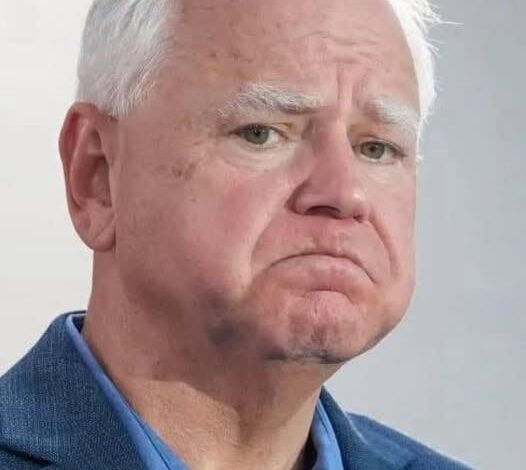
Tim Walz’s latest confirmation marks more than just another milestone in his career—it highlights the steady evolution of a political figure who has built his reputation on pragmatism, patience, and a consistent focus on everyday Americans. Over the years, Walz has carefully shaped an identity rooted in service and approachability. From his early days as a classroom teacher and National Guard member to his time representing Minnesota in Congress and later serving as governor, he has emphasized listening to constituents, finding common ground, and advancing policies aimed at strengthening working families.
What sets Walz apart, many observers argue, is the deliberate and measured way he approaches leadership. Rather than relying on dramatic gestures or partisan confrontation, his style tends to emphasize collaboration and incremental progress. Supporters point to his willingness to work across party lines and engage with differing viewpoints as evidence of a political philosophy grounded in practicality rather than ideology. This approach has helped him maintain credibility with a wide range of voters, including moderates and independents who often feel alienated by the increasingly polarized tone of national politics.
That background is part of why this moment feels particularly significant. For years, Walz has been viewed primarily as a state-focused leader—someone whose influence was largely centered within Minnesota. Now, however, analysts suggest that the latest development could expand his profile well beyond state borders. His track record in areas such as education policy, economic development, and bipartisan negotiation has begun attracting attention from national political observers who see him as a potential bridge-builder at a time when compromise often feels scarce.
Political strategists say that Walz’s calm demeanor and policy-focused style may resonate with voters who are looking for stability and practical governance rather than ideological battles. In an era when political headlines are often dominated by conflict and spectacle, his emphasis on steady administration and tangible results has become a defining element of his public image. Whether addressing issues like school funding, infrastructure, healthcare access, or support for rural communities, Walz has frequently framed his policies around improving day-to-day life for ordinary families.
Of course, the broader implications of this confirmation remain to be seen. Some analysts view it as a potential launching point that could elevate Walz’s influence on the national stage, possibly positioning him for a larger role in shaping policy debates across the country. Others believe it may simply strengthen his ability to pursue ambitious initiatives within Minnesota while contributing to national discussions on governance and bipartisan cooperation.
Regardless of the exact path ahead, the moment underscores a broader narrative about Walz’s political journey. Over time, he has cultivated an image not of a flashy or headline-seeking figure, but of a leader who works methodically, builds relationships, and focuses on practical outcomes. In a political climate that often rewards spectacle, that understated approach has become a distinguishing characteristic.
Whether this development ultimately serves as a stepping stone toward higher national prominence or simply reinforces his impact as a policymaker, one conclusion is increasingly clear: Tim Walz’s role in American politics is expanding. What once seemed like the career of a regional leader now appears to be evolving into something larger—an example of how steady, consensus-oriented leadership can gradually move from the local stage into the national conversation.