The opening months of 2026 have reshaped the global diplomatic landscape in ways that few analysts believed possible only a short time ago. For years, tensions surrounding Iran’s nuclear ambitions had remained locked in a familiar cycle of stalled negotiations, economic sanctions, and carefully calibrated threats. Diplomats argued, agreements faltered, and rhetoric intensified, yet the situation rarely crossed the threshold into open military confrontation. That uneasy equilibrium has now fractured. What had long been a strategic standoff has transformed into an active conflict, raising fears across the world that a broader regional war may no longer be avoidable.
The turning point came with a highly coordinated military operation carried out by U.S. and Israeli forces targeting critical elements of Iran’s central leadership and command infrastructure in Tehran. The strikes, described by defense officials as precise and strategically focused, were intended to disrupt what the coalition characterized as imminent security threats. However, by directing force toward the core of Iran’s governing and military apparatus, the operation crossed a boundary Tehran has repeatedly described as its ultimate “red line.” For the Islamic Republic, attacks on the capital’s leadership structures represent more than a military action—they strike at the symbolic and operational center of the state.
Within hours of the strikes, the situation moved beyond the familiar patterns of indirect conflict that have defined regional tensions for decades. In previous crises, Iran often relied on proxy groups or asymmetric strategies to respond while avoiding a direct clash with American or Israeli forces. This time, however, Tehran adopted a dramatically different posture. Officials declared that their response would be direct, decisive, and unmistakable. Military commanders announced what they described as a campaign of retaliation on a scale rarely seen in the region.
Soon afterward, waves of ballistic missiles and armed drones were launched toward a range of targets. Iranian leaders framed the barrage as a historic operation designed to demonstrate both capability and resolve. The scope of the strikes extended beyond Israeli territory to include American military facilities and strategic sites across parts of the Persian Gulf and the broader Middle East. Radar systems across the region lit up with activity as air-defense networks scrambled to intercept incoming threats.
The language used by leaders on both sides quickly shifted as the confrontation intensified. Diplomatic phrasing gave way to stark, uncompromising rhetoric. Officials in Washington warned of overwhelming retaliation if American forces were threatened further, while Iranian commanders spoke of resistance and survival in the face of what they described as aggression. Terms such as “unprecedented force,” “total defense,” and “existential danger” began appearing frequently in official statements.
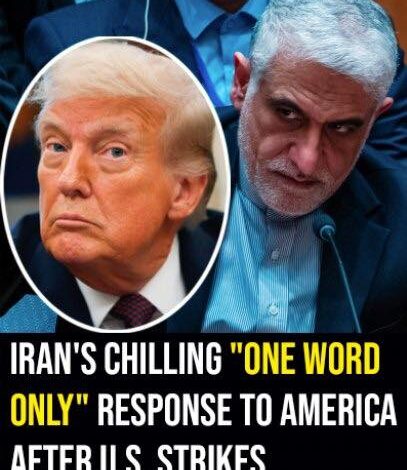
At the United Nations, the atmosphere reflected the gravity of the moment. Emergency sessions of the Security Council convened as diplomats attempted to contain a crisis that was already unfolding faster than the machinery of international diplomacy could manage. Iran’s representative condemned the strikes in the strongest possible terms, arguing that they constituted a violation of international law and framing Tehran’s military response as an act of self-defense under Article 51 of the UN Charter.
In remarks delivered with measured intensity, the Iranian envoy warned that the balance of power in the region was shifting and suggested that external pressure would not deter the country from defending its sovereignty. His comments, including a pointed remark urging Washington to approach the situation with restraint, were widely interpreted by analysts as both a warning and a signal that Iran believes it can challenge long-standing geopolitical dynamics in the region.
The American delegation, however, maintained a firm stance. U.S. officials insisted that the strikes were necessary to counter what they described as persistent threats posed by the Iranian government and its network of allied militant groups. According to Washington’s position, years of hostile activity and regional destabilization had left little alternative but to take decisive action. The tone of the debate reflected the widening gulf between the two sides, each convinced that its actions were justified and necessary.
Caught between these opposing narratives, the Secretary-General of the United Nations appealed repeatedly for restraint. His statements emphasized that continued escalation could trigger consequences far beyond the immediate battlefield. While diplomats debated legal interpretations and political responsibility, the physical reality of the conflict continued to unfold. Reports emerged of missile interceptions, air-defense engagements, and damage near military facilities such as those in Bahrain and the United Arab Emirates.
Beyond the battlefield, the psychological impact of the crisis has begun to ripple outward. In the United States, the news of direct confrontation with Iran has stirred intense debate among citizens already wary of prolonged overseas conflicts. Social media discussions and public commentary reveal deep divisions over the decisions that led to the current situation and the potential costs of further escalation.
Many Americans are questioning how a conflict of this scale might affect military families, economic stability, and national security at home. Viral discussions online have reflected frustration over the perceived gap between policymakers who authorize military actions and the service members who must carry them out. For some observers, the unfolding events feel less like a distant geopolitical dispute and more like a moment that could directly shape the lives of millions.
Complicating the situation further are reports of uncertainty within Iran’s leadership structure. Rumors surrounding the health or possible incapacitation of Ayatollah Ali Khamenei have circulated widely, raising concerns about internal power dynamics within the Iranian government. Analysts warn that a leadership vacuum or succession struggle during an external conflict could produce unpredictable decisions as competing factions attempt to assert authority.
Historically, moments of internal instability combined with external pressure have created some of the most dangerous periods in international relations. Experts caution that when leaders perceive both domestic vulnerability and foreign threat simultaneously, the incentive to escalate rather than compromise can become overwhelming.
Meanwhile, governments around the world are beginning to assess the broader implications of the confrontation. Energy markets, shipping routes, and global supply chains all pass through regions now directly affected by military activity. Economic analysts warn that prolonged instability in the Persian Gulf could disrupt oil production and maritime trade, sending shockwaves through the global economy.
Security experts have also begun discussing potential risks to infrastructure and strategic assets beyond the Middle East. Military planners typically prepare for a wide range of contingencies, and the possibility of retaliatory actions targeting allied facilities or major logistical hubs has entered public discussion in ways rarely seen outside classified briefings.
Amid the tension, political leaders in Washington are attempting to balance military readiness with assurances of stability. Administration officials emphasize that defensive systems are in place and that diplomatic channels remain open, even as military forces in the region operate on heightened alert. At the same time, the government has sought to reinforce economic partnerships and alliances with European and international partners in order to project unity among Western nations.
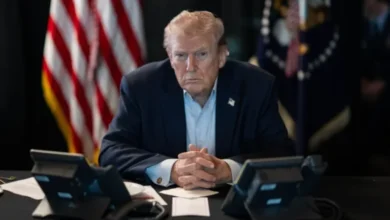
Yet the pressure of the crisis is visible. Public appearances by senior officials have carried the unmistakable signs of exhaustion that accompany high-stakes decision-making during global emergencies. The contrast between confident official statements and the uncertainty felt by the public has created a climate of unease.
For many observers, the current moment represents more than just another Middle Eastern crisis. It signals a potential shift away from the post–Cold War model of contained regional conflicts toward a more direct form of state-to-state confrontation between powerful nations. The carefully managed boundaries that once kept rival powers from clashing openly appear increasingly fragile.
Whether this escalation becomes a brief but intense episode or the opening stage of a prolonged conflict remains unclear. Military strategists note that the next several days—and the decisions made by leaders in Washington, Tehran, Jerusalem, and other capitals—could determine whether diplomacy regains a foothold or whether the cycle of retaliation continues to spiral.
For ordinary people watching events unfold from afar, the experience is one of anxious waiting. Families follow news alerts, analysts debate possible outcomes, and diplomats continue to search for paths back from the brink. The stakes feel unusually stark, as if the world has reached a moment where familiar assumptions about stability no longer apply.
History often records such moments as turning points—times when a sequence of decisions reshapes the direction of global politics. Whether this confrontation becomes a contained crisis or the beginning of something far larger will depend on choices still being made behind closed doors.
For now, the missiles and countermeasures, the speeches and negotiations, and the fears and hopes of millions exist side by side in an uneasy balance. The world is watching closely, aware that the next chapter of this story has not yet been written.