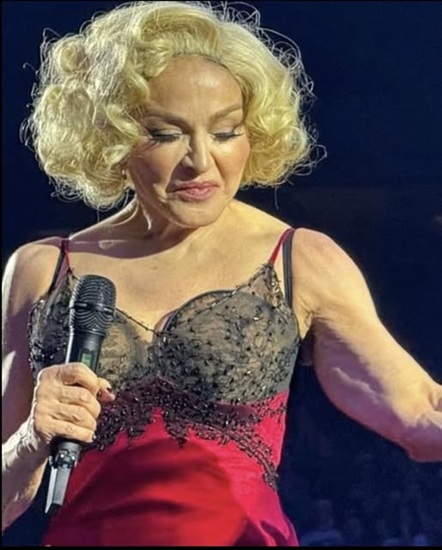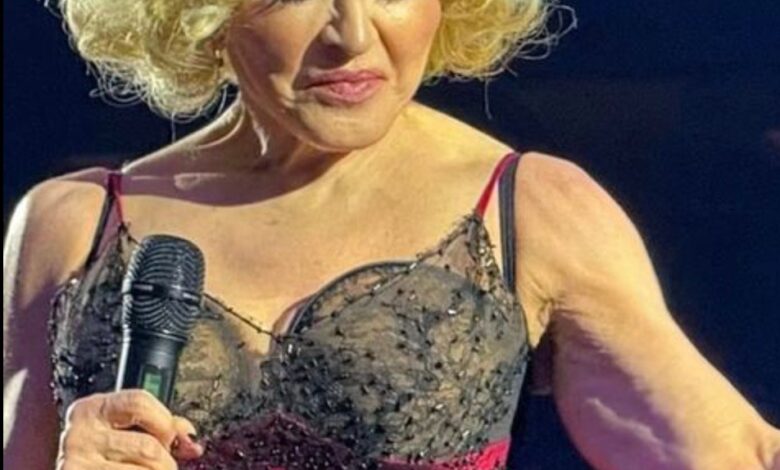
Madonna once again proved why she remains one of pop culture’s most compelling figures with a bold, emotionally charged performance at a sold-out Madison Square Garden in Manhattan. The 65-year-old Queen of Pop took the stage in a striking red négligée, confidently showcasing her muscular physique and fearless persona.
The performance was not only visually daring but also deeply personal. It coincided with the 18th birthday of her daughter, Chifundo “Mercy” James Kambewa Ciccone, who joined Madonna onstage to perform the 1992 hit “Bad Girl.” Madonna’s son, David Banda Mwale Ciccone, also appeared, playing guitar on “Mother and Father,” creating multigenerational moments that blended spectacle with family pride.
As expected, her revealing outfit sparked debate online. Critics questioned her fashion choices due to her age, while supporters praised her confidence, physical strength, and refusal to conform to age-based stereotypes. Madonna has long challenged traditional standards of beauty, sexuality, and female autonomy, making these discussions a continuation of her decades-long cultural commentary.
A Career Defined by Provocation and Reinvention
Madonna’s career has been characterized by reinvention and boundary-pushing. From the 1980s to her current Celebration Tour, she has consistently used music, fashion, and performance to provoke dialogue and challenge norms. Her stage presence remains energetic and theatrical, blending choreography, storytelling, and visual spectacle—even in the face of health challenges.
Her resilience was particularly evident following a severe health scare in June 2023, when a bacterial infection led to a 48-hour medically induced coma and postponed tour dates. Despite the ordeal, she returned to the stage, underscoring her determination and commitment to her art.
Legal and Logistical Hurdles
Madonna has also faced legal scrutiny over concert start times. A federal lawsuit filed in January 2026 claimed her December 13 Brooklyn show began later than advertised, causing inconvenience for fans. Delays, often due to technical issues, have been a recurring challenge during her tours, though they rarely overshadow her performances.
The Celebration Tour
Marking her 12th major tour, the Celebration Tour commemorates over 40 years in music. Grossing approximately $77.4 million across 79 dates, the tour demonstrates her enduring global appeal. Creative director Lewis James and musical director Stuart Price have helped craft a production that blends hits, deep cuts, elaborate costumes, and immersive visuals, honoring her legacy while highlighting her continued relevance.
Bob the Drag Queen, winner of RuPaul’s Drag Race Season 8, serves as the tour’s opening act, reflecting Madonna’s longstanding support for LGBTQ+ artists and her embrace of drag culture.
Past Setbacks and Ongoing Resilience
Madonna’s career has been physically demanding. Knee and hip injuries forced her to cancel 14 shows during the 2019–2020 Madame X Tour. She underwent multiple surgeries and regenerative treatments amid the pandemic but returned to performing with determination, adapting her shows and schedules without stepping away entirely.
Looking Ahead: Biopic Plans
Madonna is developing a Universal Pictures biopic, Little Sparrow, which she will direct. The film chronicles her rise from aspiring dancer to global superstar, highlighting both professional triumphs and personal struggles. Julia Garner, a three-time Emmy winner, is set to star, with screenwriter Erin Wilson shaping the project after Diablo Cody’s departure. Madonna remains deeply involved, ensuring her story is told on her own terms.
A Legacy Still in Motion
Madonna’s Madison Square Garden performance exemplified the qualities that define her career: bold self-expression, emotional vulnerability, controversy, and resilience. At 65, she continues to challenge assumptions about age, artistry, and longevity. The Celebration Tour is both a reflection on her past and a declaration that her story is still unfolding.