IS YOUR PHONE A FIRE HAZARD? The Silent Charging Mistakes That Could Destroy Your Home Tonight

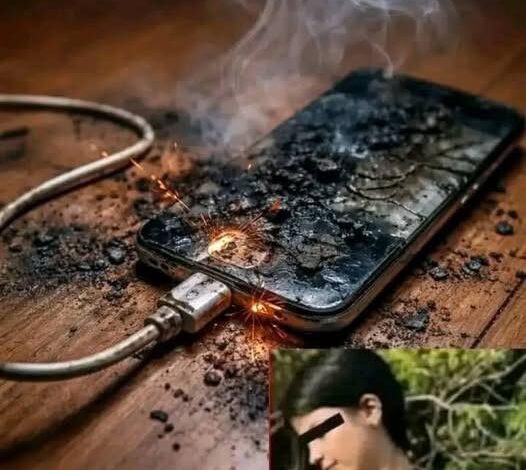
In today’s always-connected world, charging a phone or laptop has become second nature. We plug in without thinking—by the bed, on the couch, sometimes even under a pillow. It feels harmless. Routine.
But experts are now warning that this everyday habit is creating a quiet risk: what they call “charging complacency.”
It’s the point where convenience starts to override basic safety—and where ordinary devices can become unexpectedly dangerous.
One of the biggest risks starts with something small: the charger itself.
We’ve all done it. A cable breaks, and instead of buying a certified replacement, we grab a cheap alternative—something quick, inexpensive, and “good enough.”
But many of these low-cost chargers lack critical internal protections. Certified chargers are built with components that regulate voltage and manage heat safely. Knock-offs often skip these safeguards entirely.
Without them, electricity isn’t controlled properly.
That can lead to overheating, short circuits, or in extreme cases, a chain reaction inside lithium-ion batteries known as thermal runaway—a rapid, uncontrollable rise in temperature that can result in fire.
Where you charge your device matters just as much as what you use.
Placing a phone on a bed, sofa, or carpet might seem harmless, but these surfaces trap heat. Charging naturally generates warmth, and without airflow, that heat builds quickly.
Put a phone under a pillow, and you’ve essentially created an insulated pocket where temperature can rise dangerously fast.
Synthetic fabrics can ignite far sooner than most people realize.
What feels comfortable can quietly become combustible.
Then there’s the issue of overloaded outlets.
Plugging multiple devices into one power strip—phones, laptops, tablets, chargers—can create what experts call the “octopus effect.”
Each device draws power. Together, they can exceed what the outlet or extension cord is designed to handle.
That excess load generates heat—sometimes inside the wall, where you can’t see it.
Add a worn cable or a loose connection, and you increase the risk of an electrical arc—a sudden discharge of electricity that can reach extreme temperatures and ignite nearby materials almost instantly.
The warning signs are often subtle—but important.
A charger that feels unusually hot.
A faint buzzing or humming sound.
A slight burning or “electronic” smell.
These aren’t minor inconveniences.
They’re signals that something has already gone wrong internally.
Ignoring them turns a warning into a hazard.
Safety experts recommend a simple shift in mindset: maintenance before convenience.
Start with your cables. If you see fraying, exposed wires, or bent connectors, replace them immediately. Don’t wait for failure.
Use only certified chargers—those approved by recognized safety standards (like UL or MFi). They’re designed to regulate power safely, even under prolonged use.
And always charge devices on hard, flat surfaces where heat can dissipate properly.
One more habit to reconsider: leaving chargers plugged in.
Even when not in use, they can draw small amounts of power and slowly wear down internal components over time. Unplugging them reduces both risk and unnecessary energy use.
Ultimately, the solution isn’t complicated.
It’s awareness.
A few small changes—where you charge, what you use, how you maintain your equipment—can make a significant difference.
Because at the end of the day, no fully charged battery is worth risking your home.
Technology should make life easier—not more dangerous.
And sometimes, safety starts with something as simple as where you plug in.