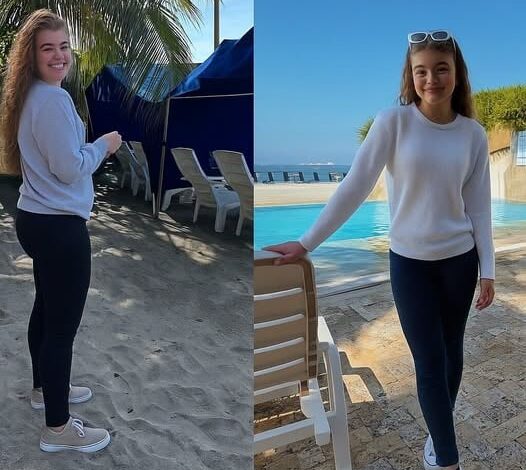
Mariana Gómez stepped out that afternoon with something simple and hopeful in her hands—a résumé, a small piece of paper carrying the weight of possibility. She moved through the familiar rhythm of the street, past storefronts and passing cars, thinking not about danger, but about the quiet, ordinary hope of moving forward. Like so many others, she was just trying to build something better, one step at a time.
What happened next had nothing to do with her.
The violence that erupted wasn’t hers, the conflict wasn’t hers, the choices that led to it weren’t hers. And yet, in a matter of seconds, she was pulled into it. When the gunfire broke out, instinct took over—the same instinct anyone would have: to move, to shield, to survive. But sometimes survival isn’t enough. Sometimes a single, random moment carries consequences that cannot be undone.
In the aftermath, the details come together—suspects, motives, timelines—but they never fully explain the loss. Mariana was not part of the story that led to that violence, yet her life became one of its most painful consequences. What remains isn’t just the fact of what happened, but everything that will now never happen. The job interview that won’t take place. The plans that won’t unfold. The conversations that will never be finished.
For her family, the absence is immediate and permanent. An empty chair. A room that still holds her things. The quiet that follows laughter when it no longer returns. These are the realities that no report or arrest can resolve.
The arrest of a 17-year-old suspect may bring a sense of accountability, but it doesn’t bring restoration. It doesn’t return the time that was taken, or the future that was interrupted. It does, however, raise deeper questions—about how violence continues to reach into lives that have nothing to do with it, and how communities absorb that impact again and again.
For neighbors, the change is subtle but lasting. A glance over the shoulder. A hesitation before stepping outside. A growing awareness that safety is not always guaranteed, even in the most routine moments. These shifts accumulate, shaping how people move through their own neighborhoods, how they think about risk, and how they carry the memory of what happened.
Mariana’s story is not just about loss—it’s about the randomness of it, the way violence can intersect with ordinary life without warning. And in that intersection, it reveals something deeply unsettling: that a life can change, or end, not because of choices made, but because of being in the wrong place at the wrong time.
What remains now is the responsibility to remember her not as a statistic, but as a person. Someone who had plans, who was trying, who was moving forward. Someone whose story should have continued.
And in that remembrance, there is also a quiet question that lingers—how many more stories like hers will begin the same way, with something as simple as hope, and end in silence.