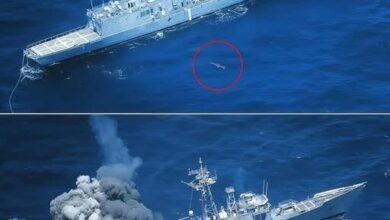
In the turbulent opening months of 2026, tensions on the global stage intensified following joint U.S. and Israeli airstrikes targeting Iranian industrial and military facilities. The operation quickly reshaped diplomatic conversations across the world and sparked a heated cultural debate far beyond government circles. As reports of explosions in the Middle East spread across international news networks, a wave of reactions from prominent artists, actors, musicians, and writers emerged online, turning a military action into a broader public conversation about war, responsibility, and morality.
Much of the response unfolded rapidly on social media, where public figures voiced concern about the potential consequences of the strikes. Many critics argued that military escalation risks widening an already fragile regional situation. In their view, decisions made in government briefing rooms can carry enormous human consequences, affecting civilians, families, and communities far from the halls of power.
Musician Jack White was among the first prominent voices to speak out, questioning the sudden shift toward military action and calling for greater transparency about the reasoning behind it. His concerns reflected a wider unease among some observers who felt the strikes contrasted with earlier political messaging that emphasized restraint and reduced foreign entanglements.
Television personality Rosie O’Donnell also criticized the move, pointing to what she described as a contradiction between previous campaign rhetoric and the current strategy. For critics like her, the shift toward military force raised questions about the direction of foreign policy and whether the public had been fully prepared for such a development.
Other cultural figures framed their concerns in political and constitutional terms. Actor John Cusack suggested the timing of the strikes could distract from domestic controversies, referencing the well-known phrase “wag the dog,” which describes using foreign conflict to divert attention from internal issues. Author Stephen King took a different angle, reminding followers that under the U.S. Constitution, Congress plays a critical role in authorizing military action. His comments emphasized the importance of democratic oversight during moments of international crisis.
Several actors focused on the humanitarian risks of escalating tensions. Carrie Coon highlighted the dangers faced by civilians living near conflict zones, while Mark Ruffalo questioned whether aggressive strategies might trigger a wider regional confrontation. Their statements reflected broader fears that further retaliation could lead to a cycle of escalation difficult for any nation to control.
At the same time, supporters of the strikes offered a very different interpretation. Backers of the administration argued that the operation was a necessary response to ongoing threats posed by Iran’s missile capabilities. From this perspective, targeting military infrastructure was seen as a strategic step designed to deter future attacks and reinforce national security commitments.
Advocates of the strikes also pointed to years of stalled diplomacy and rising tensions in the region. In their view, decisive action signaled that continued threats would not go unanswered. They argue that strength and deterrence can sometimes prevent larger conflicts by demonstrating resolve early.
The sharp divide in reactions illustrates a defining feature of modern geopolitics: foreign policy decisions now spark immediate cultural and public debate. Social media has accelerated this process, allowing political developments to become global conversations within minutes. Statements from public figures, analysts, and ordinary citizens circulate rapidly, creating a continuous feedback loop between policymakers and the public.
Beneath the arguments about strategy lies a deeper question about how democratic societies balance security with humanitarian concerns. Military planners often frame operations in terms of strategic objectives and proportional responses, while critics emphasize the real-world human impact of armed conflict. Both perspectives reflect different ways of interpreting the responsibilities of leadership in times of crisis.
In recent years, celebrities and public intellectuals have increasingly used their platforms to comment on international events. Whether their views are embraced or criticized, their voices often help bring emotional and ethical dimensions into discussions that might otherwise remain confined to diplomatic briefings and policy papers.
As tensions continue and leaders predict weeks of potential instability, public scrutiny is unlikely to fade. Observers across the world are watching closely, examining each new development and debating its implications for regional stability and global security.
The intensity of the cultural response highlights how closely connected politics, media, and public opinion have become. Global events now unfold not only through official statements and press conferences but also through millions of conversations happening in real time across digital platforms.
Ultimately, the ongoing debate surrounding the strikes reflects broader concerns about leadership, accountability, and the long-term consequences of military decisions. As the situation evolves, many voices—from policymakers to artists—will continue calling for careful judgment and restraint.
In moments like these, the challenge for any society is finding a path that protects security while preserving the values and humanitarian principles that guide it. The discussion sparked by the strikes shows that even far from the battlefield, people across the world are grappling with that difficult balance.