They met as co-stars, but what began as a professional connection quickly deepened into something far more lasting. Their relationship carried the kind of balance people rarely see up close—public success paired with a private life that felt rooted, steady, and real. Together, they built a world that extended beyond film sets and premieres, one centered on family, shared values, and the quiet rhythms of everyday life. To those around them, it wasn’t just a marriage—it was a partnership that seemed to hold both warmth and strength in equal measure.
When Natasha Richardson’s life ended so suddenly, that carefully built world fractured in an instant. There was no time to prepare, no gradual transition—just an abrupt absence that left Liam Neeson standing in the middle of something he couldn’t fix or undo. In the days and months that followed, his focus narrowed to what remained: their sons, their home, and the responsibility of carrying forward a life that now felt incomplete. Grief didn’t arrive as something dramatic or fleeting. It settled in quietly, becoming part of the background of everything—present in small moments, in memories, in the spaces she once filled.
Yet even within that loss, her presence never fully disappeared. It lived on in the way their family continued, in the values she had helped shape, in the stories that remained part of daily life. Over time, grief didn’t vanish—it changed form. It became something that could be carried, something that coexisted with love rather than replacing it.
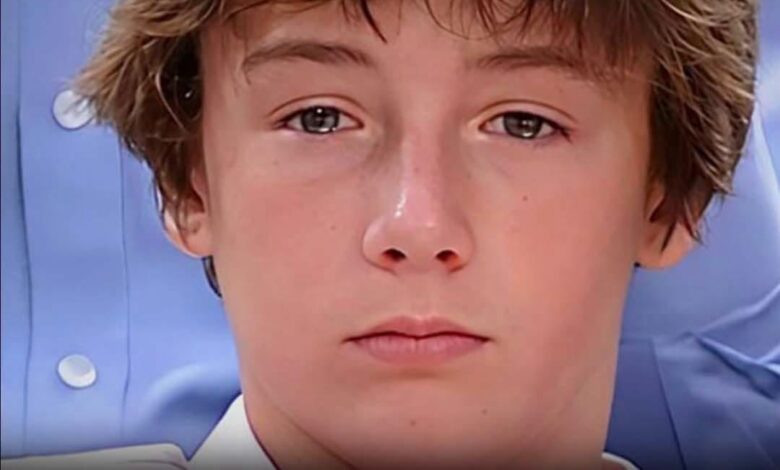
Years later, that connection found a new expression through their eldest son, Micheál. As he began to step into his own path in the acting world, he made a choice that was both personal and deeply symbolic. By taking his mother’s surname and becoming Micheál Richardson, he did more than honor her—he wove her into his identity in a visible, lasting way. Every role, every credit, every introduction now carries that connection forward.
It’s not just a gesture of remembrance; it’s a continuation. A way of ensuring that her influence doesn’t remain in the past, but moves alongside him into the future. In a profession built on names and recognition, that choice carries weight. It turns something deeply personal into something shared, allowing others to encounter her legacy through his work.
For Liam Neeson, that decision reflects something profound. It’s not only about pride in his son’s path, but about witnessing how loss can be transformed into something enduring. Watching Micheál step forward with that name, with that connection intact, is a reminder that what was lost hasn’t disappeared—it has evolved.
In that sense, Natasha Richardson’s story doesn’t end with her passing. It continues quietly, steadily, in the lives she helped shape. In the choices her son makes. In the work he creates. And in the way her presence is carried forward—not as something distant, but as something still very much alive, unfolding one moment at a time.