DEVASTATING MULTI VEHICLE CARNAGE ON MEXICO QUERETARO HIGHWAY LEAVES MOTORISTS IN ABSOLUTE DISBELIEF

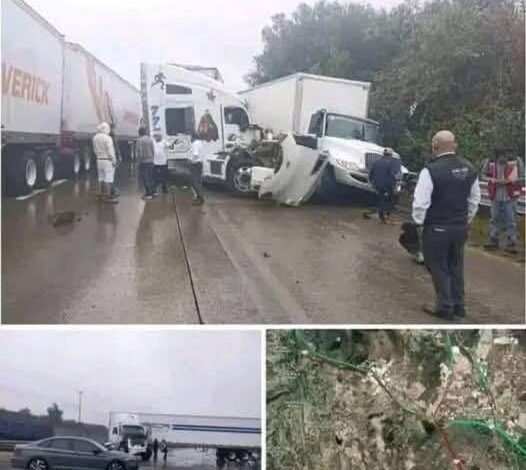
The Mexico–Querétaro Highway, one of the country’s busiest and most important transport routes, was abruptly transformed from a routine commuter corridor into a scene of chaos and fear this week. Near Huehuetoca, in the State of Mexico, a serious multi-vehicle crash brought traffic to a standstill and left drivers shaken by how quickly an ordinary morning unraveled.
The incident occurred around kilometer 59, a stretch of road known for heavy cargo traffic and frequent congestion. According to early reports, a large tractor-trailer traveling toward Mexico City lost control as it approached the Jorobas junction. In a matter of seconds, the situation escalated. Witnesses described the truck as moving with unusual speed for the conditions, unable to slow down despite the driver’s apparent attempts to regain control.
The highway had been slick from steady rain, and that likely played a critical role. Wet pavement reduces traction, especially for heavy vehicles, making it harder to brake or steer effectively. Investigators believe the truck may have hydroplaned—essentially gliding on a thin layer of water—which would have left the driver with little to no control. Instead of stopping, the trailer veered off course, struck a roadside embankment, and then swung back into traffic.
That’s when the chain reaction began.
Several smaller vehicles—a mix of passenger cars and a pickup—were caught directly in its path. The force of the collision sent them spinning or crumpling under the weight of the trailer. Within moments, the highway was littered with debris, damaged vehicles, and stunned drivers trying to process what had just happened. The truck eventually came to rest diagonally across the lanes, effectively blocking the entire roadway.
Traffic quickly backed up for miles in both directions. What is normally a critical entry point into the capital became completely immobilized, affecting commuters, delivery trucks, and long-distance travelers alike.
Emergency crews responded rapidly. Sirens filled the air as paramedics, firefighters, and federal highway police arrived to assess the damage and assist those involved. Given the scale of the crash, responders initially feared the worst. However, in a surprisingly fortunate outcome, no fatalities were immediately reported. Many of the people involved were able to exit their vehicles on their own, though visibly shaken.
Most injuries appeared to be minor—cuts from broken glass, bruises, and possible whiplash—but medical teams urged caution. High-impact accidents can lead to delayed symptoms, including internal injuries or concussions, and several individuals were advised to seek further evaluation at nearby hospitals.
Even without severe physical injuries, the emotional impact was clear. Drivers described the moment of impact as disorienting and frightening, with little time to react. For many, it was a stark reminder of how quickly control can be lost on the road—especially under poor weather conditions.
The aftermath created significant logistical challenges. Authorities were forced to close multiple lanes and redirect traffic onto alternative routes, which quickly became congested. Recovery crews worked for hours in wet conditions to clear the wreckage, remove damaged vehicles, and reposition the overturned trailer. Only after extensive effort was partial traffic flow restored.
As the investigation continues, officials are expected to examine several factors, including vehicle maintenance, driver condition, speed, and weather impact. While rain is a common hazard, incidents of this scale often result from a combination of elements rather than a single cause.
The crash has also reignited discussions about safety along this highway. Known for its volume of heavy transport vehicles, the route has long been flagged as high-risk—particularly during adverse weather. Experts continue to emphasize the importance of reduced speeds, increased following distance, and stricter enforcement for cargo transport under hazardous conditions.
By the end of the day, traffic began moving again, and the visible signs of the accident were gradually cleared. But for those who witnessed it—or were caught in it—the experience will likely linger. What started as a routine drive became a powerful reminder of the unpredictability of the road, especially when weather, speed, and heavy machinery collide.
For now, the highway is open again. But the message left behind is clear: under rain-soaked skies, even familiar roads can turn dangerous in an instant.